
The Holy See has declined to participate in the proposed Board of Peace, with Cardinal Pietro Parolin emphasizing that international crises should be addressed through established multilateral institutions. The decision contrasts with Italy’s choice to join the initiative as an observer.
Key Takeaways
- The Holy See refused participation, citing the nature of its diplomatic role.
- Cardinal Parolin stressed the primacy of the United Nations in managing crises.
- The Vatican expressed unresolved concerns about the initiative’s framework.
- Italy opted to join as an observer, signaling political engagement.
- The contrast highlights differing approaches within Rome itself.
The Vatican Steps Back
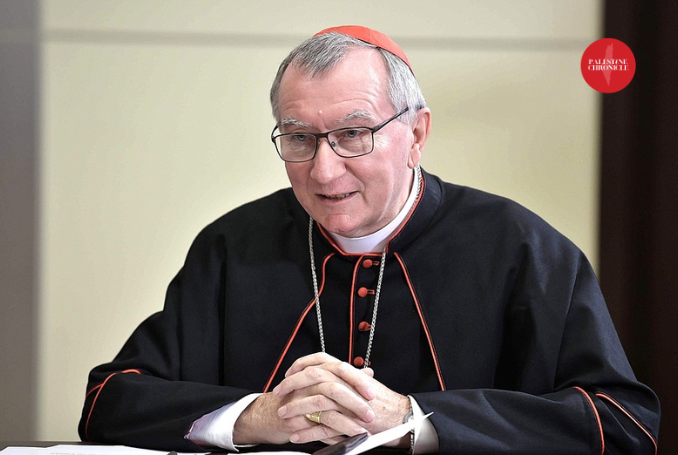
On February 17 in Rome, Vatican Secretary of State Cardinal Pietro Parolin clarified the Holy See’s position regarding the Board of Peace, drawing a clear line between the Vatican’s diplomatic philosophy and participation in political mechanisms.
“The Holy See will not participate in the Board of Peace because of its particular nature, which is evidently not that of other States,” Parolin said, according to Vatican News.
From the US-Led Rules-Based Order to Multipolar International Law
The remark reportedly reflects a consistent principle in Vatican diplomacy: the Holy See acts as a moral interlocutor rather than a geopolitical actor. Its neutrality allows it to mediate conflicts, but participation in political coalitions risks undermining that role.
Parolin indicated that the decision was also substantive rather than symbolic. He referred to “critical issues that should be resolved” and admitted that “there are points that leave us somewhat perplexed,” suggesting concerns about the initiative’s mandate and international legitimacy.
He then situated the Vatican position within a broader legal framework: “At the international level, it should above all be the UN that manages these crisis situations.”
Parolin emphasized that initiatives aimed at peace are inherently positive but must remain compatible with international law and global consensus mechanisms.
Rome Takes a Different Path
Italy, for its part, adopted the opposite approach. The Italian government chose to join the Board of Peace as an observer, a decision critics view not as neutral monitoring but as political validation of a controversial initiative whose mandate, legal basis, and authority remain undefined.
Even without full membership, participation places Italy among the actors willing to treat the framework as a legitimate diplomatic venue.
Board of Peace, Italy an Observer: Diplomatic Presence or Political Legitimization?
In practice, the distinction between “observer” and participant becomes largely symbolic: presence alone contributes to normalizing the initiative and giving it international credibility.
The contrast is stark as the Holy See insists that conflict mediation must remain within recognized international structures, particularly the United Nations, and refuses involvement until fundamental concerns are resolved.
(PC, Vatican News, Italian Media)