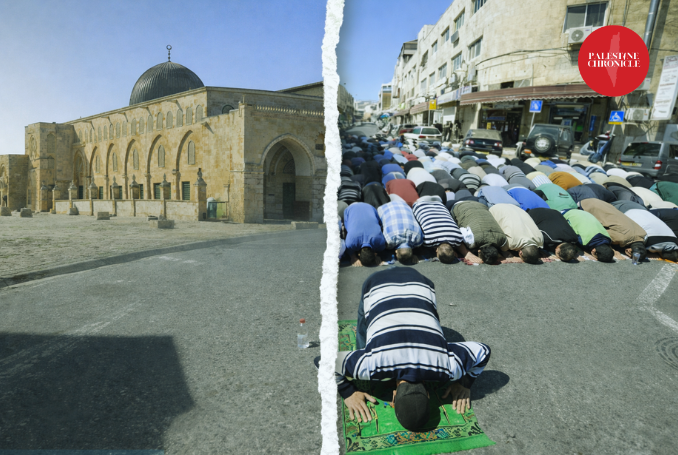

Palestinian experts warn that Israeli measures at Al-Aqsa Mosque are laying the groundwork for permanent changes to the site’s historic status.
Key Takeaways
- Palestinian experts warn Israel is advancing plans to reshape control of Al-Aqsa Mosque.
- The eastern section of the compound has become a particular focus of recent measures.
- Analysts cite a 2023 proposal by Likud MK Amit Halevi as reflecting broader ambitions for the site.
Palestinian experts and rights advocates are warning that a series of Israeli measures at Jerusalem’s Al-Aqsa Mosque compound reflect a broader effort to alter the site’s long-standing historical and legal status, raising fears of a permanent spatial division similar to that imposed at the Ibrahimi Mosque in Hebron.
According to Dr. Hassan Khater, head of the International Jerusalem Center, Israel has sought to consolidate its control over Al-Aqsa since occupying East Jerusalem in 1967, but current policies represent what he described as “a more dangerous phase.”
He argued that the objective is no longer limited to expanding security control, but to gradually transform parts of the compound into areas administered directly by Israeli authorities.
Israel Detains Jerusalem Grand Mufti, Bars Him from Al-Aqsa Mosque
Focus on Eastern Section
Khater said recent measures have increasingly targeted the eastern section of Al-Aqsa, including the Bab al-Rahma prayer hall and surrounding courtyards.
He warned that restrictions imposed there could gradually isolate the area from the rest of the compound while placing it under permanent Israeli security administration.
According to Khater, such measures would further diminish the authority of the Islamic Waqf, which administers the site under Jordanian custodianship, while weakening the Hashemite custodianship over Jerusalem’s Islamic holy places.
Israeli National Security Minister Itamar Ben Gvir storms the Al-Aqsa Mosque compound and performs Talmudic rituals in its courtyards. pic.twitter.com/8zN6nyUlKa
— Eye on Palestine (@EyeonPalestine) July 23, 2026
The 2023 Proposal
Khater also pointed to a proposal introduced in 2023 by Likud Knesset member Amit Halevi.
The proposal envisioned Israeli control over major sections of the Al-Aqsa compound, including the Dome of the Rock, central courtyards and northern areas stretching between the Lions’ Gate and the Gate of the Chain, while limiting Muslim worship primarily to Al-Qibli Mosque in the southern section.
According to Khater, implementation of such a proposal would effectively place roughly 70 percent of the 144-dunam Al-Aqsa compound under Israeli control.
Ben-Gvir Leads Record Al-Aqsa Incursion as Palestinians Warn against Religious War
Changing the Status Quo
Palestinian officials argue that Israeli authorities have steadily expanded measures affecting the historical status quo governing Al-Aqsa.
The arrangement recognizes the entire mosque compound as an Islamic holy site administered by the Jerusalem Islamic Waqf under Jordanian supervision.
In recent years, Israeli authorities have increased restrictions on Waqf employees and mosque guards through arrests, expulsions and limitations on restoration work, while facilitating increasingly frequent visits by Israeli settlers under police protection.
Rights advocates argue that these developments are gradually changing both the practical administration of the site and patterns of access.
Israel Seals Hebron with 106 Iron Gates, Tightens Grip on Ibrahimi Mosque
Echoes of Hebron
Palestinian analysts increasingly compare the situation at Al-Aqsa to the Ibrahimi Mosque in Hebron, where access and administration were permanently divided following the 1994 massacre of Palestinian worshippers by an Israeli settler.
They warn that temporary security measures can evolve into permanent spatial arrangements that fundamentally alter control over religious sites.
For Palestinian experts, the debate is therefore no longer limited to individual Israeli measures but concerns what they see as a cumulative process that could redefine the future of one of Islam’s holiest sites.
(Quds News Network)