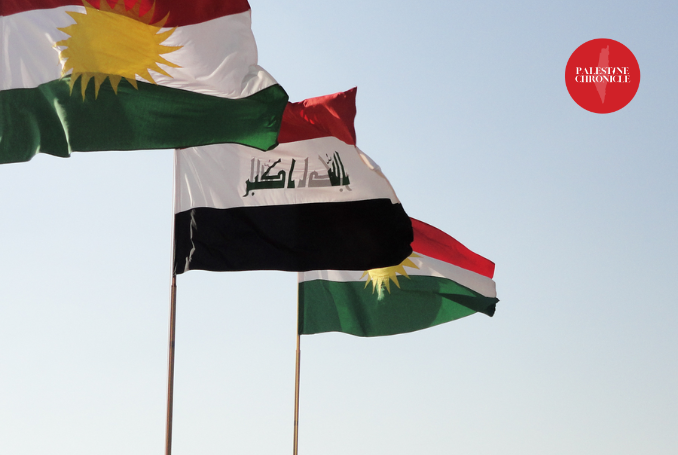
Kurdish geography lies at the heart of one of the most sensitive regions in the world: between Iran, Turkiye, Iraq, and Syria. Any military movement within this space will not remain a local event but could quickly turn into a chain of regional reactions.
Just causes are not defeated only through repression; they are also defeated when they are hijacked and used in the wars of others. Reports suggesting that Kurdish groups may be armed to ignite an uprising inside Iran raise a serious question: who is pushing the Kurdish cause into the game of empires?
Not every just cause is defeated by force. Some are defeated when they are hijacked and thrown into the struggles of empires.
This is the real danger now facing the Kurdish cause, particularly in light of Western media reports discussing the possibility of arming Iranian Kurdish groups in order to ignite an uprising inside Iran.
The issue here is not merely a new development in the context of the conflict between Washington and Tehran. It goes far deeper than that: it concerns the moral and political standing of the Kurdish cause itself within the historical consciousness of the peoples of the Middle East.
At its core, the Kurdish cause is not a project of war nor an instrument of geopolitical struggle. It is the cause of a people seeking recognition of their existence and their cultural and political rights within a shared regional space. Yet the modern history of the region reveals a more complex reality: this cause has repeatedly found itself at the center of the games of major powers, where the demands of peoples are sometimes transformed into pressure cards in the struggles of empires.
Here lies the real danger.
Empires do not enter Middle Eastern conflicts out of a desire to defend the rights of peoples; they do so to manage balances of power. When a just cause is drawn into that arena, it risks losing part of its original meaning, because liberation cannot be born from the womb of domination.
Any talk of arming Kurdish groups in order to open a new front inside Iran, therefore, places the Kurdish cause before a deeply sensitive political and moral test. Such a scenario may offer certain tactical gains in a moment of intense conflict, but it carries a greater danger: transforming the Kurdish cause, in the eyes of the peoples of the region, into a tool of international struggle.
Once that happens, the moral capital of the cause begins to erode.
Kurds, like Arabs, Persians, Turks, and the other peoples of the Middle East, are part of a single historical fabric. Any path that places them as instruments within the conflicts of major powers will not only create tension with states but may also open a deep fracture with societies themselves.
It is precisely here that the contrast becomes clear with the intellectual vision put forward by the Kurdish leader and thinker Abdullah Öcalan. In his writings on the Middle East, Öcalan repeatedly emphasized that one of the region’s most dangerous afflictions is dependence on external powers. Imperial forces, he argued, do not resolve the problems of people; they reproduce them in new forms.
For this reason, he proposed the concept of the Democratic Nation as an alternative horizon to the conflicts that have torn the Middle East apart. The Democratic Nation, as Öcalan envisioned it, is not a project for creating a new state or redrawing borders, but a framework for coexistence among the region’s peoples based on mutual recognition and cultural and political pluralism.
In other words, the Kurdish cause cannot triumph if it becomes an extension of the struggles of empires.
Kurdish geography lies at the center of one of the most sensitive regions in the world: between Iran, Turkiye, Iraq, and Syria. Any military move within this space will not remain a local event but could rapidly trigger a chain of regional reactions whose consequences may be difficult to control.
Recent history offers many examples of how Kurdish areas have turned into arenas of confrontation among different powers, where international calculations intersect with regional tensions to produce cycles of violence whose primary victims are local communities.
For this reason, the real question posed by this moment is not a military one but a political and moral one at the same time: are the Kurds meant to be a bridge for coexistence among the peoples of the region, or a battlefield for the wars of others?
Throughout its history, the Middle East has never suffered from a shortage of armies, fleets, or military alliances. What it has always known is an excess of external projects that sweep across the region like storms and then move on.
But the peoples who live on this land cannot move on with them.
Thus the Kurdish cause today, like many other causes in the region, stands before a clear crossroads: either it becomes a card in the struggles of empires—summoned when battles intensify and folded away when it is no longer needed—or it remains faithful to its original spirit: a cause of rights and justice within a regional space seeking a new formula for coexistence.
Abdullah Öcalan was clear when he warned against the illusion of salvation through imperial powers, arguing that the Middle East will only find its path to stability through building networks of coexistence among its peoples—not by turning them into instruments of external conflicts.
The question that will continue to haunt this historical moment is simple in its wording, yet profound in its consequences:
Will the Kurds remain part of the project of the Democratic Nation based on coexistence among the peoples of the region, or will they once again be pushed into the role that empires have perfected throughout history— the role of a tool in a war whose participants neither control its decisions nor its end?
Just causes may stumble, but they truly lose their spirit when they become cards in the game of empires.
(This article originally appeared in Al Mayadeen. It was translated and edited by the Palestine Chronicle).