
By Romana Rubeo 
In this Palestine Chronicle exclusive, Mariniello explains why the UN’s landmark inquiry has, for the first time, defined Israel’s actions in Gaza as genocide — and what this means for international justice.
The United Nations Independent International Commission of Inquiry on the Occupied Palestinian Territory released a landmark report on Tuesday. For the first time, a UN body concluded that Israel is committing genocide in the Gaza Strip.
To understand the significance of this finding, we spoke with Professor Triestino Mariniello, international law expert and member of the legal team representing Gaza victims before the International Criminal Court.
Why is this UN Report Historic?
“The report is of historic importance, because it is unprecedented,” Professor Triestino Mariniello told the Palestine Chronicle.
“It is the first time that a United Nations commission of inquiry has reached such a conclusion.”
He noted that in the past, UN commissions had accused Israel of committing war crimes and crimes against humanity in Gaza.
“But they had never gone so far as to say that Israel is also responsible for what represents the most serious crime at the international level: the crime of genocide.”
‘Genocide in Real Time’: UN Accuses Israel in Historic Gaza Report
What Makes the Commission Credible?
According to Mariniello, the authority of the commission and its members gives the report particular weight.
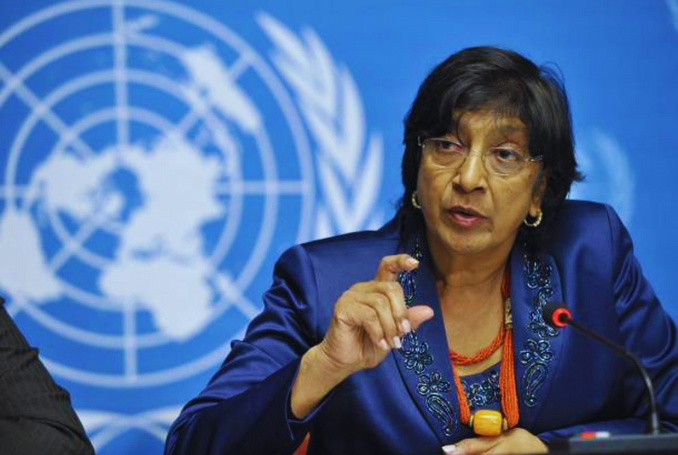
“First of all, from the authority of the commission itself and its commissioners. For example, Navi Pillay, internationally known, was also a judge at the International Criminal Tribunal for Rwanda.”
On What Evidence are the Findings Based?
“The report is based on direct evidence,” Mariniello explained.
“It essentially confirms what has already been said by a long list of international organizations, especially Palestinian ones.”
He stressed that the conclusions align with those of these organizations: “The report says that the objective of the Israeli authorities in Gaza is not, as claimed, to destroy Hamas or to bring hostages home, but—as the report states—to kill as many Palestinians as possible and to make Gaza unlivable for the survivors.”
What is the Impact on International Justice?
Although not formally binding, Mariniello pointed out that such reports have a strong influence.
“The reports of UN commissions of inquiry are not formally binding for the work of international courts, but they have a strong persuasive value. And this is the most important aspect.”
“All commissions are in direct contact with international tribunals,” Mariniello recalled.
“In the past, for example, when dealing with the situation in Sudan, the International Criminal Court (ICC) took them into consideration for investigations.”
He added: “What I expect—and hope—is that the same will happen now: that this report will have a strong persuasive impact on the International Court of Justice (ICJ), which cannot ignore what the commissioners have said, and above all on the Office of the Prosecutor of the ICC, which should expand the scope of the investigations and finally cover the crime of genocide.”
What Does This Mean Going Forward?
“From an evidentiary standpoint, there are no more excuses for the Prosecutor,” Mariniello concluded. The commission’s report consolidates years of work by Palestinian and international organizations and gives it the UN seal.
“This gives unprecedented legal and political weight to the charge of genocide in Gaza.”
(The Palestine Chronicle)
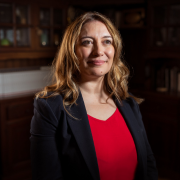
– Romana Rubeo is an Italian writer and the managing editor of The Palestine Chronicle. Her articles appeared in many online newspapers and academic journals. She holds a Master’s Degree in Foreign Languages and Literature and specializes in audio-visual and journalism translation.

Israel, on stolen land, on borrowed time. Go back to Eastern Europe where you came from.