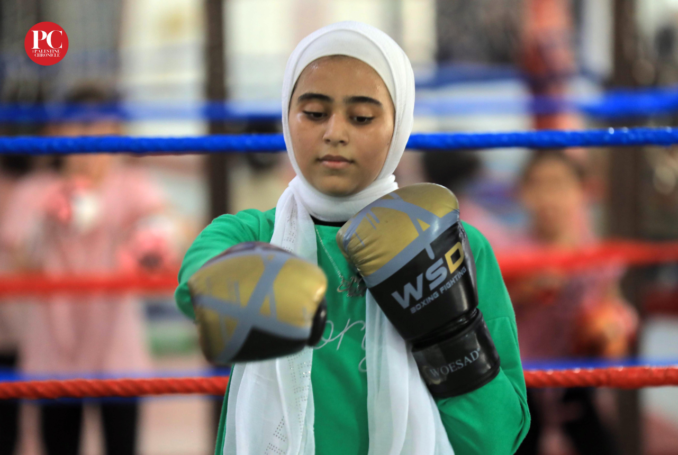
Palestinian athletes have excelled locally, regionally—through participation in the Arab Games and Arab championships—and internationally.
It is important to note that Palestinian sport is unique in that it is grounded in national, social, and organizational foundations, all of which are essential to ensuring its long-term sustainability. These foundations allow sport not only to develop and preserve its national identity, but also to function as a tool of resistance against the occupying power.
No other sports movement in the world faces conditions comparable to those confronting Palestinian sport. Since the onset of occupation, Palestinians have endured displacement, hardship, and continuous confrontation with Israeli control. As Palestinian sport evolved into a vehicle for affirming national identity and challenging domination, Israel increasingly came to view it as a threat. Palestinian sport—so long as it carries the name, flag, and symbols of the Palestinian people—has remained a persistent nightmare and a thorn in Israel’s side.
Historically, Palestinian sport has been characterized by strong social foundations dating back to the 1920s. Most sports clubs in Palestine were originally established as social clubs, with sport forming a central component of broader social activity. Over the past century, these clubs have developed management systems aligned with prevailing social structures, cultural norms, and national aspirations.
Today, the majority of Palestinian sports clubs continue to operate as community-based social institutions, run by committed members and officials and sustained by local support. There is little doubt that as sport becomes increasingly professionalized, it risks losing its authenticity and social essence. Palestinian sport, however, has largely escaped excessive professionalization. While some clubs have adopted professionalism in response to FIFA requirements, the social dimension of their activities has remained largely intact.
Since the re-establishment of the Palestinian Sports Federation in the 1940s, Palestinian sport has been organized at an institutional level, a process that has continued to the present day. Each historical phase, and each location within the Palestinian diaspora, developed its own distinct organizational characteristics shaped by political, social, and geographic realities.
For the Palestinian sports movement to reach its full potential, it must also be built upon complementary foundations—namely, health, scientific research, and democratic governance. Integration across these areas is essential for sustainable development.
One of the major challenges remains the widespread perception that sport is not an essential component of a healthy lifestyle. This presents a serious problem. Sports officials bear responsibility for promoting sport as a daily habit and an integral part of public life. Addressing unhealthy lifestyles—characterized by physical inactivity, smoking, poor nutrition, sleep deprivation, and chronic stress—requires sustained collective effort. There is no doubt that the Israeli occupation has played a significant role in exacerbating these conditions and deepening Palestinian suffering.
Globally, countries that achieve sustained sporting success increasingly rely on scientific research. Over recent decades, the number of university departments dedicated to physical education has grown, offering bachelor’s, master’s, and doctoral degrees. As a result, Palestinian physical education teachers and coaches have become more qualified and capable. However, stronger cooperation is needed between universities, sports federations, and the Palestinian Olympic Committee. Universities should play a more active role in research and applied studies to support coaches, federations, and long-term planning.
Before the Oslo Accords, sports in the West Bank and Gaza Strip were rooted in democratic principles and broad social participation, largely free from favoritism and bureaucratic control. Today, however, decision-making has become centralized, with power concentrated in the hands of the president of the Palestinian Olympic Committee and the Palestinian Football Association.
Political factionalism has come to dominate Palestinian sport, with Fatah exerting influence in the West Bank and Hamas in the Gaza Strip. It has been documented that Fatah violated the sports rights of Hamas members in the West Bank, while Hamas committed similar violations against Fatah members in Gaza.
Despite displacement, harsh living conditions, the absence of an independent state, and ongoing occupation, Palestinian sport has achieved remarkable success. This success began in the 1940s and continued after the Nakba of 1948 to the present day. Palestine’s participation in the Arab Games during the 1950s stands as a notable example.
Further milestones include the re-establishment of the Palestinian Football Association and other sports federations in the 1960s, as well as early attempts to secure FIFA membership. By the late 1960s, the Supreme Council for Youth and Sports was established, followed by the creation of the League of Clubs (Rabitat al-Andiya) in the West Bank and Gaza Strip during the 1970s. This league remained active until the signing of the Oslo Accords in 1993 and the establishment of the Palestinian Authority.
A new phase began in 1993, when the League of Clubs was dissolved and replaced—along with many civil society organizations—by state institutions. This marked a major structural shift in Palestinian sport. Following the establishment of the Palestinian Authority, the Palestinian Football Association and other federations relocated from Tunisia to the Gaza Strip, and later to the West Bank.
The Oslo Accords also facilitated intensified Israeli land confiscation, settlement expansion, construction of the separation wall, fragmentation of the West Bank, and its separation from Jerusalem. Palestinian sport, however, continued to exist within these realities and evolved in response to them.
At the same time, the Oslo Accords marginalized sports in the Palestinian diaspora. As a result, sporting activity became more concentrated in the West Bank and Gaza Strip, while diaspora communities—particularly refugee camps in Lebanon—were increasingly neglected. This imbalance created long-term structural challenges for Palestinian sport as a whole.
Palestinian sport is distinguished by its resilience and adaptability. History shows that every attempt by Israel to destroy Palestinian society has been met with renewed strength. In this context, the words of Libyan freedom fighter Omar al-Mukhtar resonate deeply: “The blow that does not break your back only strengthens you.”
This adaptability is evident in the survival and growth of sport under all circumstances—whether in refugee camps after the Nakba, under Israeli occupation in the West Bank and Gaza Strip, or in the post-Oslo period. Despite the negative consequences of Oslo, Palestinian sport adapted and achieved notable successes.
Palestinian athletes have excelled locally, regionally—through participation in the Arab Games and Arab championships—and internationally, including qualification for the World Cup, Olympic Games, and other major competitions. Athletes have emerged in numerous individual sports such as swimming, boxing, karate, taekwondo, bodybuilding, weightlifting, and athletics.
Although Palestine’s FIFA membership was facilitated by the Oslo Accords, its positive impact on Palestinian football cannot be denied. Most importantly, it placed Palestine firmly on the global sports map, enabling the promotion of Palestinian identity—name, flag, people, and cause—on an international stage.
The Palestinian national team’s strong performance in the FIFA Arab Cup 2025 further demonstrated the significant progress achieved in recent years.
While football is undoubtedly the most popular sport, it should not be conflated with Palestinian sport as a whole. Football is only one component of a broader sporting landscape, and its success contributes to—but does not define—the overall development of Palestinian sport.
Given current realities, particularly the genocidal war on the Gaza Strip, two urgent questions arise: what challenges face Palestinian sport today, and what lies ahead for its future? Beyond occupation, Palestinian sport confronts social, cultural, organizational, administrative, and economic challenges. Nonetheless, occupation remains the primary obstacle—manifesting through the targeting of athletes, restrictions on movement, obstruction of sports equipment imports, and systematic destruction of sports infrastructure.
The future of Palestinian sport is inseparable from its present conditions. These realities point toward an uncertain future, particularly for Gazan athletes who increasingly lose faith amid devastation and instability. For them, sport has become more than competition or recreation—it embodies memories of a proud past, the pain of the present, and uncertainty about what lies ahead.
There is now a stark disparity between sports in the West Bank and those in the Gaza Strip. Israel’s genocide in Gaza has resulted in widespread destruction of sports infrastructure and the killing of more than 800 athletes and sports figures. Simultaneously, Israeli forces and settlers in the West Bank are accelerating ethnic cleansing, employing tactics reminiscent of those used in Gaza—a process often described as “Gazafication”—with severe long-term consequences, including for sport.
After the occupation ends, the objective must be to unify sports in Gaza and the West Bank under a single national sports administration and a unified Palestinian government. After so much bloodshed and sacrifice, rejecting division has become imperative.
The genocide in Gaza has also triggered a profound political and moral awakening globally, particularly in the West. As a result, the Palestinian cause has gained unprecedented international solidarity and recognition as a humanitarian struggle.
It is impossible to separate Gaza from the West Bank in sporting terms. Sports in Gaza are an inseparable part of Palestinian sports as a whole. The ultimate aspiration, once occupation ends, is full integration of sports across Gaza, the West Bank, and the diaspora under one unified administration and government representing all Palestinian factions.
The continued presence of Palestinians on their land, their resistance and steadfastness, and the international solidarity they have inspired form the foundation of the future Palestinian sports movement. Palestinian sport has no choice but to stand alongside the broader revolutionary struggle for liberation and self-determination.
There is little doubt that the people of Gaza—who thwarted ethnic cleansing plans and demonstrated extraordinary steadfastness—will be able to rebuild their lives and revive their sporting activities once conditions allow.