
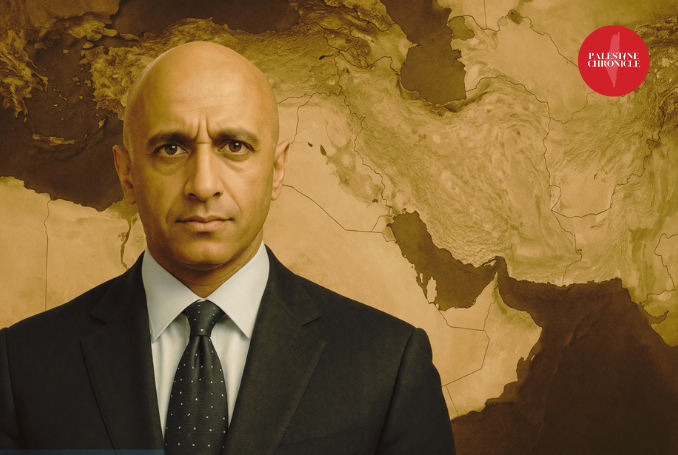

UAE openly rejects a ceasefire and calls for a decisive war outcome, aligning with continued pressure against Iran’s capabilities.
UAE Position Emerges
As the Trump administration appears to be seeking a way out of the Iran war, two regional actors continue to push in the opposite direction: Israel and the United Arab Emirates.
While Israel’s position of continuing the war has been clear from the outset, the Emirati stance has until now remained less explicit, often reflected through reports, diplomatic signals and unnamed officials suggesting support for escalation.
That position is now publicly articulated in a detailed article by UAE Ambassador to the United States Yousef Al Otaiba, published in The Wall Street Journal on March 25, 2026, offering one of the clearest official statements to date on Abu Dhabi’s view of the war.
In his article, Al Otaiba rejects the idea of ending the conflict through negotiation alone, writing that “a simple cease-fire isn’t enough,” and calling instead for “a conclusive outcome that addresses Iran’s full range of threats.”
War Beyond Ceasefire
Al Otaiba frames the war as part of a broader, long-standing confrontation, arguing that recent developments confirm what he describes as decades of concern regarding Iran’s role in the region.
“The past 3½ weeks of war have confirmed what we have known for nearly 50 years,” he wrote, describing Iran’s revolution as “a threat to global security and economic stability.”
The ambassador’s argument centers on the idea that the war must go beyond temporary de-escalation. He explicitly lists the areas that, in his view, must be addressed through continued pressure: nuclear capabilities, missile programs, drone warfare, regional alliances and maritime activity.
This framing places the UAE firmly within a camp advocating for a prolonged confrontation rather than a negotiated pause, emphasizing outcomes rather than immediate cessation of hostilities.
Economic Stakes Highlighted
A key component of the UAE’s position is the economic dimension of the war, which Al Otaiba presents as central to the conflict.
“We can’t let Iran hold the U.S., the United Arab Emirates and the global economy hostage,” he wrote, linking military developments directly to global economic stability.
According to the ambassador, Iranian actions extend beyond direct military engagement to include attacks on critical infrastructure and disruption of supply chains. He pointed to strikes on airports, seaports and energy facilities, as well as interference with shipments essential for manufacturing and agriculture.
Particular emphasis was placed on the Strait of Hormuz, a strategic maritime corridor through which a significant portion of global energy supplies passes. Al Otaiba argued that reopening and securing this route is essential, calling for coordinated international action to ensure its stability.
Frontline And Targeting
Al Otaiba also presents the UAE as a central target of Iranian military activity, highlighting both the scale and intensity of attacks directed at the country.
“Iran has launched more than 2,180 missiles and drones at the Emirates,” he wrote, adding that this figure exceeds attacks on any other country during the current conflict.
Describing the UAE as being “on the front line of this conflict,” he emphasizes the country’s proximity and exposure. At the same time, he highlights its defensive capabilities, noting that more than 95% of incoming threats have been intercepted.
The ambassador also stresses that the UAE did not seek this confrontation, pointing to diplomatic efforts undertaken prior to the outbreak of war. According to his account, Emirati officials engaged with both Tehran and Washington in an attempt to prevent escalation and made clear that UAE territory would not be used for attacks on Iran.
Strategy And Continuation
Beyond immediate military developments, Al Otaiba outlines a broader strategic vision that combines continued pressure on Iran with long-term economic resilience.
He states that while some of Iran’s capabilities have been weakened, “more needs to be done” to address remaining threats, particularly in relation to missiles and drones.
At the same time, he signals readiness to participate in international initiatives aimed at securing maritime routes, especially the Strait of Hormuz, reinforcing the UAE’s role in efforts to stabilize global energy flows.
The ambassador also emphasizes the UAE’s economic strategy, highlighting ongoing investments in sectors such as artificial intelligence, renewable energy and tourism. He underscores the country’s deep economic ties with the United States, including a $1.4 trillion investment commitment.
Concluding his argument, Al Otaiba rejects approaches based on containment or delay, warning that postponing confrontation would only lead to future crises. While stating that the UAE seeks a stable relationship with Iran, he makes clear that such a relationship, in his view, depends on fundamental changes in Iran’s regional conduct.
The article marks a significant moment in the public articulation of the UAE’s position, placing it clearly among those advocating for a continuation of the war until broader strategic objectives are achieved.
(The Palestine Chronicle)


“critical infrastructure and disruption of supply chains” — Al Otaiba, you are opening up a precedent. Beware, others may take advantage of your precedent. All your rage about Iran but not one word about the cause of the conflict: Israel. You sound like Trump and now UAE, on the Israel leash. Pathetic.