
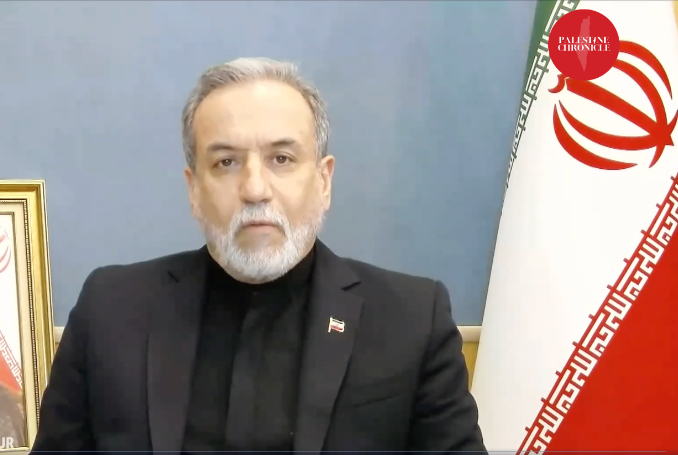

Iran says the US bears massive economic costs from war escalation while warning against threats to the Strait of Hormuz.
Key Developments
- Abbas Araghchi accuses the Pentagon of concealing the true financial costs of the war against Iran.
- Iranian foreign minister says Netanyahu’s actions have cost Washington $100 billion so far.
- Araghchi warns insecurity in Strait of Hormuz stems directly from US-Israeli military aggression.
Araghchi Rejects Pentagon Cost Claims
Iranian Foreign Minister Abbas Araghchi accused the US Department of Defense of misrepresenting the financial consequences of the recent war against Iran, arguing that the actual costs to Washington are far higher than publicly acknowledged.
In a post published on X, Araghchi said Israeli Prime Minister Benjamin Netanyahu had drawn the United States into a costly regional escalation that has already imposed approximately $100 billion in direct costs on Washington.
According to Araghchi, the figure is four times higher than the publicly stated estimates.
He added that indirect economic consequences for American households are even greater, claiming that the burden on US families has risen sharply as a result of the conflict.
“Israel First always means America Last,” Araghchi wrote.
Today is Persian Gulf Day in Iran, marking our ancestors' expulsion of Portuguese from Strait of Hormuz 400 years ago.
POTUS uses the correct term “Persian Gulf", not the Pentagon’s fake version. But calling Hormuz anything else is indeed a "terrible mistake". pic.twitter.com/KcGwj83W2B
— Seyed Abbas Araghchi (@araghchi) April 30, 2026
Warnings over Economic Fallout
The remarks came alongside analysis published by the website Resposible Statecraft, which warned that the US could suffer more severely from an oil shock than China, Russia, or the European Union.
According to the report, sharp increases in oil prices have historically preceded major economic recessions in the United States following World War II.
The analysis argued that rising gasoline prices force American consumers to reduce spending on other goods, creating broader economic contraction and intensifying inflationary pressures.
Higher transportation costs were also expected to drive up the prices of food, clothing, and essential goods.
Hormuz Tensions and Security Concerns
Araghchi also linked current instability in the Persian Gulf and the Strait of Hormuz directly to recent US-Israeli military actions against Iran.
During a phone call with Swiss Foreign Minister Ignazio Cassis, Araghchi said insecurity in the Gulf region is a direct consequence of military aggression and repeated ceasefire violations since early April.
He stressed that the United States and Israel must be held accountable for violating international law and the principles of the United Nations Charter.
Araghchi said the international community should recognize the broader regional and economic consequences resulting from the escalation.
For his part, Cassis reportedly reaffirmed Switzerland’s support for diplomacy aimed at ending the conflict and restoring stability.
The Pentagon is lying. Netanyahu's gamble has directly cost America $100b so far, four times what is claimed.
Indirect costs for U.S. taxpayers are FAR higher. Monthly bill for each American household is $500 and rising fast.
Israel First always means America Last. pic.twitter.com/onailLYFdL
— Seyed Abbas Araghchi (@araghchi) May 1, 2026
Dispute over Strait of Hormuz Naming
In separate remarks marking Iran’s ‘Persian Gulf Day’, Araghchi criticized US President Donald Trump over references to renaming the Strait of Hormuz.
The Iranian foreign minister mocked suggestions of referring to the waterway as the “Strait of Trump,” calling any attempt to alter the historical name “a terrible mistake.”
Araghchi emphasized the historical identity of the Persian Gulf and referenced the expulsion of Portuguese forces from the Strait of Hormuz by Iranians approximately 400 years ago.
“Calling Hormuz anything else is indeed a terrible mistake,” he wrote.
The remarks form part of a broader Iranian effort to frame recent developments as evidence of shifting regional dynamics following the war.
Iranian officials have increasingly emphasized Tehran’s strategic role in the Persian Gulf and its ability to influence maritime security and global energy flows through the Strait of Hormuz.
(PC, Al Mayadeen, Tasnim)



Americans are aware of their situation. It started almost 3 years ago.
But so many of them voted “him” – again? And would vote again and again …