By Ali Zafer
The motivations behind Yemen’s intervention are rooted in a combination of moral, strategic, and experiential factors.
Friends and foes alike have long speculated about Yemen’s role in the American-Israeli aggression against Iran, Lebanon, and Iraq. After weeks of calculated ambiguity, Sana’a has now provided a decisive answer—one that goes beyond expectations.
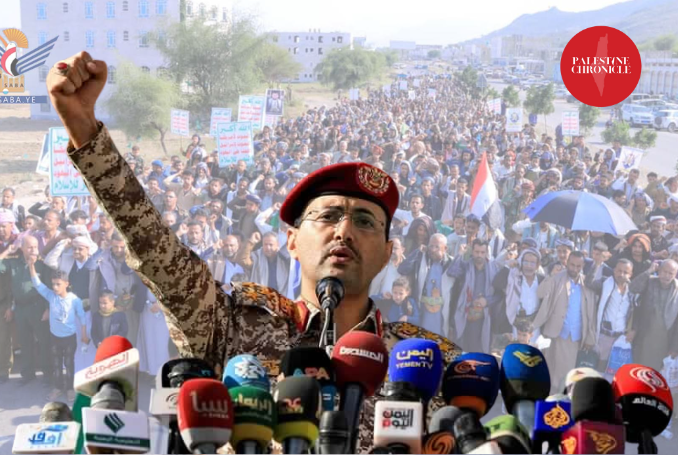
Only hours after the Yemeni armed forces outlined their red lines, they announced the launch of their first direct military support operation for Iran, Lebanon, and Iraq.
The announcement followed a major speech by Abdul-Malik Badr al-Din al-Houthi, delivered on the anniversary of the Saudi-American war on Yemen. In that speech, he reaffirmed Yemen’s firm position of solidarity with Iran, stressing that “the hand is on the trigger” in support of Iran, its forces, and its people.
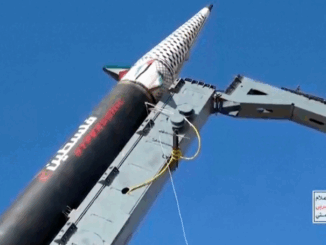
Within hours, that position translated into action. Yemeni forces launched ballistic missile strikes targeting sensitive Israeli military sites in southern occupied Palestine, describing the operation as part of a broader response to ongoing escalation. They emphasized that such operations will continue in the coming days until the aggression ends.
The timing of the intervention appears to have surprised many observers. Some analysts had expected Yemen to delay direct military engagement, particularly as its leadership had tied intervention to specific red lines. These included the expansion of alliances supporting US-Israeli operations against Iran, or the use of the Red Sea as a base for attacks on Iran or other countries in the region.
However, a third red line appears to have been overlooked. Yemeni forces had already signaled readiness for direct intervention if escalation continued in a manner dictated by the evolving military landscape. The latest strikes fall clearly within that framework.
At the same time, Yemeni messaging has been carefully calibrated. Officials have stated that their operations target only American and Israeli forces, not Muslim populations. Yet, they also issued a subtle warning to Saudi Arabia, cautioning against any further tightening of the siege on Yemen. This warning reflects the broader regional context and Riyadh’s potential role in ongoing alignments.
Yemen’s direct military entry marks a significant shift. It moves beyond the previously articulated concept of “unity of arenas”—a framework rooted in political and ideological alignment—toward a more comprehensive “unity of fronts,” defined by coordinated military engagement across multiple theaters.
This shift reflects a deeper strategic calculation. Sana’a’s leadership has consistently rejected what it describes as a “strategy of permissiveness,” arguing that the current phase of conflict is existential in nature. From this perspective, the US-Israeli campaign is not limited to Iran, but represents a broader regional threat tied to long-term geopolitical restructuring, including projects often described as reshaping the Middle East.
Against this backdrop, Yemen appears to be operating with a range of calculated options developed through prior experience.
One of these is direct strikes on Israeli targets. The recent missile and drone operations demonstrate both capability and intent, signaling that Yemen is prepared to extend its operational reach beyond its immediate geographic environment.
Another key option lies in the maritime domain. Yemen has repeatedly demonstrated its ability to influence strategic waterways, including the Red Sea, Bab al-Mandab, and surrounding maritime corridors. Activation of this front, however, appears conditional. It may depend on whether the conflict expands further, particularly through broader regional or international participation, or through increased use of maritime routes for military operations against Iran.
The motivations behind Yemen’s intervention are rooted in a combination of moral, strategic, and experiential factors.
From a moral standpoint, Yemeni leadership frames its actions as a duty to oppose aggression and support allied forces in Iran, Lebanon, Iraq, and Palestine. This position is presented not as sectarian or emotional, but as grounded in broader ethical and religious principles.
Strategically, Yemen views the current conflict as a turning point. The threat, in this perspective, is not confined to Iran but extends across the region, with implications for multiple states. This reading aligns with statements from various officials in Washington and Tel Aviv regarding long-term regional restructuring.
At the same time, Yemen’s approach is shaped by its own experience. Years of war—including the Saudi-led campaign and subsequent confrontations involving US and British forces—have reinforced a model of gradual escalation, resilience, and adaptive military strategy. This experience appears to inform current decision-making, including the pacing and scope of intervention.
Yemen’s entry into the conflict is therefore not symbolic. It reflects a deliberate shift toward coordinated military engagement alongside allied actors, reinforcing what its leadership describes as a unified front against a common threat.
At the same time, this development signals a widening of the conflict’s scope. Rather than containing escalation, continued military pressure risks expanding the number of active fronts and actors involved.
In this context, Yemen’s intervention underscores a broader reality: the conflict is no longer confined to isolated arenas, but is increasingly shaped by interconnected fronts, shared calculations, and evolving regional dynamics.
(This article was first published in Al Mayadeen. It was translated and edited by the Palestine Chronicle)