The Civil Defense Authority says it has received more than 2,500 calls for help in the past 24 hours from displaced people whose tents were flooded by the storm.
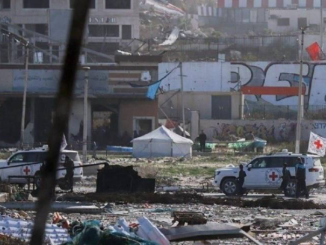
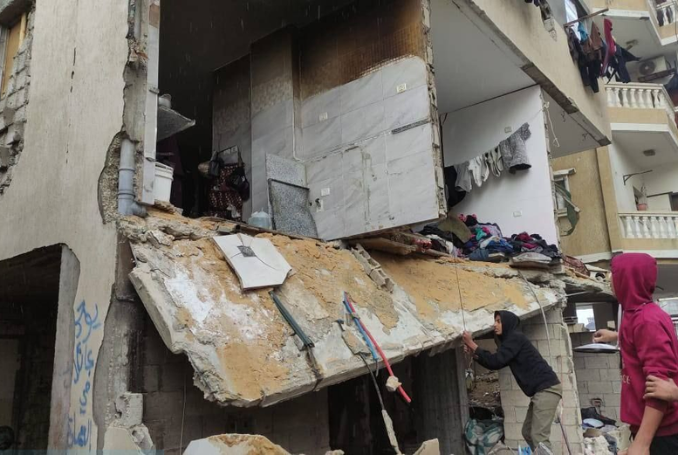
Three buildings, already damaged by previous Israeli bombardment, collapsed on Thursday in different parts of Gaza City after heavy rains battered the Gaza Strip.
The Civil Defense authority reported that the buildings were housing a number of Palestinians who had sought refuge there due to a lack of alternative housing. No injuries were reported, according to Al-Jazeera Arabic.
A four-story building in Gaza, already damaged by previous Israeli bombardment, collapsed today amid heavy rains and severe storm conditions. pic.twitter.com/vW6kflwBoY
— The Palestine Chronicle (@PalestineChron) December 11, 2025
The authority warned of the dangers of further collapses of damaged and dilapidated buildings where displaced families have taken shelter, as a heavy storm batters the Strip, causing soil erosion and further cracking in walls and columns already damaged by shelling.
The Civil Defense also reported that in the past 24 hours, it received more than 2,500 calls for help from displaced people whose tents were flooded by the storm.
At least 761 sites hosting around 850,000 displaced Palestinians are at risk of flooding, according to the Norwegian Refugee Council humanitarian organization.
Infant Freezes to Death
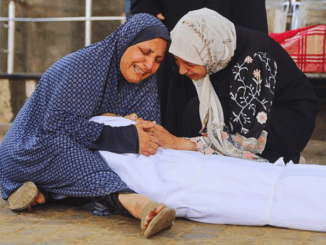
Earlier on Thursday, Gaza’s Health Ministry confirmed the death of an eight-month-old baby girl due to the extreme cold in a displacement camp in Khan Younis, southern Gaza Strip.
A severe winter storm has devastated displacement camps across Gaza, killing a nine-month-old girl and leaving over 250,000 families exposed to flooding, extreme cold, and worsening humanitarian conditions under continued blockade.https://t.co/lf4XlEYmW9 pic.twitter.com/LyeJWbSYKj
— The Palestine Chronicle (@PalestineChron) December 11, 2025
As the storm intensified since dawn on Wednesday, thousands of tents housing displaced people in various parts of the Gaza Strip were flooded following torrential downpours. The storm is expected to continue until Friday evening.
This storm comes at a time when displaced people are already living in dire conditions due to the lack of basic necessities, limited access to essential supplies, and the decline in vital services caused by the Israeli blockade.
‘New Hardships’ – UNRWA
The United Nations Relief and Works Agency for Palestine Refugees (UNRWA) warned that the Winter rains once again are “bringing new hardships.”
The UN agency said flooded streets and soaked tents “are making already dire living conditions even more dangerous,” with cold, overcrowded, and unsanitary environments heightening the risk of illness and infection.
In #Gaza, “the sewer system has collapsed completely. There are lakes of untreated sewage, and people are living amongst this,” our @UN_JWFowler tells @TRTWorld.
UNRWA teams continue to clear waste, pump sewage, and provide healthcare to displaced families under extreme… pic.twitter.com/m9cPYp7ih7
— UNRWA (@UNRWA) December 11, 2025
“This suffering could be prevented by unhindered humanitarian aid, including medical support and proper shelter. That would help families face winter in safety and dignity,” it stressed.
‘Trickle of Shelter Supplies’
The Norwegian Refugee Council reported that “only a trickle of shelter supplies” has entered Gaza, two months after the US-brokered ceasefire came into effect.
“Due to severe restrictions, UN and international aid organisations have only been able to bring in 15,600 tents for 88,000 people, while 1.29 million still need shelter to survive the winter,” the humanitarian organization said on X.
Two months since the ceasefire, only a trickle of shelter supplies has entered #Gaza.
Due to severe restrictions, UN and international aid organisations have only been able to bring in 15,600 tents for 88,000 people, while 1.29 million still need shelter to survive the winter.
— Norwegian Refugee Council (@NRC_Norway) December 10, 2025
The Council emphasized that international aid organisations “remain blocked from bringing in relief and nearly 4,000 pallets of shelter materials have been rejected.”
Gaza “urgently needs heavy machinery, tools and shelter items to prevent catastrophic flooding,” it said.
Hamas Urges Mediators to Intervene
The Palestinian Resistance movement Hamas said it held Israel responsible for the worsening humanitarian situation in the Gaza Strip, asserting that preventing the entry of essential shelter materials has exacerbated the suffering of hundreds of thousands of displaced people, Al-Jazeera Arabic reported.
“Israel’s reneging on its commitments under the ceasefire agreement, particularly regarding the humanitarian protocol and the entry of shelter materials, has led to a deterioration of the humanitarian situation with the onset of winter,” the movement reportedly said in a statement.
Amid the cold and heavy rain, displaced Palestinians endure harsh conditions in tents across the Gaza Strip after their homes were destroyed during the Israeli genocide on Gaza. pic.twitter.com/4qv761UL6I
— Quds News Network (@QudsNen) December 11, 2025
Hamas called on the mediators and the guarantor states of the ceasefire agreement to “take urgent action and pressure Israel to allow the entry of shelter materials without restrictions and to open the Rafah crossing in both directions, in accordance with the terms of the agreement.”
Most of the displaced are taking shelter in damaged tents, the report noted.
Dire Lack of Tents
The Government Media Office in Gaza estimated at the end of September that approximately 93 percent of the tents in the Gaza Strip were no longer habitable, amounting to 125,000 out of 135,000 tents.
Despite the ceasefire taking effect on October 10, the living conditions of Palestinians in Gaza have not improved due to the severe restrictions imposed by Israel on the entry of aid trucks, thus violating the humanitarian protocol of the agreement.
Displaced Palestinians in Gaza are enduring harsh, worsening conditions as rain pours into their fragile tents, leaving families cold, soaked, and with nowhere safe to turn. pic.twitter.com/rwfGGVMWDr
— Quds News Network (@QudsNen) December 11, 2025
Over the course of nearly two years of the war, tens of thousands of tents were damaged by Israeli bombing, which directly hit them or targeted their surroundings. Some also deteriorated due to the seasonal elements, such as the intense summer heat and winter storms, the report noted.
In an advisory opinion issued in October 2025, the International Court of Justice (ICJ) ruled that Israel is obliged to ensure that the Gaza population has “the basic needs” essential for survival in accordance with international humanitarian law. In its ruling, the court said it was “of the opinion that the State of Israel, as an occupying Power, is required to fulfill its obligations under international humanitarian law.”
(PC, AJA, Anadolu)