
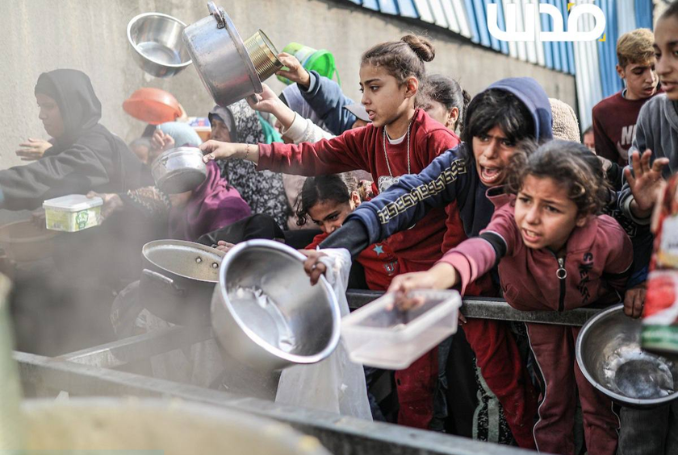

More than two months after the ceasefire, Gaza remains gripped by forced displacement, hunger, and collapsing health services, as aid restrictions prevent any meaningful humanitarian relief.
The humanitarian situation in the Gaza Strip continues to deteriorate more than two months after the ceasefire came into effect, with forced displacement ongoing and living conditions steadily worsening, according to Amjad al-Shawa, director of the Palestinian NGO Network in Gaza.
Speaking to Al-Jazeera, al-Shawa said Israeli forces have confined hundreds of thousands of Palestinians to just 41 percent of Gaza’s territory—less than 100 square kilometers—under increasingly harsh conditions. More than half a million people have been rendered homeless, while thousands of others are living among the ruins of their destroyed homes.
Severe shortages of essential supplies, soaring prices, and the collapse of livelihoods have left around 90 percent of Gaza’s population unable to meet their basic needs, al-Shawa said. The humanitarian crisis is further compounded by mounting health risks linked to widespread waste accumulation and the destruction of water and sewage infrastructure.
Although Israel has permitted limited aid to enter the Strip, al-Shawa stressed that it has failed to produce any meaningful improvement on the ground. He attributed this to strict restrictions on the types of materials allowed in, which continue to widen the gap in basic needs and prevent any real recovery.
One Killed in Beit Lahia Drone Strike as Ceasefire Violations Continue
Only minimal quantities of essential goods—particularly food, hygiene, and sanitation supplies—are being allowed through, he said. Meanwhile, continued displacement and overcrowded shelter conditions have accelerated the public health crisis, including rising rates of malnutrition, which al-Shawa linked in part to declining hygiene standards.
Local traders are receiving no more than 20 percent of the fresh fruits, vegetables, and protein required to meet population needs. These limited imports are further burdened by high coordination and import fees, driving prices beyond the reach of most families.
Israel has so far refused to allow the entry of basic protein sources, eggs, and fresh produce as free humanitarian aid, a policy al-Shawa warned is having particularly severe consequences for children and pregnant women.
There has also been no qualitative improvement in the aid reaching Gaza. Al-Shawa said the occupation has increased the number of trucks entering the Strip while continuing to block higher-quality and nutritionally adequate assistance—a policy that the United Nations has warned could lead to a catastrophic humanitarian scenario within months.
UN reports indicate that 77 percent of Palestinians in Gaza are trapped in a constant cycle of hunger, while 90 percent go entire days without regular access to food. Due to prolonged deprivation, 70 percent of children are now born prematurely and underweight, with roughly 100,000 children and thousands of pregnant women facing the risk of acute malnutrition.
According to the World Health Organization, only nine of Gaza’s 36 hospitals that were operational before the war remain partially functioning.
(PC, AJA)



Be the first to comment