
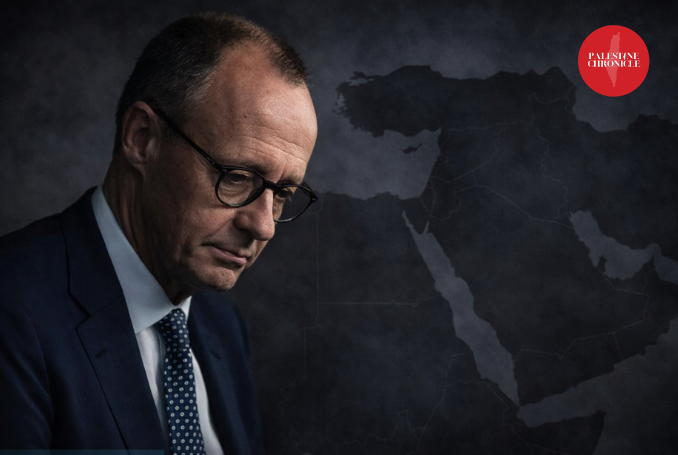
Germany faces halved growth risk as the Iran war disrupts energy flows, while the global economy absorbs widening systemic shocks.
Key Developments
- Germany’s projected growth could fall from 1% to 0.5% amid a prolonged Iran war and energy disruption.
- Putin warns Middle East conflict is already damaging global industries and logistics on a COVID-scale level.
- Hormuz tensions, selective tanker access, and gold volatility highlight widening instability across global markets.
German Growth Shock
German officials are increasingly concerned that the country’s economic recovery could be derailed as the US-Israeli war on Iran continues, with internal estimates pointing to a sharp slowdown in growth.
According to projections cited by Bloomberg, Germany’s economy could expand by just 0.5% in 2026 in a worst-case scenario—half the previously expected 1% growth rate.
Even under less severe conditions, where elevated oil and gas prices persist without further escalation, growth is expected to remain weak, ranging between 0.6% and 0.7%.
These projections reflect growing concern over energy supply disruptions linked to the war, particularly as Europe’s largest economy remains heavily exposed to fluctuations in global energy markets.
The impact is not limited to a single year. Internal estimates suggest that growth in 2027 could also be affected, declining slightly to around 1.2%.
Budget Crisis Berlin
The deteriorating outlook presents a significant challenge for Chancellor Friedrich Merz’s government, which had been relying on signs of recovery following years of stagnation.
Germany’s economy had shown early indications of improvement, supported by increased public investment. However, the outbreak of war has disrupted that trajectory and introduced new uncertainty.
The government is now facing a projected budget gap of up to €140 billion by 2029, prompting negotiations over structural reforms aimed at restoring competitiveness and stabilizing finances.
Weaker economic growth is expected to reduce tax revenues, intensifying fiscal pressure. Berlin is already planning spending cuts of €20 billion next year and €60 billion by 2028.
At the same time, domestic political pressure is mounting. The far-right Alternative fuer Deutschland is gaining ground amid public frustration over the economic situation and is polling at levels comparable to the ruling bloc.
Most Americans Say Iran War ‘Has Gone Too Far’, AP-NORC Poll Finds
Putin Supply Chains Warning
Russian President Vladimir Putin warned that the economic impact of the Middle East crisis could reach levels comparable to the COVID-19 pandemic, which slowed global development across all regions.
Speaking at a major economic forum in Moscow, Putin said the war is already causing “significant damage” to international production and logistics chains, affecting key sectors including hydrocarbons, metals and fertilizers.
He indicated that entire industries linked to extraction, processing and industrial output are under pressure, as supply disruptions ripple across global markets.
Putin also cautioned against short-term economic opportunism driven by rising oil prices. He warned that governments and companies could be tempted to exploit higher revenues but stressed that market conditions remain volatile and could reverse quickly.
He called for what he described as “moderate conservatism” in fiscal policy, emphasizing the need for stability amid uncertainty. He also highlighted the importance of economic sovereignty, stating that countries must maintain control over their financial, logistical and industrial systems to withstand global shocks.
Beyond Russia, the broader European outlook is also weakening. The European Central Bank has already lowered growth projections, while Italy is expected to cut its 2026 forecast to as low as 0.5%.
US Weighs Diverting Ukraine Weapons to Middle East as Iran War Drains Stockpiles
No Hostile States
At the center of the economic fallout is the disruption of global energy routes, particularly through the Strait of Hormuz, a critical artery for oil and gas supplies.
Iran has maintained control over transit through the strait, allowing passage for countries it considers non-hostile while restricting access for others.
Bangladesh is among the countries continuing to receive access. Officials in Dhaka confirmed that tankers bound for the country are not subject to restrictions, as it is not considered a hostile state. Coordination with Tehran has allowed continued transit despite the broader disruption.
The development is particularly significant given Bangladesh’s heavy reliance on energy imports routed through Hormuz, including oil and liquefied natural gas from Gulf countries.
At the same time, global financial markets are reflecting heightened uncertainty. Gold prices have declined sharply, falling below $4,500 per ounce and extending losses amid ongoing volatility linked to the conflict.
The drop in gold—traditionally considered a safe-haven asset—comes as rising energy prices and inflation expectations reduce its appeal, further underscoring the broader instability affecting global markets.
(PC, Anadolu, Bloomberg, Russian Media)

Obviously this is a proxy war, and they’re not even trying to hide it.
What if the ” war on Iran ” is a false flag; ( like the one on October 7, 2023 )
an intentional strategy just to cause disruptions all over the world so America can save the day, while the Israeli Jewish Nazis kill more Semites?
We’ve seen this before.
Kill a lot of people, because…terrorists-
based on zero proof. the world reacts, everyone says, ” F#ck those terrorists ” sound familiar?