
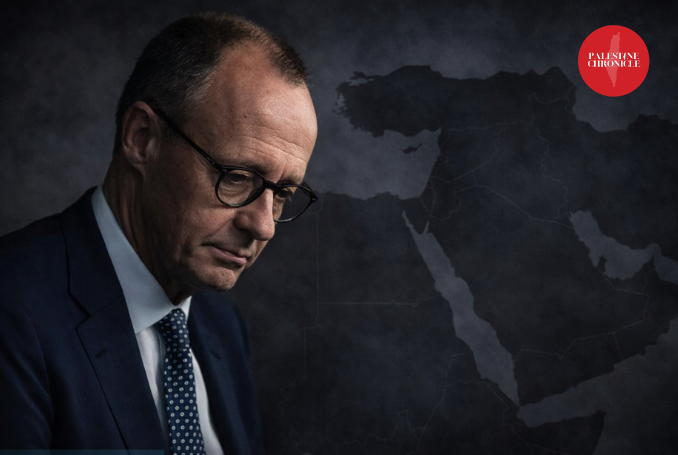

Merz warns US lacks strategy in Iran war, prompting Trump rebuke amid rising transatlantic tensions and economic fallout.
Key Developments
- Friedrich Merz says US is being “humiliated” by Iran in negotiations.
- Merz warns Washington lacks a clear strategy or viable exit from the conflict.
- Donald Trump rebukes Merz, falsely claiming he supports Iran obtaining nuclear weapons.
Merz Warns of Strategic Failure
German Chancellor Friedrich Merz said the United States is struggling in both the military and diplomatic dimensions of the Iran war, warning that Washington lacks a clear strategy.
According to Financial Times, Merz said the US had entered the conflict “without any strategy” and had “no truly convincing strategy in the negotiations either.”
He added that Iran’s leadership was effectively outmaneuvering Washington. “The Iranians are obviously negotiating very skilfully — or simply very skilfully not negotiating,” he said, warning that “a whole nation is being humiliated.”
Merz also stressed that he does not see any realistic exit from the war in the near term.
Merz linked the conflict directly to worsening economic conditions in Germany, noting that the war is “costing us a lot of money” and undermining growth.
As reported by Deutsche Welle, he warned that conflicts without clear exit strategies risk long-term consequences, drawing parallels to US wars in Afghanistan and Iraq.
He also noted that Iran appears “stronger than expected,” further complicating efforts to bring the war to an end.
Trump Rebukes Merz
US President Donald Trump responded sharply to Merz’s remarks, criticizing the German leader in a post on Truth Social, according to Reuters.
Trump claimed that Merz “thinks it’s OK for Iran to have a nuclear weapon,” a statement that misrepresented the German chancellor’s position.
Merz has consistently maintained that Iran must not obtain nuclear weapons.
The exchange highlights growing friction between Washington and European allies over the handling of the Iran war.
While Germany has expressed willingness to support international efforts—such as maritime security operations in the Strait of Hormuz—Merz has made clear that any such role would depend on a ceasefire.
At the same time, the economic fallout and lack of progress toward a diplomatic resolution are increasing pressure within Europe, raising questions about the long-term trajectory of the conflict and Western coordination.
(PC, Financial Times, Deutsche Welle, Reuters)


Be the first to comment