
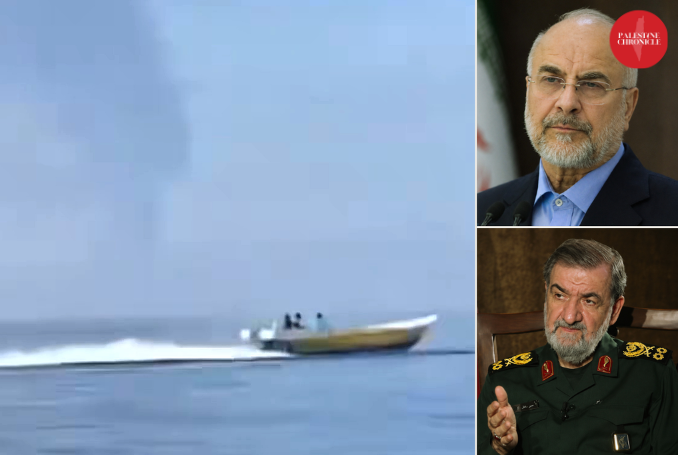

Iran said a tanker hit a mine in Hormuz as Tehran disputed reports of talks and Baghdad pressed for de-escalation.
Key Developments
- Iran reported a tanker fire in Hormuz. Separate maritime reports came from off Oman and in UAE waters.
- Ghalibaf warned against a new attack, while Rezaei denied that negotiations with Washington were underway.
- Baghdad said Prime Minister Ali al-Zaidi’s Tehran visit was aimed at narrowing differences between Iran and the US.
Iran’s Islamic Revolutionary Guard Corps Navy said Tuesday that an oil tanker exploded and caught fire after striking a naval mine in the eastern Strait of Hormuz, Iranian state broadcaster IRIB reported.
The IRGC Navy described it as the third tanker incident and said the vessel had attempted to use a route Iran had not authorized. It did not identify the tanker or disclose whether anyone had been injured.
In a separate report, UK Maritime Trade Operations said a tanker was hit by an unidentified projectile off Oman on Tuesday. The crew was safe, and no environmental damage had been reported.
The agency did not name the vessel or identify who was responsible.
ADNOC Logistics & Services also reported that one of its vessels was damaged in an attack in UAE territorial waters.
The company said response teams were working at the scene but did not identify the vessel or attribute the attack.
The reports did not establish a link between the incidents.
Two Oil Tankers EXPLODE in Strait of Hormuz, One After Hitting a NAVAL MINE
Iran’s IRGC Navy reports one SUPERTANKER struck a mine, while a second tanker, allegedly escorted by U.S. fighter jets, caught fire attempting an unauthorized passage.
Both vessels reportedly DISABLED… pic.twitter.com/oMFnnyqCzB
— Ryan Rozbiani (@RyanRozbiani) November 10, 2026
Ghalibaf Warns Against Attack
As tensions mounted in the Strait of Hormuz, Iranian Parliament Speaker Mohammad Bagher Ghalibaf said the unveiling of a new missile facility was intended as a warning against a renewed attack.
“This time, the armed forces of the Islamic Republic of Iran will determine the geography of the war,” Ghalibaf said, according to Al Mayadeen. He warned that Iran would respond swiftly if attacked.
Iran has struck a US radar/navigation site on Oman's Didamar Island in the Strait of Hormuz used to facilitate illegal smuggling through the Strait of Hormuz, and satellite imagery showed no ship traffic in the strait afterward. pic.twitter.com/DuVkAOflxB
— Seyed Mohammad Marandi (@s_m_marandi) November 10, 2026
Tehran Awaits Reply
Iranian Supreme National Security Council Secretary Mohsen Rezaei told Al Mayadeen that Tehran had conveyed seven conditions to Washington but had yet to receive a clear answer. He described the initial US reply as insufficient.
Rezaei denied that negotiations were underway or that a meeting had taken place in Qatar.
He also dismissed reports of plans for him to meet US Vice President JD Vance.
Rezaei said the Strait of Hormuz would remain closed until Iran’s conditions were met.
Tehran’s stated demands include lifting sanctions, ending the US naval blockade and releasing frozen Iranian assets. Washington has insisted that any agreement address Iran’s nuclear program.
Diplomatic contacts continued. US President Donald Trump met Qatari Prime Minister and Foreign Minister Mohammed bin Abdulrahman Al Thani at the White House to discuss efforts to end the conflict.
Israel is Trying to Drag the US Into an ‘Endless War’ With Iran, Ghalibaf Warns
Baghdad Pursues Mediation
Iraqi Foreign Minister Fuad Hussein said Tuesday that Prime Minister Ali al-Zaidi’s previously unannounced visit to Tehran last Friday was part of an effort to bring Iran and the US closer to a settlement.
Iranian media reported that al-Zaidi met President Masoud Pezeshkian and Ghalibaf during the visit.
The trip came a day after al-Zaidi spoke by phone with Trump about regional developments and security, according to an Iraqi statement.
Speaking to the Iraqi News Agency on the sidelines of the Paris Peace Forum, Hussein said the closure of the Strait of Hormuz had hurt Iraq’s economy and warned that continued instability would affect global energy markets.
He has proposed that a group of regional foreign ministers visit Tehran and Washington to press for de-escalation.
The US and Israel launched attacks on Iran on February 28. Washington and Tehran signed a memorandum in June, but disputes over sanctions, the naval blockade and navigation through Hormuz have prevented a lasting settlement.
(PC, Al Mayadeen, Anadolu, IRIB, INA)




Be the first to comment