Israeli airstrikes and artillery attacks continue across Gaza despite a ceasefire, as a child dies from meningitis amid warnings of a wider health catastrophe under siege.
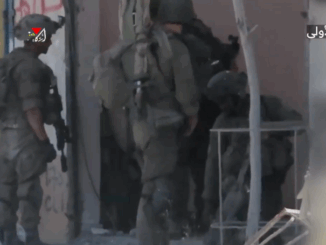
Smoke rose over parts of the Gaza Strip on Wednesday as Israeli warplanes and artillery targeted multiple areas in central and southern Gaza, according to Palestinian media.
Israeli artillery and heavy tank fire struck areas east of Khan Yunis in southern Gaza since dawn, while fighter jets carried out three airstrikes on empty homes in areas still under Israeli military occupation east of Deir al-Balah in central Gaza.
In northern Gaza, at least two powerful explosions were reported in Jabaliya after Israeli forces conducted demolition operations inside areas they continue to occupy, according to local sources and eyewitnesses.
Israeli artillery also shelled eastern neighborhoods of Gaza City, while military vehicles stationed east of the city opened machine-gun fire toward the area.
Since the ceasefire agreement came into effect, ongoing Israeli violations have killed 486 Palestinians and wounded 1,341 others.
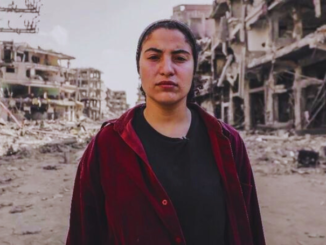
The agreement was meant to end Israel’s genocidal war on Gaza, launched on October 7, 2023, which lasted two years and killed more than 71,000 Palestinians, wounded over 171,000, and destroyed nearly 90 percent of Gaza’s civilian infrastructure. The United Nations has estimated reconstruction costs at approximately $70 billion.
Gaza Health Releases New Devastating Numbers, Warns Health System Near Collapse
Meningitis Spreads
On the humanitarian front, Gaza’s Ministry of Health announced the death of a child from meningitis, locally known as spinal fever, amid worsening health conditions in displacement camps.
Dr. Ahmed al-Farra, director of the Pediatric Hospital at Nasser Medical Complex in Khan Yunis, said six meningitis cases were recorded over the past two days, including the death of a young girl, Eileen Asfour, after her condition rapidly deteriorated.
Dr. al-Farra warned of a serious risk of disease spreading in overcrowded displacement camps, citing extreme congestion, poor sanitation, and the collapse of basic health services.
Meanwhile, Dr. Mohammed Abu Salmiya, director of Gaza’s al-Shifa Medical Complex, said the health situation in the enclave has reached its worst point since the beginning of the genocide.
More than 70 percent of essential medicines, including life-saving drugs, have run out due to the ongoing siege and restrictions on medical supplies, he said.
Hospitals are operating at minimal capacity, while the number of patients continues to rise amid the spread of epidemics and seasonal viruses that have claimed the lives of children and elderly people in recent days.
Abu Salmiya said medical staff continue working despite direct targeting, noting that approximately 1,600 healthcare workers have been killed and hundreds detained. He stressed that “humanitarian duty toward our people” remains the sole reason staff continue under such conditions.
He called for urgent international pressure to allow the entry of medicines and medical supplies, warning that more preventable deaths will occur if border crossings remain closed after more than two years of continuous war.
Exposed – How the UAE Became Central to Gaza’s Concentration Camp Plot
Currently, Gaza’s health sector is operating through only 16 partially functioning hospitals, while 22 hospitals have been destroyed. Additionally, 103 primary healthcare centers have been rendered inoperable, depriving hundreds of thousands of basic medical care.
Israel’s attacks have also devastated emergency services, with 211 ambulances damaged or destroyed, 25 of 35 oxygen generation stations knocked out, and 90 percent of blood supplies depleted to zero, threatening the lives of patients in emergency and intensive care units.
(AJA, PC, AA, Palestinian Media)