
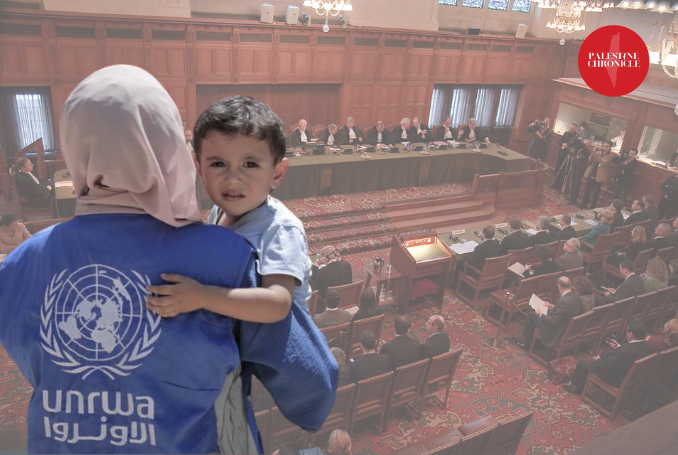

Israeli strike kills Palestinian in Gaza as UNRWA collapse deepens and Netherlands advances genocide arguments at ICJ.
Key Developments
- Palestinian killed in Israeli strike in Gaza amid continued attacks despite ceasefire.
- UNRWA chief says agency has been “crushed” following sustained Israeli actions.
- The Netherlands tells the ICJ that starvation and aid obstruction may indicate genocidal intent.
Deadly Strike
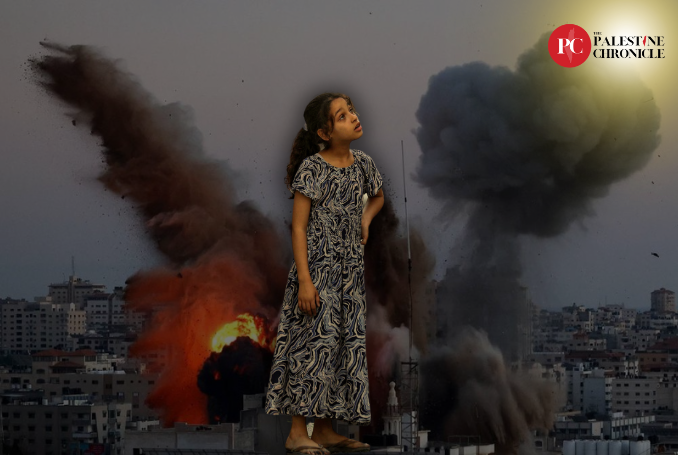
A Palestinian civilian was killed and several others were injured on Sunday in an Israeli strike targeting a gathering of residents in Gaza City, according to medical sources.
The attack hit civilians in the Sheikh Radwan area in the northern Gaza Strip. The latest casualties come despite a ceasefire agreement announced on October 10, 2025.
According to Gaza’s Health Ministry, at least 677 Palestinians have been killed and 1,813 injured since the ceasefire took effect.
The broader war has killed more than 72,000 Palestinians and injured over 171,000 since October 2023, with large-scale destruction reported across the Gaza Strip. Around 90 percent of Gaza’s civilian infrastructure has been damaged or destroyed during the course of the war.
UNRWA Under Fire
As attacks continue on the ground, the head of the United Nations Relief and Works Agency (UNRWA), Philippe Lazzarini, has warned that the agency has been systematically dismantled.
“It is incomprehensible that a UN entity has been allowed to be crushed as Unrwa has, in violation of international law,” Lazzarini wrote in an article published in The Guardian, adding that this has taken place “with total impunity.”
Lazzarini described unprecedented losses among UNRWA personnel. “In my 35 years of working in complex emergencies, I had never had cause to report the killing of 130 personnel,” he wrote. “I did not imagine then that the number of colleagues killed would triple.”
According to his account, more than 390 UNRWA staff members have now been killed since the beginning of the genocide, with many others injured, detained, or subjected to abuse.
He also reported widespread destruction of the agency’s infrastructure. “Hundreds of UNRWA premises in Gaza have been damaged or destroyed,” he stated, pointing to the scale of damage inflicted on facilities providing essential services.
Lazzarini further detailed measures taken against the agency beyond Gaza. He said Israeli authorities adopted legislation aimed at ending UNRWA’s presence in occupied East Jerusalem, including the forced closure of schools and health clinics and the cutting of water and electricity supplies.
He noted that UNRWA’s headquarters in East Jerusalem was “seized, looted and set on fire,” adding that the destruction was publicly celebrated by Israeli officials. “A deputy mayor of Jerusalem even threatened to ‘annihilate and kill all members of UNRWA’,” he wrote.
According to Lazzarini, the targeting of UNRWA has been accompanied by efforts to undermine its credibility. He described “a well-orchestrated disinformation campaign by the Israeli government” that includes “malicious assertions” about the agency’s neutrality and operations.
He stressed that such claims “have been repeatedly debunked,” and warned that their purpose is to erode international support for UNRWA and weaken Palestinian rights.
Lazzarini said that eliminating the agency has effectively become “an explicit objective of the war in Gaza,” adding that the consequences extend beyond the immediate humanitarian crisis.
“Without immediate and robust political and financial support, the agency will soon reach the end of its viability,” he warned, cautioning that a collapse of UNRWA would have serious implications for Palestinian refugees across the region.
He added that such a collapse would shift responsibility for essential services onto Israel as the occupying power and place additional strain on host countries, while deepening the humanitarian situation faced by Palestinians.
Palestinians Injured, Homes Burned – Illegal Settlers Escalate Rampage Across West Bank
ICJ Case Advances
Meanwhile, at the International Court of Justice, the Netherlands has submitted its intervention in the genocide case filed by South Africa against Israel, outlining its interpretation of acts that may constitute genocide and how intent should be assessed.
According to details reported by Anadolu Agency, the Dutch submission focuses on how specific patterns of conduct, including starvation and obstruction of aid, may be used to determine genocidal intent.
In its filing, the Netherlands stated that “acts of genocide could take the form of starvation and the deliberate withholding of humanitarian aid,” adding that such actions “may play a significant role in determining genocidal intent.”
The Dutch filing emphasized that acts creating conditions of life leading to destruction do not need to cause immediate death. Instead, it argued that such acts must be “calculated to lead to the eventual physical destruction of the group.”
It further noted that this standard does not require proof that destruction has already occurred, but rather that the conditions imposed are intended to bring about such an outcome.
The Netherlands also addressed forced displacement, stating that it “may correspond to or lead to one of the underlying acts of genocide” and may serve as evidence of specific intent.
According to the submission, forced displacement can result in “serious bodily or mental harm” and may create living conditions that threaten the survival of a group, in line with provisions outlined in the Genocide Convention.
Top Court Blocks Israel’s NGO Closure Order, but Gaza Aid Restrictions Continue
Particular emphasis was placed on the impact of such acts on children. The Netherlands argued that “a lower threshold should apply” when assessing harm in cases involving children, given their specific vulnerabilities.
It added that “the targeting of children may serve as evidence of genocidal intent” and should be considered when determining whether acts amount to the destruction of a group.
The submission also highlighted patterns of conduct, stating that coordinated or repeated actions—such as restrictions on humanitarian aid—should be evaluated collectively when determining intent.
The Netherlands noted that the prohibition of genocide is a peremptory norm of international law and that all states have a shared interest in ensuring compliance with the Genocide Convention.
Its intervention forms part of a broader set of submissions by multiple countries in the case initiated by South Africa in December 2023, which alleges violations of the Genocide Convention in Gaza.
Proceedings at the International Court of Justice continue in the case brought by South Africa, which accuses Israel of committing genocide in Gaza.
The court has already issued multiple provisional measures ordering Israel to prevent acts of genocide and ensure the delivery of humanitarian aid to Palestinians. Despite these legally binding measures, conditions on the ground have continued to deteriorate, with ongoing attacks, restrictions on aid, and widespread destruction reported across Gaza.
The case remains ongoing as states continue to submit their positions and the court reviews evidence related to the conduct of the war in Gaza.
(Anadolu, Guardian, PC, Palestinian Media)


Everything must be done to protect Israel.