WSJ reports that Israel is covertly backing Palestinian militias in Gaza to target Hamas, providing intelligence and military support.
Israel has been quietly supporting newly formed Palestinian militias in the Gaza Strip to fight Hamas, providing intelligence, logistical assistance, and military backing, according to a report published by The Wall Street Journal on Friday.
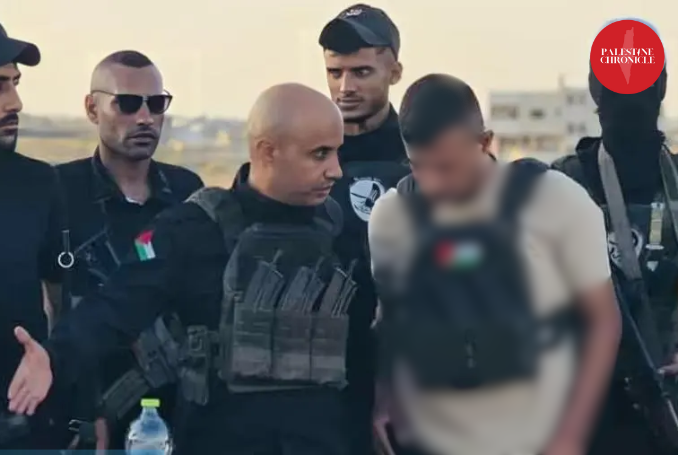
The report said Israel’s reliance on these militias was highlighted earlier this month when Hussam al-Astal, a leader of one such group, publicly claimed responsibility for the killing of a Hamas-affiliated police official in territory nominally under Hamas control. In a video message, al-Astal warned that further attacks were planned.
“We say to Hamas and everyone affiliated with Hamas: Just as we reached him, we will come for you, too,” al-Astal said in the video, while holding an assault rifle, according to the Journal.
According to Israeli officials and military reservists cited by the Journal, Israel has provided the militias with air support from drones, shared intelligence, and supplied weapons, food, and cigarettes. Some wounded militia members have reportedly been airlifted to Israeli hospitals for treatment.
The report said that the militias operate from areas of Gaza under Israeli military control, allowing them to enter parts of Hamas-controlled territory that Israeli troops are barred from accessing under the terms of the ceasefire agreement, including al-Mawasi.
The Palestinian resistance movement Hamas has accused the militias involved in the killing of the police official of acting as “agents of the Israeli occupation,” while warning that collaboration with Israel would carry severe consequences.
“The price of betrayal is heavy and costly,” Hamas said in a statement cited by the Journal.
Al-Astal denied receiving direct Israeli assistance beyond food, claiming his group acted independently. In a phone interview with the Journal, he said the targeted police official had obstructed people attempting to reach the militia.
“He was harming us—anyone who tried to reach us was shot at or arrested,” al-Astal said. “Whoever replaces him will be killed.”
From Proxy to Disposable: The US Betrayal of the Syrian Kurds
Israeli Military Support
Former Israeli military officials quoted in the report said the Israeli army closely monitors militia activities and intervenes when necessary.
“When they are going and doing activities against Hamas, we are there to watch them and some of the time to help,” said Yaron Buskila, a former senior operations officer in Israel’s Gaza division, according to the Journal. He said this included providing intelligence and intervening if Hamas attempted to target the militias.
The Israeli military and the Shin Bet domestic security agency declined to comment on cooperation with the militias.
The Journal reported that members of another Israeli-backed group, known as the Popular Forces, were used in recent months to lure Hamas fighters from tunnels in Rafah as Israel pumped explosives into the underground network.
An Israeli military reservist told the Journal that he escorted aid convoys supplying one militia in Rafah during the summer, with deliveries conducted at night without headlights. The supplies reportedly included food, water, cigarettes, and sealed boxes placed by the Shin Bet, the contents of which were not disclosed.
According to the report, Israel turned to militias after Prime Minister Benjamin Netanyahu rejected the idea of replacing Hamas with the Palestinian Authority. Earlier efforts to work with Gaza-based clans to establish alternative governance structures reportedly failed after Hamas assassinated some potential partners.
Trump’s ‘Board of Peace’ – Who has Joined, Who has Declined Membership?
Local Opposition
Despite Israeli backing, the militias have so far failed to present a viable alternative to Hamas. The Journal said their numbers range from hundreds to several thousand, and that most Gazans view them as collaborators.
Some militias were reportedly involved in looting aid during the war and have criminal backgrounds, further undermining public support. Hamas has been able to reassert control over much of the territory it holds and continues efforts to rebuild its military capabilities.
Analysts cited by the Journal warned that Israel’s strategy could backfire. Comparisons were drawn to Israel’s past support for the South Lebanon Army, whose members faced reprisals after Israel withdrew from Lebanon in 2000.
“It is a matter of time,” said Michael Milshtein, a former Israeli military intelligence official, according to the Journal. “They will have to choose whether to stay and be executed or arrested, or escape and join the IDF.”
The report noted that the fate of the militias remains uncertain if Israel withdraws from the roughly half of Gaza it currently occupies, as outlined in the second phase of US President Donald Trump’s plan, which calls for Israeli forces to pull back to a buffer zone following the disarmament of Hamas.
Israel’s reported reliance on armed Palestinian militias comes amid the broader context of its ongoing genocide in Gaza, which began in October 2023 and has resulted in the killing of more than 71,000 Palestinians, most of them women and children, and the injury of over 171,000 others, according to Palestinian health authorities.
The genocide has left much of the Gaza Strip in ruins, with UN agencies estimating that nearly 90 percent of civilian infrastructure has been damaged or destroyed. Hundreds of thousands of Palestinians remain displaced, while access to food, clean water, medical care, and shelter continues to be severely restricted.
Although a ceasefire framework came into effect in October 2025, Palestinian officials and humanitarian organizations report that Israeli military actions, restrictions, and violations have continued, alongside deepening humanitarian needs.
Human rights groups and UN experts have warned that the fragmentation of Gaza’s social and security structures, including the emergence of armed groups operating under external influence, risks further destabilizing the territory and undermining civilian protection.
(WSJ, PC, AJA, QNN)