
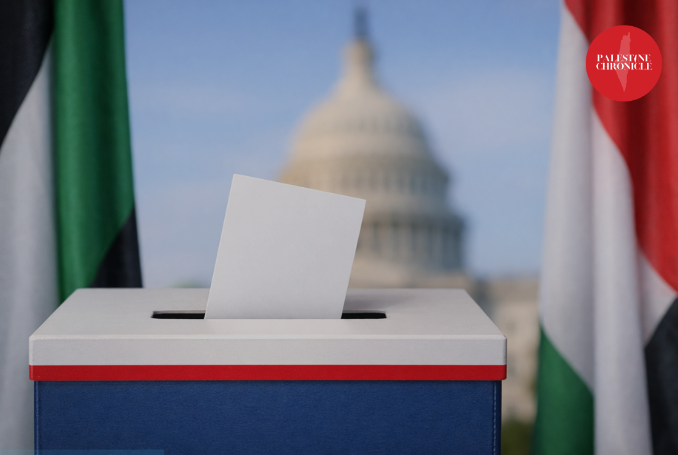

A newly formed US political action committee is seeking to translate growing public support for Palestinian rights into electoral influence ahead of the 2026 midterm elections. The initiative marks one of the clearest organized attempts to counterbalance long-standing pro-Israel lobbying dominance in American campaign financing.
Key Takeaways
- A new Political Action Committee (PAC) aims to support candidates advocating Palestinian rights and conditioning US aid to Israel.
- The initiative positions itself as a counterweight to established pro-Israel lobbying networks.
- Several progressive members of Congress are expected to benefit from its backing.
- The effort reflects shifting public opinion in the United States regarding Gaza and the occupation.
- The 2026 midterms may become the first election cycle where Palestine emerges as a structured campaign platform issue.
A New Actor
The newly established Peace, Accountability, and Leadership PAC (PAL PAC)ì was created to financially and politically support congressional candidates who advocate Palestinian human rights and a reassessment of unconditional US support for Israel.
The launch was first reported by the American outlet Zeteo, which described the organization as an attempt to convert grassroots activism surrounding Gaza into measurable electoral leverage. According to that report, the PAC intends to endorse candidates willing to promote equality under international law and challenge policies enabling the Israeli occupation.
Unlike traditional advocacy campaigns centered on protests or campus organizing, the group is reportedly structured around campaign finance.
Falling from Grace: Who Are the US Candidates Refusing AIPAC Money?
Challenging the Existing Lobby
For decades, pro-Israel lobbying networks have exercised significant influence in US elections, particularly through large-scale political donations. Therefore, the emergence of a pro-Palestine PAC signals a strategic shift: entering the same institutional arena rather than operating outside it.
Media investigations have documented tens of millions of dollars spent by pro-Israel organizations to defeat candidates critical of Israeli policy.
Statements from pro-Israel organizations, such as Democratic Majority for Israel (DMFI PAC) — which has already issued a broad list of endorsements for the same election cycle — underscore how campaign financing functions as a primary mechanism through which US Middle East policy positions are enforced.
By directing funds toward aligned candidates and against critics, these groups influence not only election outcomes but also the range of positions considered politically viable in Congress.
Candidates and Political Messaging
The newly-formed PAC is expected to support progressive lawmakers who have publicly called for ceasefires, accountability for war crimes, or restrictions on military aid. International reporting identified figures such as Rashida Tlaib, Ilhan Omar, Summer Lee, and Delia Ramirez as among those aligned with the political platform the PAC promotes.
AIPAC’s Influence Waning as Democrats Weigh New Alliances – Report
The message reportedly centers not only on Gaza but also on broader US foreign policy doctrine: conditioning aid, prioritizing civilian protection, and applying international law standards universally.
This reflects a wider ideological shift in US politics, withgrowing divisions within the Democratic Party over Israel policy and the increasing salience of Gaza among primary voters.
Public Opinion and Political Momentum
The creation of the PAC follows months of sustained mobilization across the United States — protests, campus encampments, and local resolutions demanding ceasefires. While activism has influenced public discourse, organizers now appear to be testing whether it can also influence Congress.
The PAC seeks to institutionalize that shift, where an emerging foreign-policy framework among younger politicians tends to emphasize human rights rather than strategic alliances alone.
In parallel, heavy spending against Israel-critical candidates has often discouraged political dissent; the new initiative attempts to neutralize that deterrent effect by guaranteeing financial backing.
(PC, Zeteo, AP, Common Dreams)