
The Khan Yunis operation lasted several hours, during which Palestinian fighters observed the landing of an evacuation helicopter.
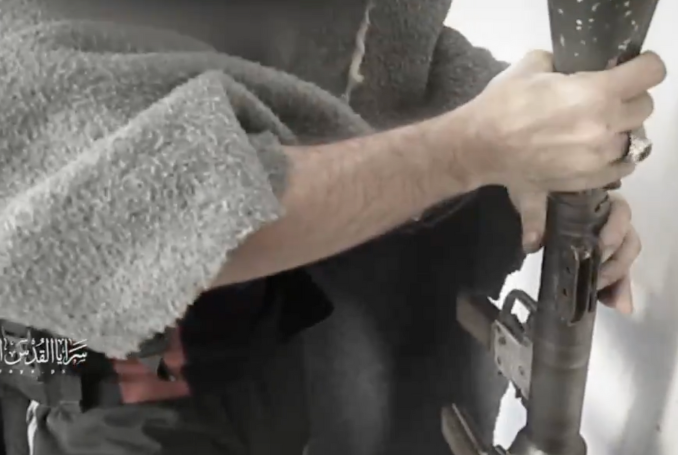
The Al-Quds Brigades, the military wing of the Islamic Jihad movement, published footage showing Israeli vehicles falling into a complex ambush prepared in cooperation with the Qassam Brigades, the military wing of the Palestinian Resistance Movement Hamas, near the Sheikh Radwan Mosque in the Sheja’iyya neighborhood east of Gaza City on July 7.
The footage documented the planning process, which included planting two explosive devices in the path of Israeli tanks two days before the attack, after the occupation forces had combed the area and confirmed that no explosives were present.
Fighters were seen planting Shawaaz and Thaqib explosive devices in daylight, under the sound of Israeli aircraft. One of them said they were setting up the ambush close to Israeli tanks and under the constant noise of warplanes overhead.
The ambush resulted in the detonation of two Merkava tanks with pre-planted Shawaaz and Thaqib explosive devices. A third tank was detonated with an anti-tank shell during the attack carried out after the first two explosions. After blowing up the tanks, the fighters targeted another tank from inside a destroyed house before withdrawing from the scene.
The Al-Quds Brigades, the military wing of the Islamic Jihad movement, published footage showing Israeli vehicles falling into a complex ambush prepared in cooperation with the Qassam Brigades. pic.twitter.com/yQlPIGbbvU
— The Palestine Chronicle (@PalestineChron) August 21, 2025
Meanwhile, the Israeli army revealed on Thursday the results of its investigation into another major attack carried out the day before by the Qassam Brigades on a military headquarters belonging to the Kfir Brigade in Khan Yunis, south of the Gaza Strip.
According to the investigation, 15 Palestinian fighters participated in the raid, emerging from a tunnel about 40 meters from the site and dividing themselves into three cells, each tasked with a specific mission. The attack began with the targeting of cameras and watchtowers, which disabled the site’s monitoring and surveillance systems and allowed the attackers to advance.
After disabling surveillance, the first cell reached a building where the company’s deputy commander was holed up with soldiers, most of whom were asleep. They opened fire and detonated hand grenades, sparking a face-to-face battle. Some of the attackers were killed, according to the Israeli army, while others managed to withdraw. The second cell remained stationed at the rear, firing mortar shells to obstruct rescue forces. Most of its members were able to retreat through a tunnel after planting explosive devices.
The Israeli army said that during the clashes, one of its tanks killed three of the attackers and another tank ran over a fighter carrying an RPG. It noted that the battle lasted about 10 minutes, though search and combing operations for the militants continued for more than three hours until the last member was found. Reinforcements and air support were called in, and militants responded with RPG fire at buildings where soldiers were positioned.
The investigation added that the tunnel used had been discovered and partly destroyed two months earlier, but Hamas restored it. The attackers even brought a stretcher, suggesting they intended to capture a soldier. The army concluded that the incident highlighted Hamas’ ability to restore tunnels and to continue carrying out complex, coordinated operations despite siege, destruction, and relentless Israeli bombardment.
For its part, the Al-Qassam Brigades announced in a statement on Telegram that it had raided a “newly established enemy position southeast of Khan Yunis, with a force consisting of an infantry platoon.” It said its fighters stormed the site, clashed with occupation soldiers, and targeted Merkava 4 tanks with Shawaaz explosive devices and Yassin 105 shells. They also shelled houses where soldiers were holed up with six anti-fortification shells and heavy machine gun fire.
Al-Qassam Brigades carried out an unprecedented infiltration and abduction operation on a new occupation base near Khan Younis involving somewhere around 14-20 fighters. Face to face battles occurred and there are reports that the AQB fighters even carried stretchers with them. pic.twitter.com/LWcogxEJev
— barry with the NED (@bonzerbarry) August 20, 2025
The statement added that fighters stormed homes and killed soldiers inside at point-blank range with light weapons and grenades. A tank commander was sniped and fatally wounded. The brigades said mortar shells were fired at surrounding sites to cut off reinforcements, and that a suicide bomber detonated himself among soldiers after the arrival of rescue forces, causing further casualties. The operation lasted several hours, during which fighters observed the landing of an evacuation helicopter.
Political analyst Ibrahim Al-Madhoun described the Khan Yunis raid as a qualitative event that caught the Israeli army by surprise. He noted that it combined three key elements: the simultaneous participation of a large number of fighters, the disabling of surveillance systems, and the safe withdrawal of part of the force. He argued that the operation demonstrated high levels of organization and preparedness, and exposed gaps in Israel’s security apparatus.
According to Al-Madhoun, the operation proves that the resistance retains the ability to manage the battle militarily, inflicting severe blows on the ground, while Israel continues its scorched-earth approach without decisive victory. He concluded that despite its overwhelming military superiority, Israel has failed to secure a final settlement or compel surrender, while fighters continue to emerge from the rubble to challenge its plans to seize control of Gaza.
(PC, AJA)