
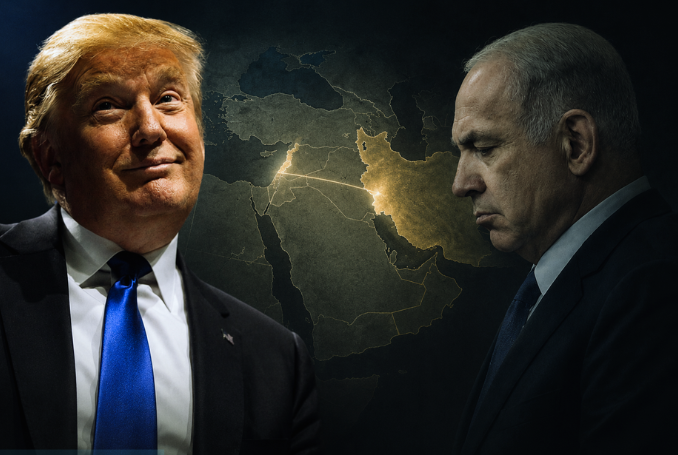

Netanyahu vowed to maintain Israel’s occupation of southern Lebanon as criticism mounted over the emerging US-Iran agreement.
Key Takeaways
- Netanyahu says Israeli forces will remain in occupied areas of southern Lebanon indefinitely.
- He claims Israel has established “security zones” in Lebanon, Gaza, and Syria and intends to maintain them.
- Netanyahu admits he does not yet know the full details of the US-Iran memorandum.
Israeli Prime Minister Benjamin Netanyahu used his first public remarks following the announcement of the US-Iran memorandum of understanding to reaffirm Israel’s intention to maintain military positions in southern Lebanon.
He presented familiar security arguments that critics say are increasingly disconnected from the political realities emerging across the region.
Speaking at a press conference on Monday, Netanyahu insisted that Israeli troops would remain in what he described as “security zones” established during the war.
“We have established strengthened security zones around Israel. We did this in Gaza, Lebanon and Syria, and we will remain in these security zones as long as necessary to protect our country,” he said.
Regarding Lebanon specifically, Netanyahu declared that Israel would continue occupying territory in the south indefinitely.
“We established a buffer zone, a security zone, and we will remain there for as long as necessary,” he said.
His comments came less than twenty-four hours after Iran and the United States announced a memorandum of understanding designed to end the war and establish a framework for broader negotiations.
The agreement is expected to be formally signed in Switzerland later this week.
‘We’re Left Alone’: Israeli Politicians, Media Turn on Netanyahu after Iran-US Deal
Defending Failed Policy
Netanyahu sought to portray the continued occupation of southern Lebanon as a security necessity, claiming Iran had attempted to make Israeli withdrawal part of the negotiations.
According to Netanyahu, those efforts failed. “Iran wanted us to withdraw. That did not happen,” he said, adding that he believed Washington respected Israel’s position.
Yet the Israeli leader simultaneously acknowledged that he still did not know the precise details of the agreement.
“We do not yet know what the agreement between Washington and Tehran will look like,” Netanyahu admitted.
The contradiction was difficult to miss. While insisting that Israel had successfully protected its interests during negotiations, Netanyahu also acknowledged uncertainty about the final content of the agreement.
Lebanon Included in Iran-US Deal as Residents Return, Israel Continues Strikes
Rewriting the War’s Objectives
Netanyahu also appeared to distance himself from one of the most frequently discussed questions surrounding the war: whether the ultimate goal was regime change in Iran.
“I did not say that one of the goals of the operation was to overthrow the regime,” he said.
Instead, he argued that military operations were intended to create conditions that might eventually lead to such an outcome.
The comments represent a notable shift from earlier rhetoric that many observers interpreted as supporting broader efforts to weaken or destabilize Iran’s leadership.
‘Step Toward Liberation’: Hezbollah Hails Deal as Iran Draws Red Line on Lebanon
Growing Criticism
Netanyahu’s remarks came as criticism mounted within Israel over both the agreement itself and his handling of the conflict.
According to reports carried by Israeli media, some officials now privately acknowledge that the political outcome of the war differs dramatically from what many expected when the conflict began.
A senior Israeli official quoted by i24 stated that had Israel known the war would conclude in its current political form, “it is not certain that it should have been fought.”
The remark reflects growing concern among sections of the Israeli establishment that the military campaign failed to achieve its broader political objectives.
Iran Declares End to War on All Fronts as Israel Rejects Lebanon Withdrawal
Beirut Strike under New Scrutiny
Additional reporting by Yedioth Ahronoth has intensified questions surrounding Israel’s recent strike on Beirut’s southern suburb.
According to the newspaper, the attack was personally approved by Netanyahu and Defense Minister Israel Katz despite warnings from senior military officials concerned about its timing.
The objections reportedly had little to do with operational considerations and instead focused on fears that an attack at such a sensitive moment could jeopardize the emerging US-Iran agreement.
Sources cited by the newspaper said several officials suggested postponing the operation for a day or two, hoping diplomatic developments might clarify the situation.
Others reportedly warned that the strike could function as a political and military “landmine” placed in the path of negotiations, potentially triggering an Iranian missile response and opening the door to broader escalation.
The Day After the Iran War: Five Scenarios, Core Questions, and a Forum for Our Readers
‘Unable to Stop the Agreement’
According to Yedioth Ahronoth, Netanyahu’s ability to influence American policy has declined significantly.
The newspaper reported that Israeli leaders increasingly view the agreement as dangerous but lack the means to prevent it from moving forward.
Sources quoted in the report suggested Netanyahu was concerned about political criticism and ordered officials to focus public messaging on Lebanon rather than on the broader implications of the agreement.
One source reportedly described the objective of the Beirut operation as an attack on the agreement itself—an attempt to generate additional tension at a critical moment in the negotiations.
The Iran-US Deal Explained: Ceasefire, Lebanon, Sanctions and Road Ahead
Trump Prevails
The same reports suggest that the operation failed to achieve its intended effect.
According to a security source cited by Yedioth Ahronoth, Netanyahu believed the Beirut strike could push negotiations toward confrontation and delay the agreement.
Instead, the opposite occurred. The memorandum continued advancing with strong backing from US President Donald Trump, who publicly criticized the Beirut strike and urged all sides not to jeopardize the emerging deal.
The result, according to the newspaper, was that “everything ended with Trump’s will prevailing.”
As the agreement moves toward formal signing later this week, Netanyahu now finds himself defending a policy of indefinite occupation in Lebanon while confronting growing questions about Israel’s influence over the diplomatic process reshaping the region.
(Israeli Media, PC)




“messaging on Lebanon rather than on the broader implications of the agreement” — asshole! Lebanon IS the agreement! Including ALL fronts! / “I did not say that one of the goals of the operation was to overthrow the regime,” he said. So, what did he say? ““I did not say that one of the goals of the operation was to overthrow the regime,” he said. LOLOLOL!