
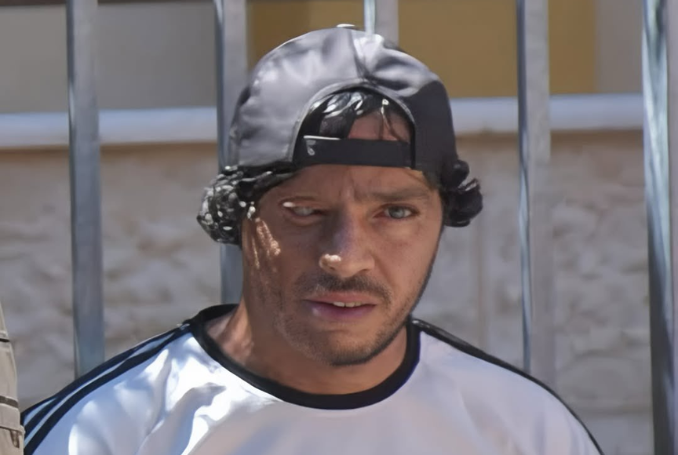
Odeh Hadhalin was buried in Umm al-Khair, the village he defended all his life, surrounded by family and friends.
“This is the least we could offer him,” said Ikhlas Hadhalin, describing the open-ended hunger strike launched by around 70 women from the village of Umm al-Khair, in the Masafer Yatta area south of Hebron, to pressure Israel into releasing the body of teacher Odeh Hadhalin.
Odeh, 32, was shot and killed by an illegal Israeli Jewish settler during a raid on the village last week. Despite this, Israeli authorities withheld his body, imposing conditions for its release. The villagers, who loved him deeply, refused to accept what they described as unjust terms.
A father of three young children—the eldest not yet five, the youngest born just five months ago—Odeh was an English teacher at the village school, an activist who documented Israeli violations in Umm al-Khair and Masafer Yatta, and a tireless helper to the sick and needy.
He was beloved by all, especially the children. According to villagers, he was killed by a settler intent on seizing their land, with the full support of the Israeli army and government.
‘They Hit First, Then Burn’: Settlers Wage Daily War on Palestinian Villages
‘Our Message to the World’
On July 28, a group of settlers attacked Umm al-Khair, assaulting its residents. Odeh stood at a distance, holding his two-and-a-half-year-old son and filming the events. Suddenly, a settler fired a bullet that struck Odeh in the chest. His child fell from his arms as he collapsed, bleeding heavily.
“We gathered at the scene, and Odeh was unconscious,” Ikhlas recalled. “Because of the Israeli barriers, the nearest Palestinian ambulance could not arrive for 45 minutes. We carried him toward the entrance to the settlement, pleading for help.”
Settlement guards delayed his transfer to an ambulance, costing him more blood loss. An Israeli ambulance eventually took him away, but no one was allowed to accompany him.
“We felt he wouldn’t come back,” Ikhlas said. “His child cried the entire time, as if he knew his father would never return.”
Shortly afterward, news of Odeh’s death reached the village. Grief swept Umm al-Khair, and the pain deepened when Israel refused to return his body.
‘I Wished for Death’: A Palestinian Man’s Torture at an Israeli Checkpoint
His wife fell into deep mourning and stopped eating and drinking. In solidarity, all the women of the village joined her in a hunger strike, pledging not to eat or drink until Odeh’s body was returned.
The next day, the Israeli army, accompanied by settlers, raided the village and arrested several family members. Settlers pointed them out to soldiers, falsely accusing them of participating in the “attack.”
The harassment only strengthened the women’s resolve. For six days, women aged 15 to 60 continued their hunger strike, despite some suffering from low blood pressure and weakness.
“Odeh was a rare example for us,” Ikhlas said. “He never hesitated to help anyone. His loss is immeasurable.”
‘A Huge Void’
Israel’s initial conditions for returning Odeh’s body included a night burial in a remote location, attended by no more than 15 family members. The villagers refused.
After sustained pressure, including the women’s hunger strike and widespread publicity, Israel relented and released his body without conditions. Odeh was buried in Umm al-Khair, the village he defended all his life, surrounded by family and friends.
His brother Khalil said Israeli forces were on high alert during the handover, closing roads to prevent Palestinians from attending. Despite this, thousands came to bid him farewell.
‘Green Light to Judaize’: How Israel Tightens Its Grip on Jerusalem
“Odeh was loved not only in Umm al-Khair but throughout Masafer Yatta,” Khalil said. “He documented demolitions, attacks, and helped patients and children. He was always smiling. His absence leaves a huge void.”
Odeh was also a professional soccer player for several local teams. The family insists his killing was deliberate.
“Yes, the settler assassinated him because he documented their crimes, and that threatened them,” Khalil said.
The family was further devastated when the killer was released, while several relatives were unjustly arrested, abused, and humiliated.
Israeli forces raided homes, arresting 18 men. Women stayed awake at night for fear of further raids.
“The day after Odeh was killed, while his body was still held, the settler came to our village entrance with a bulldozer,” Ikhlas said. “It was the most painful moment of my life.”
“There is no justice here,” Khalil concluded. “The ruler and the executioner are the same.”
(The Palestine Chronicle)
– Fayha’ Shalash is a Ramallah-based Palestinian journalist. She graduated from Birzeit University in 2008 and she has been working as a reporter and broadcaster ever since. Her articles appeared in several online publications. She contributed this article to The Palestine Chronicle.


With the zionist mongrels one have to go on hunger strike just to get the body of a loved one. Death to the zionist terrorists wherever they are.