
By Jamal Wakim
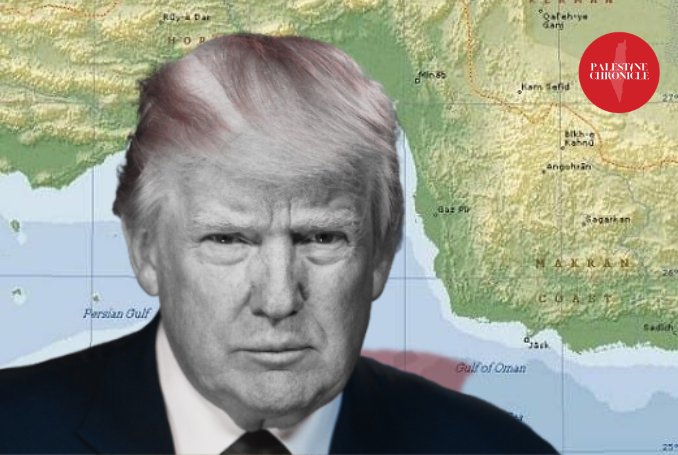
By attempting to control Iran, Donald Trump was effectively seeking to dismantle China’s Belt and Road Initiative and to position Türkiye as a transit corridor for US influence through the South Caucasus into Central Asia.
On Tuesday night, US President Donald Trump surprised the world by accepting a ceasefire under conditions proposed by Tehran through a Pakistani mediator—despite earlier threats to destroy Iranian civilization.
Although Washington later attempted to dilute aspects of the agreement—such as excluding Lebanon from the ceasefire and raising the possibility of negotiations over uranium enrichment—the very acceptance of the deal amounts to an implicit admission of failure. Neither the United States nor Israel achieved their declared or undeclared objectives.
Signs of American Failure
The US objectives extended far beyond regime change. Washington sought to fragment Iran into multiple entities, a scenario openly discussed by American and Israeli officials, with expectations of mobilizing separatist dynamics in regions such as Iranian Kurdistan, West and East Azerbaijan, Khuzestan, and Balochistan.
Such fragmentation would have facilitated control over the Iranian plateau—a vast and strategically critical region stretching from the Zagros Mountains to the Afghan highlands, and from the Alborz range to the fringes of the Hindu Kush. Control of this elevated geography would provide oversight of Central Asia, Mesopotamia, and key corridors linking the Middle East to South and East Asia.
From this vantage point, the United States aimed to consolidate dominance over the Middle East while projecting power into Central Asia, thereby pressuring Russia’s southern flank and China’s western regions, particularly Xinjiang and Tibet.
At the same time, Washington has grown increasingly aware of its declining economic advantage vis-à-vis China. As US infrastructure and productivity stagnate, China has emerged as the world’s primary industrial engine.
In this context, American strategy has shifted toward controlling global energy flows—not out of necessity, but as leverage. By dominating energy supply routes, Washington seeks to pressure Beijing, which remains the world’s largest oil importer.
This logic helps explain US actions in Venezuela, where attempts were made to undermine President Nicolás Maduro and restrict Chinese access to Venezuelan oil. Escalation against Iran followed as part of this broader strategy.
Iran’s significance lies not only in its oil exports—much of which flows to China—but also in its control over the Strait of Hormuz, a critical chokepoint through which a substantial portion of global energy supplies passes. China depends heavily on Gulf oil imports, including from Saudi Arabia, the UAE, Kuwait, Iraq, Oman, and Iran.
A third strategic objective was to contain China by restricting both maritime and land-based trade routes. This is reflected in US-led alliances across East and Southeast Asia, its naval presence in the South China Sea and the Strait of Malacca, and efforts to disrupt overland corridors connecting China to Europe—many of which converge in Iran.
Thus, controlling Iran was central to undermining China’s Belt and Road Initiative. The failure to achieve this objective represents a strategic setback for Washington, regardless of the scale of destruction inflicted within Iran.
Signs of Israeli Failure
Parallel to the American setback, Israel has suffered a major strategic failure, particularly in its effort to impose dominance over the Levant and, ultimately, the broader Arab region.
Since 2023, Israel has pursued a systematic effort to reshape the political geography of the Levant. The war on Gaza, launched in October of that year, aimed to forcibly displace the Palestinian population and create an alternative reality on the ground.
Although this objective was not fully realized, the campaign inflicted severe damage on Palestinian resistance structures while settlement expansion in the West Bank intensified.
In September 2024, Israel escalated further by targeting Hezbollah leadership, culminating in the assassination of Secretary-General Hassan Nasrallah.
Two months later, and in coordination with regional and international actors, the Syrian government of Bashar al-Assad was overthrown, shifting Syria into the sphere of US influence. Israeli Prime Minister Benjamin Netanyahu subsequently advanced a vision of a new regional order under Israeli dominance.
Within this framework, Israeli forces launched extensive airstrikes that significantly weakened the Syrian army, while advancing to strategic positions, including the highest peak of Mount Hermon. From there, Israel gained a commanding vantage point over large parts of Lebanon and Syria.
This was part of a broader plan to fragment the region into sectarian and ethnic entities, including proposals affecting Syria, Iraq, and Lebanon. The objective was to redraw borders in a manner that would ensure long-term Israeli dominance.
However, the persistence of Iran and its regional alliances disrupted this trajectory. Israel’s ultimate objective—neutralizing Iran as a strategic actor—was not achieved.
Conclusions
The failure to overthrow the Iranian government or plunge the country into fragmentation has had far-reaching consequences. Rather than weakening Iran, the confrontation has reinforced its regional position.
Tehran now maintains significant influence over the Strait of Hormuz and retains strategic depth across the broader region. Its allies—including Hezbollah—remain key actors in regional dynamics.
This outcome undermines the broader project of establishing Israeli regional hegemony. A strengthened Iran enhances the position of resistance movements in Iraq, Lebanon, Palestine, and Yemen, while also reshaping the balance of power in Syria.
As a result, the trajectory that once appeared to favor Israeli expansion has reversed. Gains made between 2024 and 2025 now face erosion across multiple fronts.
This shifting reality may help explain the intensification of Israeli military actions and the continued commission of mass violence, as efforts to compensate for the failure of a broader strategic project.
(This article was originally published in Arabic in Al Mayadeen. It was translated and edited by the Palestine Chronicle)


Dondolf Twitler is a traitor to America. High Treason is punishable by death.
What happens when you elect a drug-addicted pedophile?
This. This right here.
Trump is just the mouthpiece for the Gang of 8. They are made up of a bipartisan committee that’s behind the majority of US decision making. Especially since the Gang of 8 is pro-Israel.
Losing this war is good for Americans since the war and Israeli support is going against the grain of American politics and their credibility is destroyed more each day…the plans they had for the future US are also in jeopardy now that more and more Americans are against the war and support for Israel. That will be very hard to impossible to reverse.