
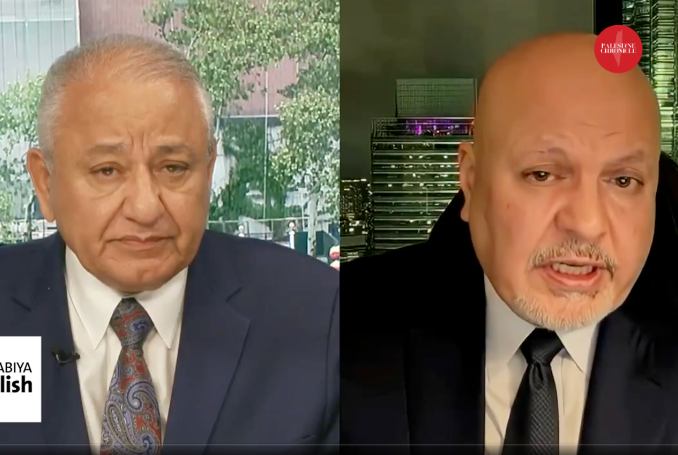

Just before his dismissal, Karim Khan warned that sanctions, threats and political coercion against the ICC threaten international justice and accountability.
Key Takeaways
- Karim Khan said sanctions and intimidation against ICC officials are designed to coerce and weaken international justice.
- He linked political pressure directly to the court’s Palestine investigation, citing threats over arrest warrants against Israeli officials.
- Khan argued that the ICC applies the law equally in Palestine, Ukraine, Afghanistan and Myanmar, rejecting accusations of political bias.
- His remarks were published two days before ICC member states voted to remove him as chief prosecutor amid misconduct allegations he denies.
‘They Target You and Your Family’
Just before member states voted to remove him as Chief Prosecutor of the International Criminal Court (ICC), Karim Khan issued a stark warning that political intimidation, sanctions and threats against the court are undermining international justice and bringing the world “closer to more and more conflict.”
Speaking in an interview with Al-Arabiya published on Friday, Khan reflected on what he described as an unprecedented campaign of pressure directed at himself, ICC judges and prosecutors following the court’s actions on Palestine.
His remarks came as the court continues to face mounting opposition over its decision to pursue accountability for alleged war crimes and crimes against humanity committed in Gaza.
‘Powerful States’ Using Coercion
Khan argued that governments are increasingly relying on coercive measures against judicial institutions instead of engaging with legal processes.
“Well, we see an increasing proclivity on the part of powerful states to use coercive measures,” he said.
Khan then turned to the measures imposed by the United States following the ICC’s actions concerning Israel.
“I was the first person sanctioned by President Trump in February 2025,” he said. “It was quite lonely for several months. I was the only one, and later on, some judges and deputies… they were sanctioned.”
"They THREATENED my family if I pursued ISRAEL."
International Criminal Court Prosecutor Karim A. A. Khan KC says he, ICC judges, and UN officials faced threats after pursuing cases involving Israel, warning such pressure undermines the rule of law.@KarimKhanQC pic.twitter.com/sSb3lOnIZp
— Al Arabiya English (@AlArabiya_Eng) July 24, 2026
‘Deeply Dangerous’
The former prosecutor condemned the use of state power to pressure judicial officials.
“I just think it’s unwarranted,” he said. “To use the power of the state to coerce, to intimidate, is deeply dangerous.”
Khan said similar patterns were emerging internationally, pointing to threats against UN officials and members of the ICC.
“We see threats against UN Special Rapporteurs like Francesca Albanese, or judges of the ICC, or myself.”
According to Khan, these attacks are aimed not at correcting legal errors but at punishing independent judicial work.
“They don’t… take a different view out of malice, out of bias, or out of any antipathy to any people or person in the world,” he said, adding:
“It’s simply an exercise of responsibilities, given that one has to look at the evidence and the law, and apply the law fairly, equally.”
‘As Equally in Palestine and Israel’
Responding to accusations that the ICC had singled out Israel, Khan insisted that the court applies the same legal standards across all situations under its jurisdiction.
“As equally, for example, in Palestine and Israel as we did in Ukraine and Russia, as equally as we’re doing in Afghanistan and Myanmar, and the list goes on,” he said.
The ICC’s arrest warrants against Israeli Prime Minister Benjamin Netanyahu and former Defense Minister Yoav Gallant were issued in November 2024 by Pre-Trial Chamber I after Khan requested them earlier that year.
The prosecutor stressed that such decisions ultimately rest with independent judges acting on the evidence before them.
‘You Have Been Warned’
Perhaps the strongest part of Khan’s interview concerned explicit threats made against him before sanctions were imposed.
“And to cause pain is not an unanticipated consequence; it’s a desired outcome,” he said.
He recalled a public letter sent by US senators before sanctions were imposed.
“Twelve senators wrote, and they said, ‘If you target Israel, we will target you and your family. You have been warned.’ That’s almost a verbatim quotation.”
According to Khan, those warnings were later carried out. “They are truthful and they’ve made good on their promises, because the court as a whole has been targeted.”
He warned that such actions weaken both international law and the credibility of states employing these measures.
“It is undermining the moral authority of states, it is dividing the international community, and in the end, it’s bringing us closer to more and more conflict,” Khan said, adding: “Because if we don’t have the law…”
Amid US, Israeli Pressure, ICC Votes to Remove Prosecutor Karim Khan
ICC Removes Khan
On Friday, soon after the publication of the Al-Arabiya interview, member states of the ICC voted to remove Khan as Chief Prosecutor following allegations of sexual misconduct.
According to Reuters news agency, 82 of the court’s 125 member states voted in favor of his dismissal during a secret ballot held at the Assembly of States Parties at UN headquarters in New York, surpassing the 63 votes required for removal.
The decision followed recommendations by ICC administrators, who concluded that Khan had violated the court’s code of conduct through what they described as an inappropriate sexual relationship with a junior staff member.
Khan has categorically denied the allegations. His legal team described the proceedings as “illegal, procedurally unfair, and unsupported by evidence.”
Arrest Warrants Remain in Force
Khan’s tenure became one of the most politically contentious in the ICC’s history after he requested arrest warrants for Israeli Prime Minister Benjamin Netanyahu and former Defense Minister Yoav Gallant over alleged war crimes and crimes against humanity in Gaza.
Those warrants were issued by ICC judges in November 2024 and remain legally valid despite Khan’s removal, as judicial decisions can only be revoked by the court itself.
Israel welcomed Khan’s dismissal, with Foreign Minister Gideon Sa’ar arguing that the warrants had been politically motivated and calling for them to be withdrawn.
Israeli officials also acknowledged conducting diplomatic outreach ahead of the vote in an effort to encourage member states either to support Khan’s dismissal or abstain.
The vote also came amid continued pressure from the United States, which is not a party to the Rome Statute but imposed sanctions on Khan and several ICC judges following the court’s decisions related to Gaza.
(PC, Al-Arabiya, Reuters)



US media had an entirely different slant to this story. I feel like a dope.
Izrahell owns your media.