
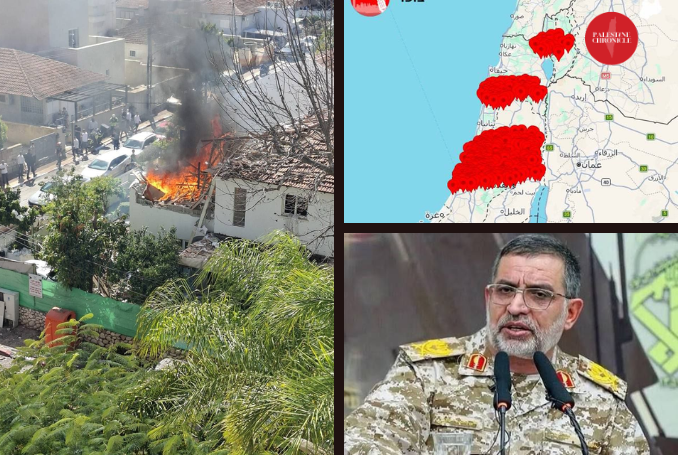

Iran launches new wave of missile strikes, hitting Rehovot as Israeli media reports injuries and growing pressure on air defense systems.
Key Developments
- Iranian missiles strike Rehovot, with Israeli media confirming building damage and at least seven injuries.
- IRGC launches 67th wave of Operation “True Promise 4,” targeting Israeli and US military infrastructure across the region.
- Israeli media acknowledges challenges in confronting Iran’s sustained missile campaign amid ongoing war of attrition.
Iranian Missiles Hit Rehovot
Israeli media reported that a building in the city of Rehovot, south of Tel Aviv, was damaged following an Iranian missile strike on Friday, with at least seven people injured.
The reports came after sirens sounded across multiple areas, including the southern suburbs of Tel Aviv, Ashdod, and surrounding regions. Sirens were also activated in the western Galilee amid fears of drone infiltration.
The strikes form part of Iran’s ongoing missile campaign targeting sites across the occupied Palestinian territories, with Iranian forces focusing on military and strategic infrastructure.
🚨 HAARETZ / CHANNEL 12: Building hit in central Israel as reported Iranian cluster missile scatters shrapnel; fire breaks out in a home in Rehovot, south of Tel Aviv. pic.twitter.com/pYVZAVxO33
— The Palestine Chronicle (@PalestineChron) March 20, 2026
IRGC Expands ‘True Promise 4’ Operations
Iran’s Islamic Revolutionary Guard Corps (IRGC) announced the launch of the 67th wave of Operation True Promise 4, describing it as a continuation of its response to ongoing US-Israeli attacks.
According to the IRGC, the operation involved “ballistic and cluster missiles” as well as extensive drone strikes targeting US military assets and Israeli infrastructure.
Targets included the Ali Al-Salem base in Kuwait, UAV and air-space command centers, aircraft maintenance facilities, and the operations center of US-led coalition forces. The IRGC also reported strikes on early warning missile defense radars and gathering points at Al-Wafa base.
Within Israeli-controlled territories, Iranian strikes targeted “satellite, radar and air defense centers in the central, southern and northern” areas, using long- and medium-range missile systems.
The IRGC stated that the latest wave was carried out “as a tribute to the soul of the martyr Naeini and the righteous martyrs,” referring to Brigadier General Ali Mohammad Naeini, the IRGC spokesperson, killed earlier in a US-Israeli attack.
Earlier in the day, the IRGC had announced the 66th wave of operations, noting that it deployed a wide range of missile systems, including Qadr, Khorramshahr, Kheibar Shekan, Qiam, and Zolfaghar missiles, alongside attack drones, and emphasized that the campaign “will not halt” and that further waves are expected.
Mounting Pressure
Israeli media outlets have begun acknowledging the growing strain posed by sustained Iranian missile attacks.
Israel’s Channel 13 described the ongoing confrontation as a “war of attrition,” noting that Iran’s continued missile launches present a serious challenge to Israeli defense capabilities.
The channel warned that “if the situation continues for weeks and we are facing ten Iranian missiles a day… then this poses a challenge to Israel’s defense capabilities.”
Similarly, Israel’s public broadcaster Kan reported that Israeli officials have recognized that overthrowing the Iranian government is not feasible under current conditions, reflecting a shift in expectations regarding the war’s trajectory.
Other reports indicated that, even with extensive US support, there are no signs of imminent collapse within Iran’s leadership.
🚨 WATCH: Ballistic missile fragment crashes in “Tel Aviv” after impact pic.twitter.com/rW5ehjfXRC
— The Palestine Chronicle (@PalestineChron) March 20, 2026
Strategic Infrastructure
In parallel with the missile strikes, Iranian forces have expanded their targeting to include strategic sites linked to military and logistical operations.
The Iranian Army announced that it had once again targeted gatherings of refueling aircraft at Ben Gurion Airport, as well as facilities linked to Israel’s internal security apparatus and media infrastructure, including the headquarters of Israel’s Channel 13 in Tel Aviv.
The statement highlighted the strategic role of refueling aircraft in supporting air operations, while describing certain institutions as part of what it called “psychological warfare.”
The latest developments come amid ongoing US-Israeli military aggression on Iran since late February, which resulted in the killing of hundreds of civilians, including children and women.
In response, Iran has continued launching waves of missile and drone strikes targeting Israeli territory and US military bases across the region.
(PC, Al Mayadeen, Israeli media, IRGC statement)






Be the first to comment