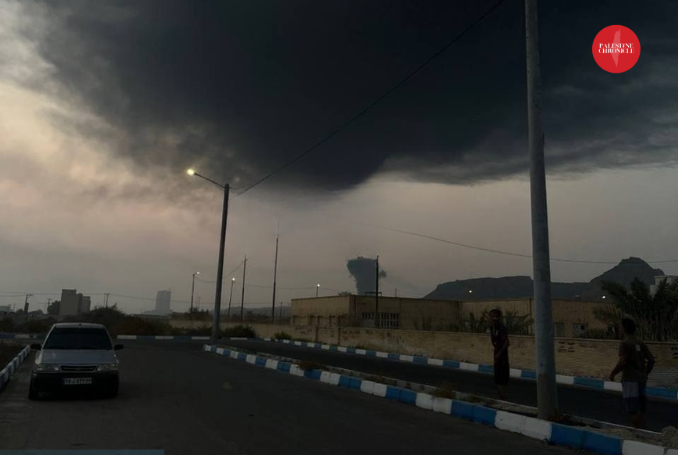

A New York Times investigation found a US 2,000-pound bomb destroyed an Iranian family home, killing three civilians.
US 2,000-pound bomb
A New York Times investigation has concluded that the United States used a 2,000-pound bomb to strike a family home on Iran’s Qeshm Island during overnight attacks on Thursday, killing a husband, wife and their two-year-old son.
Drawing on satellite imagery, videos, photographs and munition fragments, the newspaper determined that the weapon used was a US-made Mark-84 bomb fitted with a Joint Direct Attack Munition (JDAM) guidance kit.
The conclusion was supported by Trevor Ball, a former US Army explosive ordnance disposal technician and analyst at Armament Research Services, and Frederic Gras, a French munitions consultant, both of whom reviewed the available evidence.
The strike hit the Chah-Tangu neighborhood of Qeshm City, a densely populated residential area overlooking the Strait of Hormuz. The Times geolocated the attack using bystander footage and satellite imagery, finding that it left a crater measuring at least 30 feet across and destroyed several nearby buildings.
Iranian authorities identified the victims as Zahra Jafari, her husband Qeysar Jafari, a taxi driver, and their two-year-old son Sina. The couple’s two surviving children, Mohammad Reza and Mehdi, were rescued from the rubble and remain hospitalized in stable condition.
The United States dropped a 2,000-pound bomb designed to crack open military bunkers onto a taxi driver's home on Qeshm Island, killing his wife and toddler son and burying two more children alive, the latest casualty count in Washington's escalating war on Iran.
Thursday's… pic.twitter.com/XRfRXj1F9m
— 🔻agitprop + absurdity🔻 (@agtprpnabsrdty) August 1, 2026
No Military Target
According to the investigation, the strike destroyed homes, damaged vehicles more than 200 feet from the impact site and displaced approximately 20 neighboring families.
After examining satellite imagery and available footage, the newspaper said it found no indication of military infrastructure near the family’s home or reports of military casualties that would explain the target.
Photographs published by Iranian media showed fragments that both weapons experts identified as components of a JDAM guidance kit. Gras also concluded that the bomb detonated beneath the surface, with the sandy terrain absorbing part of the blast while directing much of its force downward.
The strike formed part of a broader US operation in southern Iran that Washington said was launched in retaliation for earlier Iranian attacks on a military base hosting American forces in Jordan. The investigation also found that two warehouses outside Qeshm City were destroyed during the same wave of attacks.
US Central Command acknowledged the reports of civilian casualties but declined to identify the intended target, specify the munition used or explain what precautions had been taken before the strike.
“We are aware of the reports and looking into them,” CENTCOM spokesman Capt. Tim Hawkins told the newspaper. “The U.S. military never targets civilians,” he claimed.
Iran-US war update last night
Updates since 11PM Tehran time:
• HIMARS US missile attack on Abadan
• HIMARS US missile attack on Shadegan’s vicinity
• HIMARS US missile attack on Ahvaz
• HIMARS US missile attack on Arvandkenar’s vicinity
• US attacks on Kazerun and… pic.twitter.com/bYU2O2AtkE— Arya Yadegaar (@AryJeayBackup) July 30, 2026
Legal Questions Raised
The investigation said the available evidence raises questions about both the intended objective of the strike and the choice of weapon used in a densely populated civilian neighborhood.
The newspaper noted that international humanitarian law requires attacking forces to weigh the anticipated military advantage of an attack against the expected harm to civilians and to take all feasible precautions to minimize civilian casualties.
Tom Dannenbaum, a professor of international law at Stanford University, told the Times that using a 2,000-pound bomb in such an environment was “very difficult to reconcile” with those obligations.
“The attacking force must take all feasible precautions to minimize civilian harm, including in its selection of munitions, times of attack and, whenever circumstances allow, by issuing effective advance warnings,” Dannenbaum said.
While US Central Command maintains that it does not target civilians, the New York Times concluded that the evidence gathered through visual analysis leaves unresolved why a large conventional bomb was dropped on a residential home where no apparent military objective has been identified.
(PC, NYT)