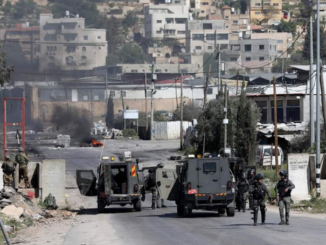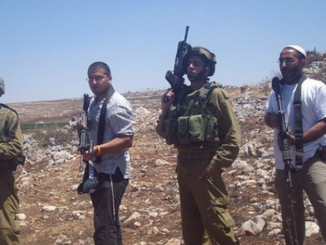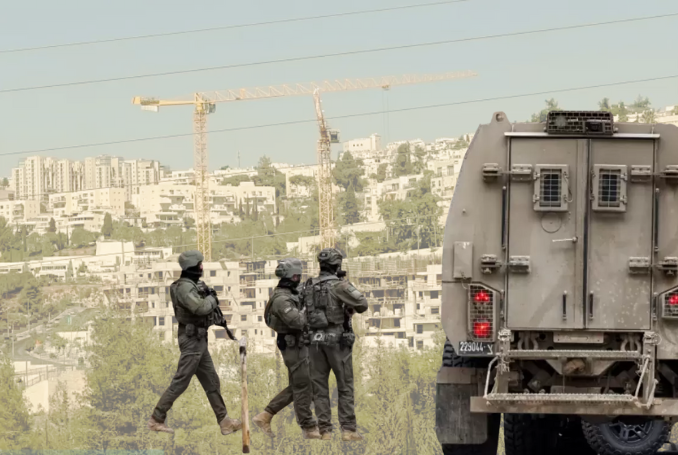

Israeli forces and settlers carried out nearly 1,900 attacks in January, displacing families and accelerating de facto annexation.
Key Developments
- Israeli occupation forces and settlers carried out 1,872 documented attacks across the occupied West Bank in January alone.
- Settler violence displaced at least 125 Palestinian families, primarily from Bedouin communities in strategic areas.
- Israeli authorities advanced new settlement construction, land seizures, and industrial zones across multiple governorates.
- Dozens of homes and agricultural structures were demolished or threatened with demolition, especially around Jerusalem and Hebron.
- Prisoners continue to face severe abuse, medical neglect, and punitive conditions inside Israeli detention facilities.
A Month of Systematic Violence
Israeli occupation forces and armed settlers carried out 1,872 attacks against Palestinians and their property across the occupied West Bank during January 2026, according to newly released data by the Colonization and Wall Resistance Commission.
Of these attacks, 1,404 were carried out directly by Israeli military and security forces, while 468 were committed by settlers, often under direct army protection. The assaults spanned nearly every governorate, with Hebron, Ramallah and al-Bireh, Nablus, and Jerusalem emerging as the most heavily targeted areas.
Officials and human rights monitors describe the scale and coordination of these assaults as evidence of a systematic policy of forced displacement, not isolated incidents.
Emptying of Bedouin Communities
Settler attacks were particularly devastating for Palestinian Bedouin communities. At least 125 families were forcibly displaced from three Bedouin communities, including the Shallal al-Auja community east of the West Bank, as well as families near Birzeit and Attara, north of Ramallah.
Settlers carried out 349 acts of vandalism and theft, including the destruction, poisoning, or uprooting of 1,245 olive trees, a key economic and cultural lifeline for Palestinian farmers. Entire agricultural areas were rendered unusable through arson, bulldozing, and military closures imposed under the pretext of “security.”
Officials stressed that these actions aim to clear Palestinians from strategic land corridors, paving the way for settlement expansion and annexation.
Palestinian Churches Warn: Settler Violence Threatens Christian Presence in the Holy Land
Land Seizures, Settlement Expansion
January also saw an aggressive push to consolidate Israeli control over Palestinian land. Israeli authorities seized 744 dunums of land, including 694 dunums in Qalqilya and Salfit designated for a new settlement named Dorot, and additional parcels in Ramallah, Nablus, and Jenin under military orders.
At the same time, Israel studied or advanced 21 settlement master plans, involving the construction of 2,729 new settlement units, and approved a new industrial settlement zone west of Tulkarm covering 788 dunums.
Demolitions continued at a steady pace. Israeli forces carried out 59 demolition operations, destroying 126 Palestinian structures, including 77 inhabited homes, while issuing 40 new demolition orders, most of them concentrated in Hebron (Al-Khalil) governorate.
In Hizma, northeast of Jerusalem, Israeli forces issued demolition orders against 11 homes and structures, further tightening pressure on Palestinian communities surrounding the city.
Nael Barghouti Calls on the World to Act for Exiled Palestinian Prisoners
Settler Assaults
Beyond demolitions and land grabs, Israeli forces intensified daily raids and movement restrictions. Agricultural roads were blocked in Sebastia, northwest of Nablus, while Israeli forces stormed Silwan and Hizma, raiding shops and patrolling neighborhoods with military vehicles.
In Khirbet al-Kharaba, southeast of as-Samu south of Hebron, armed settlers attacked Palestinian homes, beating residents and spraying pepper spray under the protection of Israeli soldiers. Several Palestinians were injured, including individuals who lost consciousness and required hospital treatment.
These actions further fragmented Palestinian geography, isolating communities and cutting off access to farmland, schools, and healthcare.
Palestinian Prisoner Dies One Week After Release, Exposing ‘Slow Execution’ Inside Israeli Prisons
Prison Abuse
Palestinian detainees continue to endure harsh and degrading conditions inside Israeli prisons, reflecting another front of the same coercive system.
According to the Detainees’ Affairs Commission, prisoners held in Negev Prison face near-daily beatings, humiliating searches, solitary confinement, and severe food restrictions. Prisoners reported being limited to one plate and one cup of food per day, alongside punitive fines.
Medical neglect remains acute. One detainee from Jenin has reportedly lost 15 kilograms, suffering from untreated scabies, fungal infections, and malnutrition, with prison authorities refusing to provide even basic pain relief.
Does the End of the UNRWA Herald the End of the International Order?
A Policy, Not a Pattern
Officials from the Colonization and Wall Resistance Commission emphasized that January’s figures confirm a deliberate policy of de facto annexation, implemented through violence, displacement, settlement expansion, and institutionalized impunity.
Despite repeated international condemnations, Israeli authorities continue to entrench control over Palestinian land while dismantling the social, economic, and geographic foundations of Palestinian life across the West Bank.
With nearly 750,000 Israeli settlers now living in settlements and outposts — including 250,000 in occupied East Jerusalem — Palestinian communities face an accelerating campaign aimed at permanent dispossession.
(QNN, CWRC, WAFA, PC, Palestinian Detainees’ Affairs Commission)