
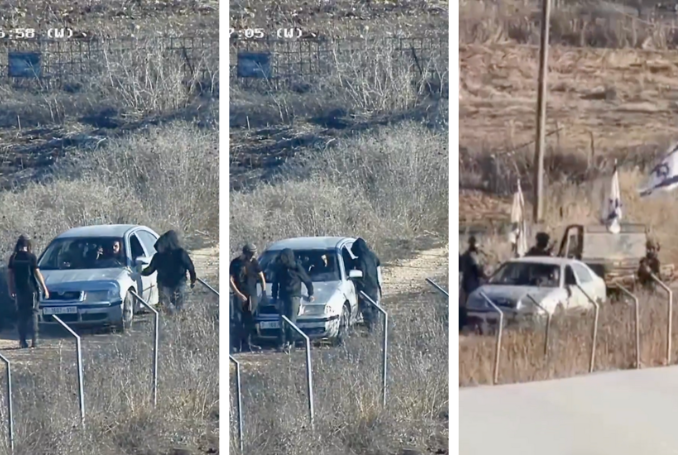

Settler attacks have left children and an elderly woman dead, while demolitions and healthcare deprivation intensify pressure on Palestinian communities.
Key Developments
- 36 Palestinians, including seven children, were killed during settler attacks through November 23.
- Seven attacks accounted for 17 deaths, including two brothers in Qaryut and four members of one family in Tell.
- Jerusalem communities behind the separation wall face worsening healthcare shortages following the closure of UNRWA’s Shuafat health center.
Thirty-six Palestinians, including seven children and a 72-year-old woman, have been killed during settler attacks or by Israeli occupation forces accompanying them since the beginning of 2026, according to the Palestinian Information Center, Mu‘ta.
The toll, documented through November 23, includes Palestinians shot by settlers, killed by accompanying troops, struck in vehicle rammings or killed through other consequences of the attacks.
Seven Children Killed
Among the youngest victims documented by Mu‘ta was 13-year-old Aws al-Naasan, killed during a settler attack on Al-Mughayyir boys’ school.
The list also included Fadda Salem Hajjaj Fheidat, 72, from Al-Duyuk Al-Tahta near Jericho. Twenty of those killed were under 30.
Seven attacks each killed more than one Palestinian, leaving 17 dead—nearly half the documented toll.
Brothers Muhammad and Fahim Muammar were killed in Qaryut, south of Nablus. Four members of the Ramadan family, including two brothers, were killed during an attack on Tell.
Israeli settlers attack a Palestinian man and his vehicle as he heads to his land in Qaryut village, south of Nablus, under the protection of Israeli forces. pic.twitter.com/gPxPIbVhNK
— Eye on Palestine (@EyeonPalestine) November 25, 2026
Ramallah and Al-Bireh recorded 15 fatalities, followed by Nablus with ten and Hebron with three.
March was the deadliest month, with ten Palestinians killed, followed by July with nine. The latest death recorded was that of Hamza Abdo, killed near Dura Al-Qar‘, northeast of Ramallah, on November 20.
Mu‘ta’s documentation described attacks on Palestinian villages and agricultural communities in which Israeli occupation forces accompanied settlers and provided protection.
Elderly Woman’s Home Surrounded
Qaryut was again targeted Wednesday, when armed settlers entered the Al-Dababis area southeast of the village, surrounded the home of elderly resident Halala Muhammad Said Musa and attempted to force their way inside, according to local reporting.
The attack came alongside demolitions farther south, where Israeli occupation forces entered Mughayyir Al-Abeed in Masafer Yatta with bulldozers and destroyed dwellings, caves and sheep shelters.
The operation followed demolitions Tuesday in Khallet Al-Dabaa that targeted homes, caves and water wells. Approximately 200 olive trees were also uprooted.
The destruction struck both residents’ shelter and the resources sustaining their presence on the land.
Near Jericho, settlers entered date farms adjoining the Al-Balqa Bedouin community, released livestock into cultivated areas and assaulted residents. Vegetable stalls along Route 90 were vandalized for a second consecutive day.
Israeli settler mobs carry out an attack on the village of Qaryut, south of Nablus, in the occupied West Bank, attempting to break into Palestinian homes. pic.twitter.com/4NnjVdnbLN
— PALESTINE ONLINE 🇵🇸 (@OnlinePalEng) November 25, 2026
Schools Besieged
Israeli occupation forces also entered two boys’ schools in Burqa, northwest of Nablus, and prevented students from reaching them.
In Kafr Malik, in the Ramallah area, troops surrounded a kindergarten during an incursion into the village.
Detentions were reported across several governorates, including the detention of a 17-year-old in Beit Ummar.
In Jaba‘, near Jenin, occupation forces delivered dozens of demolition notices against homes, shops and other structures along the road toward the Sanur military camp. Owners were given seven days to object.
Troops also seized a private vehicle and a truck carrying a water tanker in Humsa Al-Tahta in the northern Jordan Valley, adding to restrictions facing a community dependent on access to transported water.
Health Crisis
For Palestinian communities behind the separation wall in occupied Jerusalem, restrictions on movement are compounded by a shortage of basic healthcare services.
More than 140,000 Palestinian Jerusalemites are estimated to live behind the wall. Shuafat refugee camp and the surrounding neighborhoods of Ras Khamis, Ras Shehadeh and Dahiyat Al-Salam lack dedicated maternal and child healthcare centers.
Israeli Troops Storm Schools, Beat Palestinians in West Bank Raids
Residents must cross the Shuafat military checkpoint to reach clinics elsewhere in Jerusalem for childhood vaccinations, developmental checks and pregnancy monitoring.
Searches, waiting times and congestion make those journeys particularly difficult for pregnant women and mothers accompanying young children. Delays threaten access to regular appointments and timely treatment, especially when urgent intervention is needed.
The closure of UNRWA’s health center in Shuafat camp has further reduced the alternatives available to refugees and surrounding communities.
An estimated 60,000 to 80,000 people live in the camp and neighboring areas. Although these communities remain within Jerusalem’s Israeli municipal boundaries and residents pay municipal taxes, they face substantial shortages in healthcare, infrastructure and other public services.
Rights advocates warn that service deprivation, restrictions on UNRWA and obstacles to movement create pressures that could force Palestinian Jerusalemites to leave their neighborhoods, threatening their continued presence in the city.
(PC, QNN)
Be the first to comment