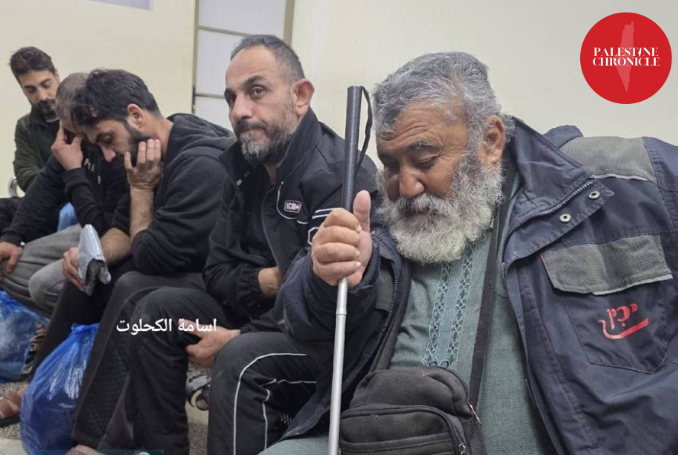

Over 9,600 Palestinians are imprisoned as abuse worsens, while many Gaza detainees remain uncounted and their fate unknown.
Key Facts
- More than 9,600 Palestinians are currently held in Israeli prisons, according to latest available figures.
- At least 350 children and 86 women are among the detainees.
- 3,532 Palestinians are held under administrative detention without charge or trial.
- 1,251 detainees are classified as “unlawful combatants,” allowing detention without standard legal protections.
- Large numbers of detainees from Gaza remain uncounted and are held in military facilities outside the formal prison system.
- Reports document widespread use of solitary confinement, physical and psychological abuse, and medical neglect.
- Family visits and communication are frequently restricted or denied, particularly since the escalation of war on Gaza.
- The issue of prisoners has remained central to the Palestinian struggle for decades and is commemorated annually on April 17.
Palestinians marked Palestinian Prisoners’ Day on April 17 amid renewed warnings over worsening prison conditions and growing concern over detainees from Gaza whose numbers and whereabouts remain unclear.
The day, observed annually on April 17, was designated by the Palestinian National Council in 1974 following the 1971 release of Mahmoud Bakr Hejazi in a prisoner exchange.
Mahmoud Bakr Hijazi was the first Palestinian prisoner to be released in a prisoner exchange with Israel in 1971. His release became a symbolic milestone in the Palestinian struggle, marking the beginning of organized efforts to secure the freedom of prisoners.
It has since become a central moment in the Palestinian political calendar, focusing on prisoners as a core issue in the broader struggle.
According to the Palestinian Prisoners’ Information Office, more than 9,600 Palestinians are currently held in Israeli prisons, as detention conditions continue to deteriorate and reports of abuse intensify.
Escalating Violations
In a statement marking the occasion, the office said detainees are subjected to severe physical and psychological torture, alongside deliberate medical neglect described as part of a policy of “slow killing.”
Prisoners are also facing prolonged solitary confinement and daily mistreatment, amid unprecedented levels of repression inside Israeli detention facilities.
According to data as of early April 2026, the number of Palestinian prisoners exceeds 9,600, including 86 women and 350 children.
The figures also include 3,532 administrative detainees held without charge or trial, as well as 1,251 individuals classified as “unlawful combatants,” a category that allows detention without standard legal protections.
However, these figures do not include all detainees from the Gaza Strip, particularly those held in Israeli military camps.
Gaza Detainees
Palestinian prisoner groups report a sharp rise in enforced disappearance cases, particularly among detainees from Gaza.
Many are held without communication with their families and without official disclosure of their location or legal status.
Rights groups have indicated that detainees from Gaza are often held outside the regular prison system, making it difficult to determine their exact number.
As a result, the total number of Palestinians in Israeli custody is believed to be higher than publicly available figures.
The office warned of a deepening health crisis inside prisons, citing the spread of disease, lack of adequate healthcare, and continued denial of treatment.
It also highlighted escalating restrictions, including denial of family visits, communication, and severe shortages of food and basic necessities.
Execution of Prisoners Law
The office warned that what is referred to as the “execution of prisoners law” constitutes a serious violation of international law and could pave the way for legalized killing.
It also rejected policies cutting financial allowances to prisoners, describing them as a direct targeting of prisoners’ families and their basic rights.
The office called for urgent national action to halt repressive measures, restore financial support, and intensify legal and media efforts to hold Israel accountable.
It also pointed to growing solidarity movements internationally, where activists continue to highlight the issue of Palestinian prisoners and expose violations.
The statement concluded by affirming that the issue of prisoners will remain central to the Palestinian struggle until their full freedom is achieved.
‘Rights are Not Executed, Dignity is Not Hanged’: Palestinian Palestinian Prisoners’ Day 2026
(PPI, QNN, PC)