
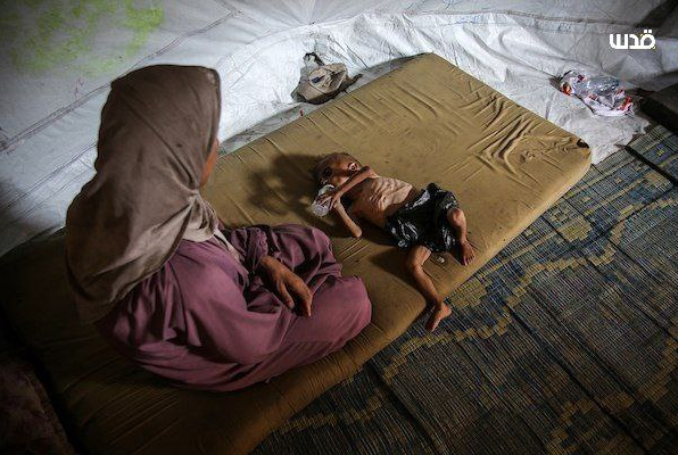
It is one thing to die of hunger. It is another to die never having been held with the fullness of safety and warmth that nature intended.
In Gaza, famine is not a threat. It is a reality measured not only in calories and corpses but in something far more intimate: the silence between a mother and her child when the milk never comes. This is not only a humanitarian crisis. It is a biological and spiritual desecration.
A mother brings new life into the world, and in the sacred order of things, that life turns to her breast, seeking warmth, safety, nourishment. The first drops of colostrum are thick with antibodies, hormones, and history. They are the first sacrament of care, of belonging. But in Gaza, under siege, the breast is often dry. The baby suckles and finds nothing. And in that moment, a bond older than civilization begins to unravel.
I saw this with my own eyes, while practicing medicine in Gaza. Infants limp with hunger, too weak to cry. Mothers gaunt, ashamed, desperate, their own bodies wasting as they tried to offer comfort with arms that shook. They looked at me not for medicine but for mercy. And all I could think was: this is not how the world is supposed to be.
The biology is brutal. Starvation halts lactation. Cortisol floods the body under extreme stress, shutting down prolactin, suppressing oxytocin. No oxytocin, no milk. No milk, no immunity, no warmth, no hope. The baby’s gut becomes inflamed and porous. Infections race in. Muscles waste. The brain, lacking fat and glucose, slows. A child who does not breastfeed is not only hungry, they are unmoored from the biological cradle that teaches trust, rhythm, and connection. Many children die. If they survive, they live in a body and mind etched with trauma.
This is more than a tragedy between one mother and one child. This bond is the first social contract. It is the first act of giving and receiving, the first heartbeat of civilization. When that contract is broken, when thousands of mothers cannot feed thousands of babies, what is torn is not just flesh. It is culture. It is continuity. It is the future.
We rarely speak aloud just how holy this feedback loop is. When a baby suckles, it is not simply extracting milk. It is sending a biochemical signal through the nipple to the mother’s brain, which responds by releasing prolactin to make more milk, and oxytocin to let it down.
This is not one body giving to another. It is two bodies singing in a shared language of love, an intimate duet of breath, pressure, scent, and warmth. The baby regulates the mother’s physiology. The mother’s milk regulates the baby’s immune system and brain development. This mutual regulation, this exquisite reciprocity, is the biological ground zero of empathy.
When that feedback is severed, it is not only nutrition that vanishes. It is emotional safety. The baby’s nervous system, without the soothing rhythms of the maternal body, becomes chaotic. The stress hormones flood in. Synapses prune. Future personality, future attachment, future capacity to love, all of it is altered. On a molecular level, love has been interrupted.
And that is what makes this moment in Gaza so unspeakably unnatural. This is not a slow tragedy of drought or crop failure. This is not the hardship of poverty. This is an engineered scission. This is the active dismantling of the most sacred interaction life has to offer.
This is starvation imposed by policy, a blockade that strangles not just goods but human relationships. It is one thing to die of hunger. It is another to die never having been held with the fullness of safety and warmth that nature intended. That is a different kind of annihilation.
The broken bond becomes metaphor. The starvation of the child mirrors the starvation of the people. The collapse of lactation echoes the collapse of infrastructure. The mother’s dry breast is the dried-up aquifer, the burned olive tree, the shuttered bakery, the desperate and violent waiting line for aid that never arrives.
As the infant’s body falters, so does the society that might have nurtured them. When babies die in their mothers’ arms for lack of milk, it is not just a personal grief. It is a national hemorrhage and an international failure of morality.
And the damage will echo for generations. Children raised in hunger grow into adults with stunted brains, dysregulated hormones, and shattered trust. Their wounds will not remain private. They will spread through relationships, institutions, and memory. A traumatized generation is being forged in Gaza, one hungry cell at a time.
To sever a mother from her child’s need is a violation of both biology and soul. It is the collapse of continuity, the smashing of the first mirror a baby looks into and learns, I am loved. When that mirror is cracked by siege and starvation, it becomes harder to believe in anything—peace, justice, biology and even God.
This is not just famine. This is the theft of tenderness. It is the sabotage of one of nature’s most beautiful expressions of mutual need and mutual care. It is a moral catastrophe.
When a mother cannot nurse her child, something ancient dies. And when this happens not by accident, but by the hands of men and policies, it is not just famine. It is a campaign against the very idea of tenderness, of care, of inheritance. It is the erasure of the future, one hungry infant at a time.
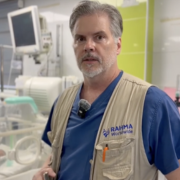
– Dr. Mark Brauner is a board-certified emergency physician with over 20 years of experience, most recently volunteering at Nasser Hospital in Gaza during the siege in June 2025. He contributed this article to the Palestine Chronicle.



The most terrifying article I have read yet about the genocide in Gaza. May Allah bless the Palestinians, and the good doctor Mark Brauner.