By Jeremy Salt
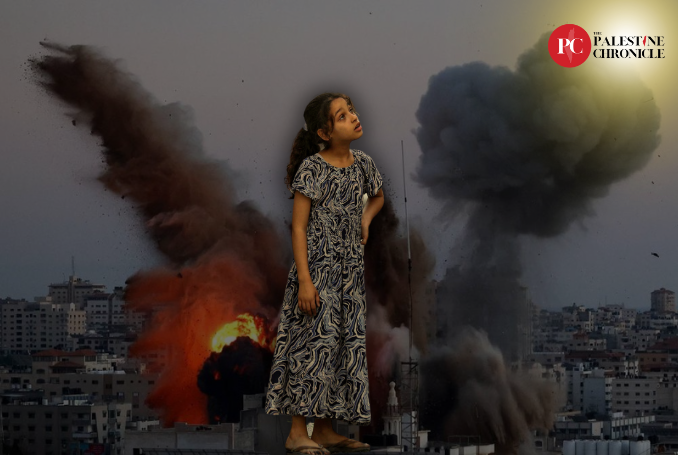
There is no destruction in Arab and Islamic history remotely to compare with what these ‘western’ barbarians and the genocidal state they have created in Palestine have done since 1918.
While Israel pushes ahead on its trail of genocidal destruction, resistance to the Jolani/al-Shara’a regime in Syria continues to spread. The media describes it as being composed of ‘Assad loyalists,’ the same phrase of denigration used against the Syrian army after the attack that began in 2011 and culminated in the collapse of the government in December 2024.
The results are clear. Syria is now in the hands of Turkiye in the northwest, the US and the Kurds in the northeast, and Israel in the south. Ahmad al-Shara’a is in Washington at the time of writing. He is giving the US an air base near Damascus, has no problems with Israel, and in time, no doubt he’ll be entering the ‘Abraham accords.’ Palestine has been betrayed, and there is no longer a unified Syria. The partition plan launched by the imperial powers in 1918 has been almost finalized.
Hay’at Tahrir al Sham (HAT) did not conquer Syria. It was handed to it after a deal was worked out ahead of time. Basically, it walked out of Idlib and into all of Syria’s cities in the west, from Hama through Homs to Damascus. There was virtually no fighting. An army that had fought valiantly since 2011 mysteriously ‘collapsed.’ Precisely how and why remain to be determined.
In line with their ideology and their massacres over more than a decade, the armed groups known as Hayat Tahrir al-Shams (HTS) resumed their massacres of Alawis the moment Al Qaeda took up residence in Damascus. They began with beatings and humiliation, with lines of men and boys forced to lie on the ground and bark like dogs. Women were beaten, or killed, or abducted as war booty and forced into marriage.
Soon, these certified killers moved on to mass murder. In August 2025, the UN International Commission of Inquiry on Syria issued a report on violence that “may amount” to war crimes committed between March 25 and August 14 this year. These crimes included the massacre in March of 1400 men, women, and children in Latakia, Tartu,s and Hama by ‘security forces’ and civilians coming from Homs and as far north as Idlib to join in the killing and destruction.
On October 30, the chairman of the commission, Paulo Pinheiro, told the UN General Assembly that investigators had visited Latakia and Tartus in June and the southern, largely Druze governorate of Suwayda more recently.
Alawis had been “displaced” from Damascus and western governorates. In Suwayda, more than 30 Druze villages were “entirely depopulated,” looted, and burnt down in July. Tens of thousands of civilians had fled into Lebanon, mostly Alawis and Christians
Pinheiro described the treatment of the civilian population as “indescribable” and the death and destruction as “immense.” The “Inhuman acts” he mentioned included the mistreatment of dead bodies. The commission had received multiple reports of women and girls subjected to sexual violence and forced into marriage. Some had disappeared without any action being taken by ‘authorities’ to investigate.
The report found that the March massacre of Alawis had followed armed resistance to arrests by “interim government forces” in which some had been killed, so to this limited extent, the opposition was blamed as well. “Killings and other acts” by ‘security’ forces and allied civilians were part of a systematic pattern across multiple widespread locations.
While the commission found no evidence of government policy, Pinheiro said it had continued to receive reports of extra-judicial killings, torture, and the ill-treatment of Alawis. He said the hate speech that followed the March massacres in the coastal region had set the stage for further violence.
Those held responsible for the crimes against civilians are a mixture of ‘security’ forces, like-minded civilians, and armed groups such as Saraya Ansar al Sunnah (friends or protectors of religious tradition), which is committed to the total extermination of Alawis, Shia, Druze, and Christians. Formed in secret in Idlib before HTS began its advance on Damascus, Saraya Ansar al Sunnah broke with the movement because it was too ‘soft’ on heterodox Muslims and Christians.
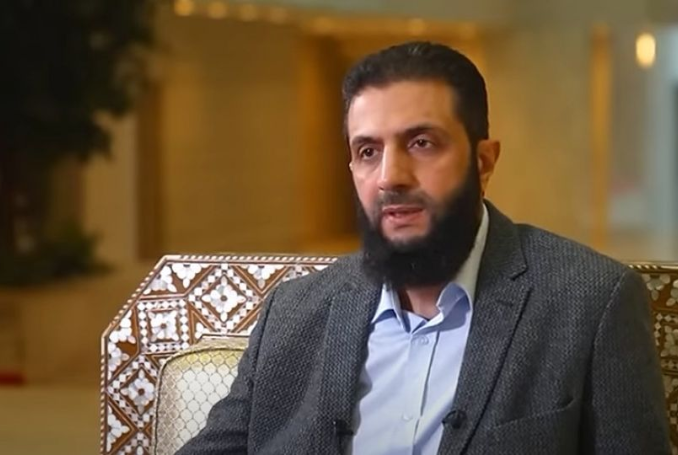
The head of the ‘interim government’ in Damascus, Ahmad al-Shara’a, rose through the ranks of Al Qaeda in Iraq as Abu Muhammad al-Jolani before being captured in Mosul by US forces in 2005. Imprisoned in Camp Bucca, he was transferred to the custody of the Iraqi government in 2010 and released in March 2011, two days before anti-government demonstrations began in Dara’a. The timing naturally invites suspicion as to whether he was ‘turned’ in Camp Bucca.
Shara’a was affiliated with the Islamic State of Iraq in 2011 before being sent to Syria to establish an arm of the movement. However, breaking with both Al Qaida and the Islamic State, he instead established Jabhat al Nusra Ahl al Sham (Front for the Assistance of the People of Syria) in 2012. The group was rebranded as Jaish al Fatah in 2015 and Jabhat Fatah al Sham in 2016.
Globally listed as a terrorist organization, the crimes attributed to Nusra included summary killings (of gay men and women accused of adultery, amongst other victims), torture, and abductions. This is separate from the crimes in which Jolani may have been involved as a senior figure in Al Qaida.
Throughout, Shara’a’s stated objective once the secular Syrian government had been overthrown was to establish an Islamic state based on shari’a law. Jabhat al Nusra was rebranded Hay’at al Tahrir al Sham (HTS) in 2017, after a bloody round of infighting ended in the unification of the movements in Idlib under Sharaa’s command.
He soon began spreading the message that his regime was moderate and inclusive, despite the unpunished slaughter and abductions still taking place and the senior role in the ‘interim government’ of individuals who were far from moderate and inclusive.
They include ‘justice’ minister, Shadi Muhammad al Waisi, formerly a judge in the Nusra court in Idlib, where he was videoed overseeing the ‘execution’ of two women accused of prostitution and adultery.
‘Defence’ minister Murhaf abu Qasra was another senior HTS figure in Idlib. The crimes of which he has been accused include the ‘executions’ of Shia and Christians, amputations and stonings to death, murder, and rape.
Entering Damascus in December 2024, Al Shara’a exchanged the head dress of the emir for a sharp suit and tie. In the ‘west’ and the Gulf states, that apparently made all the difference.
Most likely already groomed for the role he was to play, there was to be no waterboarding or genital electrocution to force Shara’a to confess to the crimes for which he must have been responsible as a senior figure in the listed terrorist organizations.
Instead, he welcomed important visitors to Damascus, was interviewed positively by the international media, and was received as an honoured guest in Arab and ‘western’ and other countries: Egypt, Kuwait, Jordan, Saudi Arabia, Qatar, the UAE, Russia, Turkiye, Azerbaijan, and now the US. Given their complicity in the destruction of Syria, he should feel perfectly at home.
In Riyadh in May this year, he met Trump, who described him as a “young attractive guy” with a “turbulent” past. They were soon to meet again in the White House, and no doubt soon he will be in Germany, where Chancellor Merz has invited him for a visit to discuss the ‘repatriation’ of Syrians.
The ‘tough line’ is aimed at countering far-right attacks in Germany on security and migration. “I will say it again,” Merz said. “The civil war in Syria is over. There are no longer any grounds for asylum in Germany. We can therefore begin repatriation.”
In fact, this was not a civil war but an eventually successful attempt by ‘western’ and regional governments to bring down the Syrian government through the terrorist proxies they financed, armed, and trained.
Anyway, apart from how the war is to be described, even after ten months, Syria, as Amnesty and the UN have made clear, is far from safe for any Alawis, Shia, or Christians among the more than one million Syrians who sought sanctuary in Germany. Secularized Sunni Muslims would have to think twice about going back, too, although from the way Merz is talking, they might not have much of a choice.
It is also far too premature to say the war is ‘over.’ The US, Turkiye, and Israel are showing no inclination to withdraw from the large slabs of the country they have occupied. Resistance to the regime in Damascus continues to build up. Israel is violating the ceasefires in Gaza and Lebanon and killing civilians every day. It continually threatens escalation while preparing to attack Iran.
The Lebanese army is not capable of disarming Hezbollah as instructed by the US and Israel, and Lebanese army commanders are not willing to do it anyway, as Israel’s murderous attacks have shown who the country’s real enemy is. Now, for the first time, President Aoun, a former head of the army, has ordered it to resist Israeli attacks.
Between Iraq and Lebanon, Syria has been turned into an outpost of ‘western’, Israeli and gulf state interests. This makes it vulnerable to being sucked into the vortex if, as repeatedly threatened, Israel and the US go ahead with further large-scale attacks on Lebanon and Iran. The point here is that the war on Syria embraces the entire region and is far from over.
Shara’a does not control ‘Syria’ because Syria, as it was until 2011, no longer exists. It has been effectively partitioned between Turkiye in the northwest, the US/the Kurds in the northeast, and Israel in the south.
Shara’a was chosen as ‘interim president’ by HTS’s armed command. Syria no longer has a constitution, only a “declaration” of one issued by Shara’a. The recent ‘elections’ were held on the basis of pre-approved candidates appointed to electoral colleges by sub-committees established in each of Syria’s 14 governorates.
There were no ‘elections’ in the predominantly Kurdish regio,n where DAANES (Democratic Autonomous Administration of North and East Syria) described the process as undemocratic and not representative of the will of the people. Neither were they held in Suwayda, where resistance to Damascus continues to develop.
Two-thirds of the successful candidates were ‘elected’ by the electoral colleges. The remaining third was reserved as the prerogative of the ‘interim president.’ Shara’a also set up an 11-member supreme body to ‘oversee’ the path of the pre-approved candidates into the People’s Assembly.
In the end, out of a nominal population of 25 million people (more than seven million of whom have fled the country since 2011), only 6000 people within the electoral colleges actually voted, in a process tightly controlled from the top,
Senior command positions in the regime’s armed forces have been filled by foreign fighters from the Arab world, the Caucasus and Central Asia. Raed al Saleh, the leader of the White Helmets, the ‘civil defence’ group which collaborated with Nusra and other groups listed as terrorist organizations, is now the ‘interim government’ minister for disasters and emergencies.
In an article for the Cradle, under the heading of ‘In Syria the lunatics are running the asylum,’ (January 31, 2025), Fuad Walid Itayim wrote that the country the ‘lunatics’ want is not the country Syrians want. There is no doubt of this. Syria’s civilization is ancient, multi-ethnic and multi-religious, composed of Sunni and Shia Muslims, Alawis, Ismailis, Yazidis, Kurds, Druze and Christians of various denominations, all previously protected under the umbrella of the secular state.
After thousands of years, this has now been collapsed over the heads of the Syrian people. The declaration of Islamic jurisprudence (fiqh), as the legislative base of the state, sets the tone for what is to come, but resistance is spreading. Syrians have not fought for their country for a century to allow it to fall into the hands of murderous sectarian tools of the ‘west’ and Israel.
This long war on the central lands of West Asia (Syria, Lebanon, Palestine, and Iraq) is also a war on Arab history, culture, and identity. That is the greater story. There are no separate wars because each one is a link in a chain of conquest and control of West Asia set in motion nearly two centuries ago.
There is no destruction in Arab and Islamic history remotely to compare with what these ‘western’ barbarians and the genocidal state they have created in Palestine have done since 1918.
The heirs to the richest civilizations in the world have had to watch them being turned into graveyards and rubbish dumps. What level of arrogance and racism makes the barbarians from the west think they can get away with this forever?
– Jeremy Salt taught at the University of Melbourne, at Bosporus University in Istanbul and Bilkent University in Ankara for many years, specializing in the modern history of the Middle East. Among his recent publications is his 2008 book, The Unmaking of the Middle East. A History of Western Disorder in Arab Lands (University of California Press) and The Last Ottoman Wars. The Human Cost 1877-1923 (University of Utah Press, 2019). He contributed this article to The Palestine Chronicle.