

More than three months into a ceasefire, Palestinians in Gaza say they need basic shelter and dignity—not grand development schemes. Jared Kushner’s reconstruction plan is widely viewed as detached from reality, politically conditional, and dismissive of Gaza’s social fabric and national rights.
Waiting for Basic Shelter
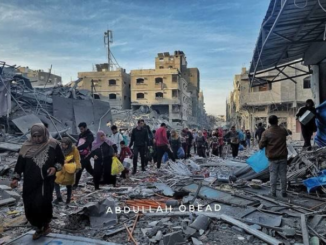
More than three months into the ceasefire, people in Gaza are clinging to any trace of hope that their homes will be rebuilt and their lives restored after two years of genocide that stripped them of even the most necessities. They are not asking for luxury. What they want is a simple cement house that can protect them from harsh winter winds and heavy rain, and from the burning summer sun.
Yet the plan put forward by Jared Kushner, which presents Gaza as a modern, polished enclave filled with skyscrapers, luxury resorts, ports, and investment hubs, has failed to inspire relief or optimism among Palestinians. Instead, it has been widely dismissed or viewed as an illusion designed to conceal the real intentions of Israel and the United States toward the Strip.
Skepticism on the Ground
“The United States has long acted as Israel’s primary backer and has supported the genocide in Gaza for two years,” said Mohammed Abu Own, a 35-year-old researcher from Gaza who lost his twin son and daughter, along with his home, in an Israeli airstrike in early 2024. “Why would it suddenly be concerned about our prosperity and reconstruction?”
“I believe this plan was not designed to end our suffering or reduce unemployment,” he added, describing it as unserious and unconvincing. According to him, the proposal lacks practical details and a clear timeline, turning it into “a form of political blackmail rather than a genuine reconstruction effort.”
Abu Own argues that the plan raises more questions than it answers and appears aimed at reshaping Gaza both geographically and demographically. Based on available descriptions, the plan divides the Strip into so-called “executive phases,” beginning in Rafah and Khan Yunis in the south and extending northward toward Gaza City.
Through this gradual process, critics fear Gaza’s identity would be altered under the cover of prosperity and modernization.
Under the proposal, the coastline is envisioned as a dense strip of tourism and investment towers, while the heart of Gaza City is portrayed as a zone of massive industrial compounds and advanced data centers. Eastern border areas are designated for industrial use in a manner resembling an expanded, population-free ‘buffer zone’. The plan also includes major infrastructure projects such as a port, an airport, a railway, and a tri-border crossing located in the far southeast of Rafah.
Ignoring Gaza’s Social Fabric
While the plan places heavy emphasis on economic development, it largely ignores Palestinians’ lived reality and the cultural, social, and religious fabric that defines Gaza’s historical identity.
“They want to replace national rights with employment projects,” Abu Own said. “They want to diminish our presence and erase our identity.”
Before October 7, 2023, Gaza had a distinct character rooted in Arab and Islamic traditions. Homes were built close together, neighborhoods were tightly knit, and extended families often lived in the same buildings or along the same streets. Daily life revolved around proximity, shared spaces, and strong social bonds.
“We cannot live in compounds or skyscrapers,” Abu Own said. “Our way of life is inherited from our grandparents and ancestors. It’s traditional, communal, and far removed from the chaos and alienation of modern urban living.”
Economic Claims Under Scrutiny
The plan also fails to treat Palestinians as victims of war who deserve peace, stability, compensation, and humanitarian relief. Instead, it frames them primarily as a labor force meant to serve ambitious development projects—projects that many Palestinians doubt will ever materialize.
Kushner’s claim that unemployment in Gaza could reach zero percent within three years of implementing the plan has been met with widespread skepticism.
“This alone proves how unconvincing the proposal is and deepens our doubts about its real intentions,” said Mohammed Rushdy, an engineer at the Gaza Municipality. “No country in the world, even the most economically advanced, has ever achieved zero percent unemployment.”
“The United States itself, which is often described as the most powerful country in the world, has an unemployment rate of around 4.4 percent,” Rushdy added.
Rushdy also questioned the three-year timeline allocated for implementation. Gaza, he noted, covers only 365 square kilometers.
“Entire industrial and smart cities have been built from scratch within three years,” he said. “For Gaza, this is an excessively long timeline given its small geographic size.”
Reality on the Ground
These concerns become even more pressing when measured against the reality on the ground. Over the past two months, and continuing to this day, the Israeli army has carried out large-scale demolition operations within what is known as the “yellow line,” an area that now consumes nearly 55 percent of Gaza’s total land.
With only 45 percent of the Strip remaining for nearly two million people, Abu Own questions where the plan’s proposed projects and massive investments would even be built. Would they be established across the entire Strip, or only on the shrinking areas not under Israeli control? How could Gaza physically absorb such a vast number of towers and industrial facilities within its limited space?
Political Conditions
Further doubts about the plan’s credibility emerged when Kushner linked its success to several political conditions, most notably the disarmament of Hamas and other Palestinian resistance factions. Palestinians argue that this condition renders the plan’s implementation uncertain and dependent on shifting political calculations and the will of Israel and the United States.
For many in Gaza, these contradictions reinforce a single conclusion: the plan is not about rebuilding lives, but about reshaping the Strip on terms imposed from outside, with little regard for the people who call it home. Real intentions of settlement, they believe, are concealed behind this plan.
(The Palestine Chronicle)

– Noor Alyacoubi is a Gaza-based writer. She studied English language and literature at al-Azhar university in Gaza City. She is part of the Gaza-based writers’ collective We Are Not Numbers. She contributed this article to The Palestine Chronicle.




Kushner is a zionist killer, like his god daddy netanhayu. Both expel lies thru their skin pores.