
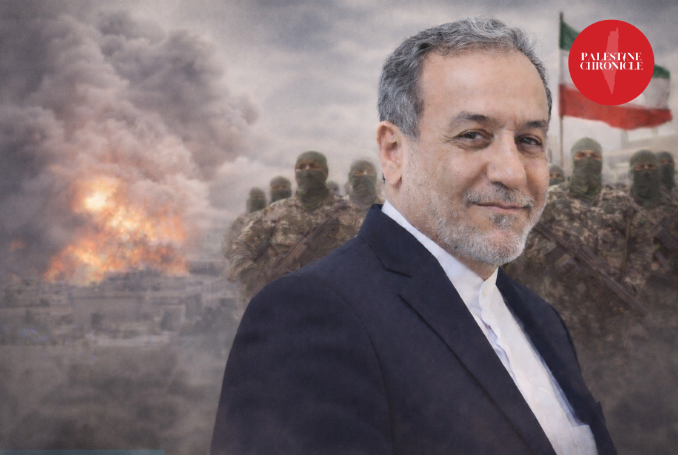

Iran’s “Decentralized Mosaic Defense” spreads command and firepower, aiming to outlast decapitation strikes and impose escalating costs regionally.
What Is Iran’s “Decentralized Mosaic Defense” Strategy?
Iran’s foreign minister, Abbas Araghchi, recently put a clear label on a concept Iranian planners have discussed for years: “decentralised (decentralized) mosaic defence”—often described as a wartime design meant to keep the system fighting even if senior leadership, communications, or major hubs are hit.
At its core, mosaic defense is built around dispersion and redundancy. Rather than relying on one central “brain” that can be disabled, authority and capability are distributed across multiple geographic and organizational nodes, with overlapping chains of command and pre-planned contingencies.
According to Reuters, Iranian sources described how the Revolutionary Guards had delegated authority far down the ranks and built “successor ladders” so units can keep operating if commanders are killed.
In a televised interview also cited by Reuters, Iranian deputy defence minister Reza Talaeinik said each figure in the command structure had named successors “stretching three ranks down” ready to replace them.
Why Araghchi Says “20 Years” Of US Wars Shaped It
Araghchi framed the doctrine as a product of watching the United States fight—then struggle to finish—major wars on Iran’s borders. Araghchi wrote:
“We’ve had two decades to study defeats of the U.S. military to our immediate east and west. We’ve incorporated lessons accordingly.
Bombings in our capital have no impact on our ability to conduct war. Decentralized Mosaic Defense enables us to decide when—and how—war will end.”
We've had two decades to study defeats of the U.S. military to our immediate east and west. We've incorporated lessons accordingly.
Bombings in our capital have no impact on our ability to conduct war. Decentralized Mosaic Defense enables us to decide when—and how—war will end. pic.twitter.com/E4jrdnDapb
— Seyed Abbas Araghchi (@araghchi) March 1, 2026
That “study” shaped Iranian planning in two ways:
First: don’t fight the enemy’s favorite war. The US advantage is high-end airpower, ISR (intelligence/surveillance/recon), and precision strikes. Mosaic defense tries to make those strengths less decisive by ensuring there is no single headquarters, city, or leader whose loss collapses the fight.
Second: make war politically and operationally exhausting. The doctrine is designed for endurance—survive the initial shock, keep retaliating through multiple channels, and raise the costs of a prolonged campaign. This is the essence of the message Araghchi is trying to send: Iran intends to shape how—and when—the conflict ends, not just absorb blows.
How It Works In Practice: “If One Part Is Hit, Others Keep Moving”
Mosaic defense is often explained with a simple idea: “decapitation is not a silver bullet.” The goal is to keep the “body” functioning even if the “head” is struck—by building a system where commands can pass quickly, units can operate semi-independently, and retaliatory capacity is not concentrated.
Reuters’ reporting adds concrete operational detail. It says decentralization has been part of the IRGC’s doctrine for over 20 years, developed after observing the collapse of Iraqi forces in 2003—a cautionary lesson about what happens when a centralized military is shattered quickly.
In this structure:
Provincial and sector commands can keep fighting with “general instructions given in advance,” rather than waiting for real-time direction from top political leadership.
Succession planning is built in so leadership losses don’t freeze operations; Talaeinik’s “three ranks down” line is meant to reassure that replacements are immediate.
The coercive/security architecture is also designed to function internally during wartime.
This is why analysts describing the doctrine emphasize overlapping chains of command and dispersed stockpiles—it’s not just decentralization, but redundancy everywhere.
‘Largest Army in the World Is Fleeing’: IRGC Says US Forces Retreating in Gulf
Deterrence, Not Just Defense—and the Risks
Araghchi’s messaging is strategic in itself: it says, in effect, “You can hit us hard and still not end this quickly.” The doctrine is intended for both domestic reassurance and outward deterrence: Iran’s warfighting capacity is portrayed as “a web designed to endure, adapt, and retaliate,” rather than a pillar that collapses if broken.
Other top Iranian officials have echoed the “long war” framing. Gulf News quoted Ali Larijani as saying: “Iran, unlike the United States, has prepared itself for a long war.”
But mosaic defense has a downside: delegation increases unpredictability. Reuters noted that empowering mid-ranking officers can build resilience yet also raise the risk of miscalculation or escalation, because more actors can initiate actions under broad guidance.
(PC, Gulf News, Reuters, AJA, Social Media)


Be the first to comment