
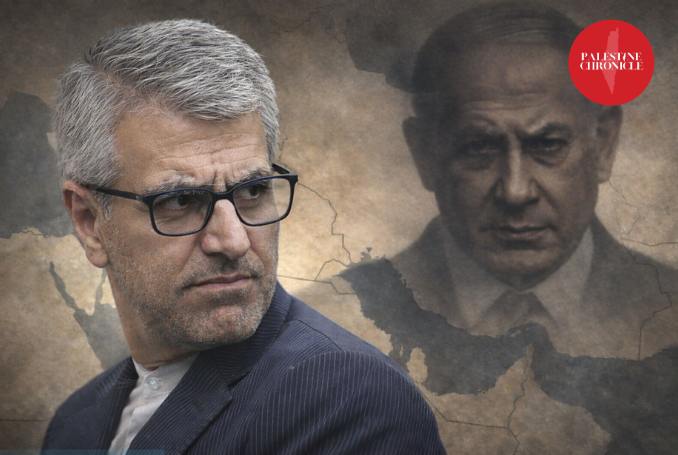

Iranian officials warn Israel may stage covert attacks in third countries to widen the war and implicate Tehran.
Key Takeaways
- Iranian officials say Israel may attempt “false flag” attacks in Arab countries to widen the war.
- The accusation gained momentum after incidents in Saudi Arabia and Cyprus during the first week of the conflict.
- Tehran insists its military campaign targets Israeli and US military assets, not neighboring Arab states.
- Iranian officials argue Israel would benefit if Arab governments were drawn directly into the war.
- The accusations have been voiced by Iranian officials and reported by Iranian and regional media.
Growing Concerns
As the war between Israel and Iran continues to expand geographically, Iranian officials are warning that Israel may attempt to widen the conflict through covert provocations in neighboring states.
Tehran says such actions could be designed to implicate Iran in attacks against Arab countries, potentially dragging regional governments directly into the war.
The warning has emerged amid a series of security incidents across the Middle East and eastern Mediterranean during the first days of the conflict.
Iranian officials say those developments have increased the risk that the war could spread beyond its original battlefield.
Baghaei’s Warning
The most direct accusation from Tehran came from Iranian Foreign Ministry spokesman Esmaeil Baghaei, who warned that Israel could attempt to transform the war into a wider regional confrontation.
“The Zionist regime will undoubtedly seek to exploit the situation, expand the scope of fire, and carry out acts of sabotage in regional countries in order to transform the war it has initiated together with the United States against Iran into a widespread regional conflict,” Baghaei said during a press conference in Tehran on March 3, according to Press TV and Mehr News Agency.
Baghaei also said Israel has a long history of covert operations designed to manipulate regional dynamics.
“Destabilizing the region is the project of the Zionist regime,” he said at the same briefing.
In a separate interview published by the investigative news outlet Drop Site, Baghaei said Israel was already attempting to blame Iran for attacks in the Gulf.
“These attacks are false-flag operations intended to provoke the countries of the region into entering a regional war,” he said.
Apology or Warning? Pezeshkian’s Message to the Gulf – Analysis
Incident in Saudi Arabia
The Saudi dimension is central because this is where the accusation carries its clearest political consequences.
On March 6, Saudi officials warned Iran against attacks on Saudi territory and energy infrastructure, according to reporting by Anadolu Agency.
The warning came after security incidents linked to missile and drone activity across the Gulf region.
Saudi officials reportedly told Tehran through diplomatic channels that further attacks could trigger retaliation.
Iranian officials responded by insisting their operations were directed at Israeli and US military targets.
“Our armed forces attack only those installations, those military bases that are being used, or abused, by the United States to attack Iran,” Baghaei said in remarks cited by Press TV.
Citing top officials, Iranian media outlets have reported that Tehran does not seek confrontation with Gulf states and respects the sovereignty of neighboring countries.
The War Iran Prepared For: How Tehran Is Raising the Cost of War
The Cyprus Strike
Another development that fueled speculation about wider escalation occurred in Cyprus.
On March 4, a drone struck the British military base at RAF Akrotiri, one of the United Kingdom’s sovereign bases on the island.
Cypriot authorities confirmed the strike caused limited damage, according to the Cyprus Mail.
The incident triggered renewed debate in Cyprus over the presence of British military bases on the island.
It also led to additional security measures around the bases and the deployment of counter-drone systems.
The Akrotiri base has been used for military operations connected to the Middle East, making it a sensitive strategic location during the current conflict.
Iranian officials have not claimed responsibility for the incident but have pointed to such attacks as examples of events that could be manipulated to widen the war.
Tucker Carlson’s Claims
The issue gained additional attention in the United States after comments by conservative broadcaster Tucker Carlson, who claimed Israeli intelligence agents had been arrested in Gulf countries.
In a widely circulated video commentary, Carlson said authorities in Saudi Arabia and Qatar had detained Israeli operatives planning attacks.
“It hasn’t been reported, but it’s a fact that last night, in Qatar and Saudi Arabia, authorities arrested Mossad agents planning on committing bombings in those countries,” Carlson said.
Carlson questioned why Israel would allegedly plan attacks inside countries already facing Iranian missile threats.
“Why would the Israelis be committing bombings in Gulf countries, which are also being attacked by Iran?” he asked.
He then suggested such attacks could be intended to widen the war.
“Israel wants to hurt Iran, and Qatar, and the UAE, and Saudi Arabia, and Bahrain, and Oman, and Kuwait,” Carlson said in the same broadcast.
Carlson’s remarks circulated widely across social media and regional media outlets, adding to the broader debate over whether covert provocations could push additional states into the conflict.
Destroying the Deal: How Trump Helped Advance Iran’s Nuclear Program
Tehran’s Message to Regional States
Iranian officials have repeatedly emphasized that their confrontation is with Israel and the United States rather than with Arab governments.
Statements carried by Iranian media have stressed that Tehran’s military campaign targets Israeli and US military infrastructure.
Iranian President Masoud Pezeshkian has also said Iran respects the sovereignty of neighboring states and does not seek war with them.
Those messages have been directed particularly at Gulf countries, where several governments host US military facilities.
Tehran has attempted to reassure those states that Iranian retaliation is focused on what it calls the “source of aggression.”
IRGC Announces Major Escalation as Iran Moves to Double Strategic Missile Operations
Why Iran Says Israel Would Benefit
Iranian officials and commentators argue that expanding the war geographically could serve Israeli strategic interests.
If Arab states were drawn directly into the conflict, the battlefield would widen significantly.
Iran would then be forced to divide its military capabilities—including missiles and drones—across multiple fronts.
That, Iranian analysts say, would reduce the concentration of pressure currently facing Israel.
A broader war would also make diplomatic efforts to end the conflict more complicated.
Once more states are directly involved, the number of military actors, political agendas, and security calculations increases dramatically.
For this reason, Iranian officials say regional governments should be cautious about how incidents are interpreted during the conflict.
(FARS, IRNA, MEHR, Press TV, Al-Mayadeen, AJA, AA, PC, Iranian Media)




From what we know about Netanyahu’s character, would he do such a thing? Absolutely! America needs to investigate this, but they won’t.