
By Palestine Chronicle Editors
Did the Iran rescue expose the real truth—that a ground war is not just difficult, but impossible?
Key Developments
- Iran says US rescue mission failed, multiple aircraft destroyed near Isfahan on April 5.
- US officials say missing F-15 crew member was successfully recovered in a large-scale operation.
- Episode highlights widening gap between US war rhetoric and battlefield realities.
From Downing to Rescue: What Happened
The competing narratives surrounding the US rescue mission must be grounded in the events that unfolded in the days leading up to Sunday, April 5.
In early April, Iranian air defenses shot down a US F-15E fighter jet over Iranian territory (one of several shot down on that same day), a development that immediately contradicted repeated US claims that Iranian defenses had been neutralized. The downing of the aircraft was not a minor incident—it represented a direct challenge to Washington’s assertion of air superiority.
US officials acknowledged the loss and confirmed that one crew member had been located, while the second remained missing. In response, Washington launched a large-scale search-and-rescue operation involving dozens of aircraft, special forces, and surveillance systems operating over central Iran.
By Sunday, April 5, the operation reached its decisive phase. The United States announced that the missing crew member had been retrieved. President Donald Trump declared on Truth Social, “WE GOT HIM!” describing the mission as “one of the most daring” operations in US military history.
But this narrative was immediately contested.
Iran’s Version: A Failed Operation Under Fire
Iranian military officials offered a sharply different account, one that framed the rescue attempt not as a success but as a failed incursion into contested airspace.
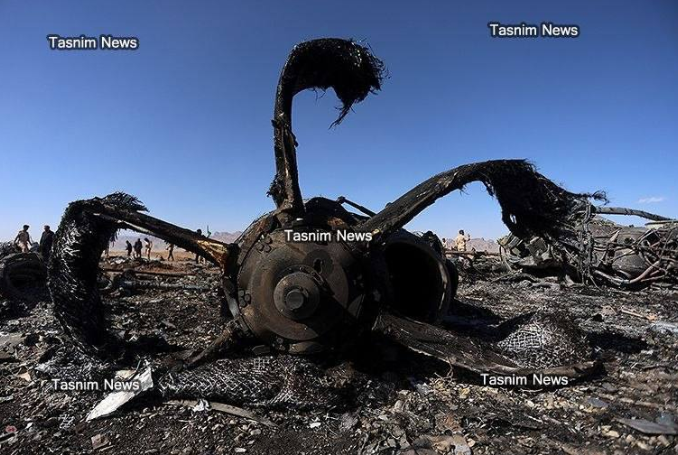
According to Tasnim and Press TV, a spokesperson for the Khatam al-Anbiya Central Headquarters said Iranian forces detected and engaged US aircraft attempting to extract the downed pilot south of Isfahan. The response, he said, involved coordinated operations by the Islamic Revolutionary Guard Corps (IRGC), the army, and auxiliary units.
“The enemy’s operation ended in failure,” the spokesperson stated, emphasizing that Iranian forces not only disrupted the mission but inflicted losses on the incoming aircraft.
Iranian reports described the destruction of multiple US platforms, including helicopters and transport aircraft, during the engagement. The IRGC also announced that an MQ-9 drone had been shot down over Isfahan, adding to a growing tally of aerial assets brought down in recent days.
This narrative builds on a broader pattern that Iranian officials have consistently emphasized: that US forces are operating under sustained threat inside Iranian airspace, and that attempts to project power deep into the country carry escalating risks.
Iranian media also highlighted the role of local mobilization in the aftermath of the downing. Reports described residents and tribal fighters in mountainous regions participating in efforts to locate the pilot, while US helicopters searching the terrain reportedly came under fire.
This dimension is central to Iran’s message. It portrays a society not only resisting but also actively participating in the confrontation, reinforcing the image of a unified internal front rather than a fragmented state under pressure.
Washington’s Version: A High-Risk Success
The US narrative, while celebratory, reveals a far more complex operation than the rhetoric suggests.
According to US officials cited by Reuters, CBS News, and other outlets, the rescue involved dozens of aircraft and special operations forces working to locate and extract the missing crew member using a tracking beacon. The pilot, they said, was injured but stabilized after recovery.
Iran reports destroying US aircraft during failed rescue operation, while Washington says pilot was successfully retrieved in complex mission.https://t.co/lNJM5QanHY pic.twitter.com/KH0K0pfPos
— The Palestine Chronicle (@PalestineChron) April 5, 2026
However, even within this account, the operation unfolded under significant pressure.
US officials acknowledged that aircraft involved in the mission came under fire. Reports indicated that at least one helicopter was damaged, while an A-10 aircraft was hit during the operation, forcing the pilot to eject before being recovered. Additional reports indicated that US forces had to destroy or abandon aircraft during the mission due to damage or technical issues.
These details stand in contrast to the image of uncontested dominance.
They point instead to a contested environment in which US forces were operating under active threat while attempting to carry out the rescue.
From Strategic Ambition to Tactical Survival
Beyond the immediate contradictions, the episode reveals a deeper transformation in the framing of the war.
At the outset, US officials spoke in expansive terms—defeating Iran, reshaping the regional order, and imposing a new political reality. Claims of “total control of the skies” were central to that narrative.
Yet the events surrounding the downing of the F-15 and the subsequent rescue mission tell a different story.
The most prominent achievement now being presented is the retrieval of a single pilot from hostile territory after a high-risk operation that involved losses, damage, and sustained engagement with Iranian forces.
This is not a minor shift in emphasis. It reflects a narrowing of objectives from strategic transformation to tactical containment. The war is no longer being framed in terms of decisive outcomes, but in terms of managing incidents and extracting personnel from contested zones.
The symbolism of this shift is difficult to ignore. A military campaign that began with promises of overwhelming superiority is now defined, at least in this moment, by the recovery of one individual under fire.
Hormuz and the Limits of Power
The rescue operation took place against the backdrop of a broader strategic reality that continues to shape the conflict.
The Strait of Hormuz remains heavily disrupted, with global shipping affected and energy markets under sustained pressure. Iran has demonstrated the ability to influence access to one of the world’s most critical maritime chokepoints, maintaining leverage that extends far beyond the immediate battlefield.
At the same time, Iranian forces continue to deploy missile and drone capabilities across multiple fronts, reinforcing the perception that the country retains both operational capacity and strategic depth despite ongoing attacks.
These developments challenge the narrative of US control. They suggest that the conflict has not produced the decisive outcomes that were initially promised, and that Iran remains capable of shaping events in ways that extend beyond isolated incidents.
The Politics of ‘We Got Him’
Trump’s statement—“WE GOT HIM!”—is more than a declaration of success. It is a political framing of the entire episode.
By focusing on the recovery of the pilot, the narrative shifts attention away from the circumstances that made the rescue necessary: the downing of a US warplane, the persistence of Iranian air defenses, and the contested nature of the operational environment.
The emphasis on a single moment of success obscures a broader set of questions.
If US forces had established the level of control that was repeatedly claimed, why was such a high-risk operation required? Why were aircraft damaged, pilots forced to eject, and assets destroyed or abandoned during the mission?
These questions are not addressed by celebratory statements. They point instead to the underlying contradictions in the US narrative.
The Real Question: What Would an Invasion Look Like?
What happened over Isfahan on April 5 is not a side episode—it is a compressed version of the war itself.
To retrieve a single downed pilot, the United States deployed dozens of aircraft, special forces, intelligence coordination, and regional support. The mission unfolded under fire, with helicopters damaged, aircraft hit, and assets destroyed or abandoned to avoid capture. This is the operational reality behind the claim “WE GOT HIM.”
If this is what it takes to briefly enter Iranian airspace, locate one individual, and extract him under pressure, then a ground invasion becomes something entirely different. An invasion cannot rely on speed or withdrawal. It requires sustained presence—fixed bases, extended supply lines, and troops exposed to continuous engagement across difficult terrain.
What was temporary in the rescue becomes permanent in a war. Every vulnerability—aircraft under fire, contested airspace, reliance on rapid extraction—would expand across weeks and months. The scale would not increase gradually, but exponentially.
This is the meaning of the operation. Not strength, not control—exposure. A system pushed to its limits just to retrieve one man. And if this is the price of one pilot, then an invasion of Iran is not a plan—it is a disaster waiting to unfold.
(The Palestine Chronicle)




I feel bad for all the people living in the Arab countries that have to put up with evil Israel and evil Trump and it is an embarrassment to me to be living in the USA when things like this is happening to my Arab friends
Blackhawk Down Revisisted, it looks like.