
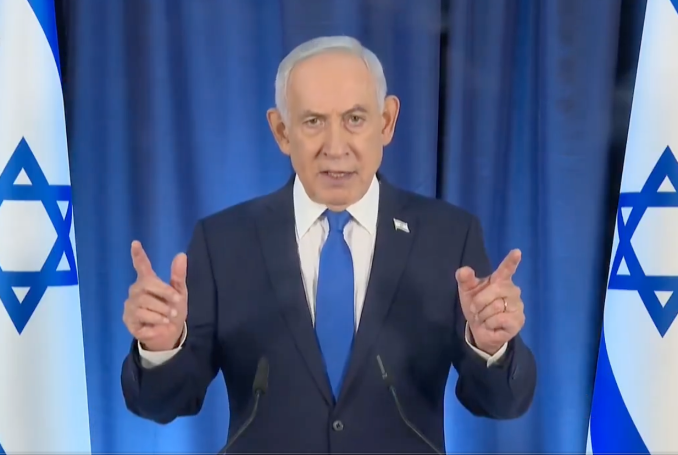

Despite the ceasefire, Netanyahu openly acknowledged expanding Israeli ground operations in southern Lebanon as airstrikes killed four Lebanese women.
Key Developments
- Four women were killed in southern Lebanon as Israeli strikes continued despite the ceasefire.
- Netanyahu said Israeli forces were expanding ground operations with “large forces on the ground.”
- The UN reported its highest number of airspace violations since the April ceasefire.
Israeli attacks intensified across southern Lebanon on Tuesday, with airstrikes, artillery shelling and expanded ground operations continuing despite an ongoing US-mediated ceasefire.
Lebanon’s National News Agency reported that four women were killed after an Israeli airstrike struck a house in the town of Maareke in the Tyre district.
Rescue teams continued searching through rubble for a missing family believed trapped beneath the destroyed building.
Earlier in the day, additional strikes on Kherbet Selem and Srifa killed two people, including a health worker.
The latest attacks come amid a broader escalation in southern Lebanon that has continued despite the ceasefire agreement announced on April 17 and later extended into July.
According to Lebanese authorities, Israeli attacks since early March have killed nearly 3,200 people, injured more than 9,600 and displaced over 1.6 million.
الإعلام الحربي ينشر مشاهد من عملية استهداف دبابة ميركافا تابعة لجيش الاحتلال الإسرائيلي في بلدة مركبا بمحلّقة أبابيل الانقضاضيّة.#لبنان #الميادين_لبنان pic.twitter.com/mFhkBJGlIQ
— الميادين لبنان (@mayadeenlebanon) May 26, 2026
Netanyahu: Ground Operations
The military escalation coincided with remarks by Israeli Prime Minister Benjamin Netanyahu, who said Israel was deepening its military campaign in Lebanon.
At the start of a Security Cabinet meeting, Netanyahu said Israeli forces were operating with “large ground forces” and controlling what he described as strategic areas. He also said Israel was reinforcing a “security belt” intended to protect northern Israeli communities.
Separate reports by Israeli media suggested military activity had expanded beyond the Litani River and the so-called “yellow line” imposed by the Israeli army earlier this year.
The zone stretches across territory south of the Litani and has been described by Israel as a buffer area.
Yedioth Ahronoth and Israeli public broadcaster KAN reported that operations had intensified in recent days beyond those areas amid anxieties surrounding Hezbollah drone capabilities.
Earlier Tuesday, Israeli occupation forces reportedly advanced into Zawtar al-Sharqiya north of the Litani River amid clashes with Hezbollah fighters.
According to an Anadolu tally, Israel carried out 82 attacks across Lebanon in a single day.
The expansion also comes amid continuing Israeli control of areas in southern Lebanon, some occupied for decades and others seized during more recent fighting.
During the current offensive, Israeli forces have reportedly advanced approximately ten kilometers into Lebanese territory.
Hezbollah Fighters Target Israeli Vehicles, Merkava Tank in Clashes near Zawtar
UN Reports Highest Violations
As military operations intensified, the United Nations reported a sharp increase in activity across southern Lebanon.
UN spokesperson Farhan Haq said UNIFIL recorded ninety-one airspace violations on Monday — the highest number observed since the ceasefire took effect in April.
UNIFIL also documented 399 firing incidents attributed to Israeli forces and eleven projectiles attributed to Hezbollah.
The mission additionally reported armored movements, engineering activity, artillery shelling and sustained military traffic throughout its operational area.
The UN also warned that humanitarian conditions continue deteriorating.
Nearly one million people remain displaced across Lebanon, according to UN figures. Families fleeing recent attacks were reportedly seen spending the night in vehicles in Beirut while shelters in the capital received dozens of newly displaced families.
Hezbollah Announces Series of Attacks as Israeli Media Warns of ‘Strategic Threat’
Ground Advance Faces Resistance
Meanwhile, Hezbollah said its fighters had been engaged in direct confrontations with advancing Israeli forces on the outskirts of Zawtar al-Sharqiya.
According to Al Mayadeen, Hezbollah said clashes began before dawn after an Israeli force advanced toward the southern town following extensive airstrikes and artillery shelling. The group said its fighters confronted advancing forces using rockets, artillery shells, attack drones and direct ground engagement.
Hezbollah stated that at approximately 8:45 a.m., its fighters destroyed an Israeli Merkava tank using an Ababil attack drone and said clashes remained ongoing.
The movement also announced a series of additional operations targeting Israeli forces and supply routes near the riverbed area, River Road and near a water reservoir in Zawtar al-Sharqiya, as well as areas around Yahmar al-Shaqif.
Hezbollah said it also targeted an Israeli communications vehicle and a D9 military bulldozer using Ababil drones, in addition to striking a Hummer vehicle, which the group said caught fire following the attack.
Al Mayadeen’s correspondent in southern Lebanon disputed reports circulating about Israeli control over Zawtar al-Sharqiya, saying confrontations remained concentrated around the outskirts of the town and near the river area rather than inside the town itself.
The developments came as Israeli media acknowledged injuries among soldiers following explosive drone incidents and reported repeated activation of warning sirens in settlements in the western Galilee amid concerns over drone infiltrations.
(NNA, AA, PC, Al Mayadeen, Israeli Media)




Be the first to comment