


On Redacted, Baroud presents Before the Flood as a people’s history of Palestine rooted in memory and resistance.
‘Before the Flood’ as a People’s History
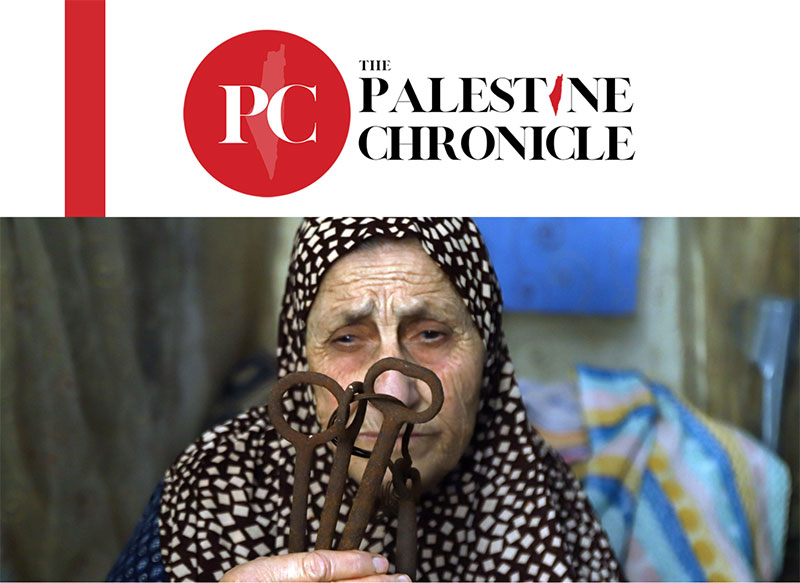
In an interview on the Redacted program hosted by Natali Morris, Palestinian journalist and author Ramzy Baroud discussed his latest book, Before the Flood, presenting it as an effort to reclaim Palestinian history through lived experience.
Baroud described the book as a “people’s history,” constructed from within Palestinian society rather than imposed through external political frameworks.
The work follows multiple generations of a Palestinian family, tracing their displacement, survival, and resistance from the Nakba to the present war on Gaza.
Speaking with Morris, Baroud emphasized that Palestinian history has often been fragmented or excluded in mainstream discourse.
He argued that Before the Flood seeks to restore continuity by merging personal storytelling with political context, grounding historical developments in everyday life.
For many Palestinians, he explained, history has been preserved through oral transmission, stories shared within families in response to restrictions on education and expression.
This process, he said, is not merely cultural, but central to maintaining identity under conditions of displacement and occupation.
Challenging Media Narratives
Baroud also used the interview to critique Western media coverage of Palestine, arguing that it frequently strips events of context and limits Palestinian voices.
He said Palestinians are often portrayed as reactive rather than as historical actors with agency, reducing complex realities to simplified narratives.
Before the Flood, he argued, attempts to counter this by centering Palestinian perspectives and restoring historical depth.
Throughout the discussion, Baroud stressed that current developments in Gaza cannot be understood in isolation. Instead, he framed them as part of a longer historical trajectory shaped by decades of displacement, violence, and resistance.
By linking past and present, the book presents what he described as a continuous Palestinian experience, rather than a series of disconnected crises.
The interview also touched on ongoing legal and political developments affecting Palestinians, including the recent death penalty law against Palestinian prisoners.
(The Palestine Chronicle)


Be the first to comment