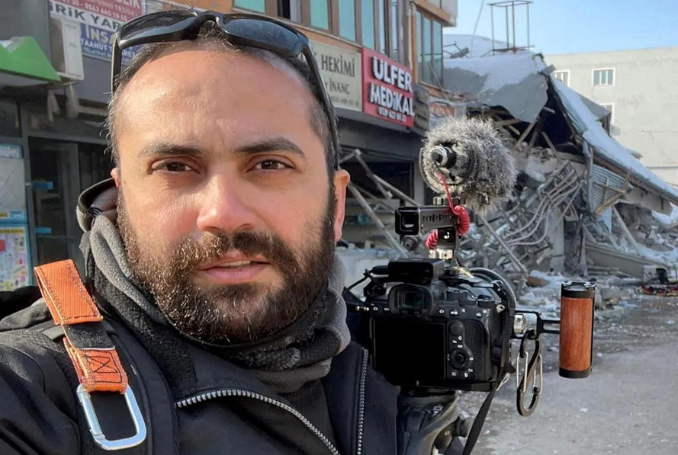

HRW warns that Lebanon’s failure to prosecute Israel for the war crime killing of journalist Issam Abdallah “begets more war crimes.”
Human Rights Watch (HRW) has issued a statement calling on the Lebanese government to take legal action two years after the killing of Reuters journalist Issam Abdallah in an “apparently deliberate attack” by Israeli forces in South Lebanon.
The organization argues that victims of war crimes in Lebanon currently “remain without effective access to accountability and justice.” HRW welcomed the Lebanese government’s October 9, 2025, announcement to task the Justice Ministry with assessing legal measures as a “fresh opportunity to achieve justice for the victims.”
Core Accusation and Lack of Impunity
HRW emphasizes that Lebanon’s inaction sends a dangerous message about impunity. Ramzi Kaiss, Lebanon researcher at Human Rights Watch, stated:
“Israel’s apparently deliberate killing of Issam Abdullah should have served as a crystal-clear message for Lebanon’s government that impunity for war crimes begets more war crimes.”
He added that since Abdallah’s killing, “scores of other civilians in Lebanon have been killed in apparently deliberate or indiscriminate attacks that violate the laws of war and amount to war crimes.” HRW also highlighted the wider context, noting that Israeli forces have, according to Reporters Without Borders, killed over 200 journalists in Gaza (actual number is closer to 300-PC), and carried out a strike on a media center in Sanaa that killed 31 journalists and media workers, per the Committee to Protect Journalists.
Saleh Aljafarawi, Palestinian Journalist, Killed by Israel’s Collaborators
Evidence of a Deliberate War Crime
HRW categorized the strike that killed Abdallah and injured six other journalists from Al-Jazeera, Reuters, and AFP as “apparently a deliberate attack on civilians and therefore a war crime.”
Key evidence supporting this finding includes:
UNIFIL Investigation: An investigation by the United Nations Interim Forces in Lebanon (UNIFIL) found that an Israeli tank fired two 120 mm rounds at a group of “clearly identifiable journalists,” violating international law.
No Active Hostilities: The UNIFIL investigators “said that UNIFIL personnel did not record any exchange of fire across the border between Israel and Lebanon for more than 40 minutes before the Israeli Merkava tank opened fire.”
Journalists’ Visibility and Location: The journalists “were well removed from ongoing hostilities, clearly identifiable as members of the media, and had been stationary for at least 75 minutes before they were hit by two consecutive strikes.” HRW’s review of evidence indicated that the Israeli military “knew or should have known that the group of people they were firing on were civilians.”
Israel Kills Two Medical Workers Daily, Journalist Every Three Days – Latest Data
Broader War Crimes Documented
Beyond the attack on journalists, HRW has documented a series of other unlawful attacks and war crimes committed by the Israeli military in Lebanon, including against peacekeepers, medics, and civilian objects. These include:
Destruction of Infrastructure: “Israel’s deliberate demolition of civilian homes, destruction of vast swaths of critical civilian infrastructure and public services, and its use of explosive weapons in populated areas have made it impossible for many residents to return to their villages and houses.”
Forbidden Weapons: The military’s “widespread use of white phosphorus, including unlawfully over populated residential areas, its apparent deliberate destruction and pillaging of schools, and unlawful use of booby trapped devices.”
Hezbollah Failures: HRW also noted that Hezbollah “failed to take adequate precautions to protect civilians in its attacks on northern Israel between September and November 2024,” launching explosive weapons in populated areas.
Palestine Chronicle Managing Editor Honors Gaza Journalists at Rome Protest against Genocide
Call for Justice and ICC Accession
HRW urged Lebanon to fully incorporate international crimes into its domestic law and take steps to involve the International Criminal Court (ICC).
The organization called on the government to “accede to the ICC’s Rome Statute and submit a declaration accepting the court’s jurisdiction… including since at least October 7, 2023.”
Concluding his appeal, Ramzi Kaiss stated:
“Lebanon’s government can and should honor victims’ demands for justice by enabling the investigation of unlawful attacks and war crimes that caused untold damage and suffering.”
The conflict has caused severe damage, with the World Bank estimating nearly US$14 billion in economic losses in Lebanon, and over 80,000 people displaced as of May 2025. Although a ceasefire was implemented in November 2024, the UN reports that at least 103 civilians in Lebanon have been killed in the ten months since.
(HRW, PC)