
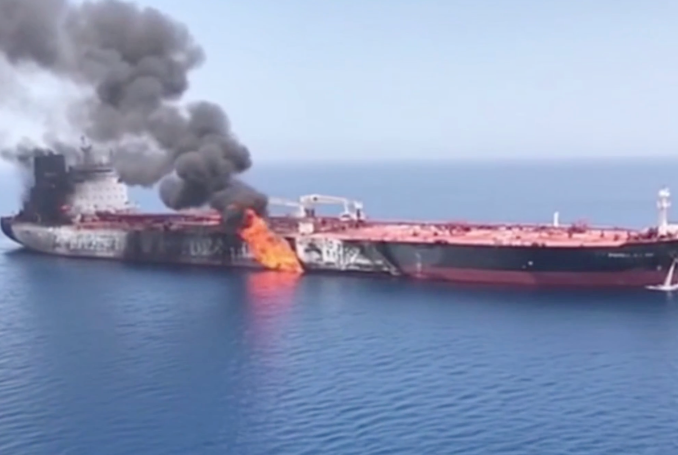

The US war on Iran has disrupted global energy supplies, removing billions of barrels of oil and driving import costs higher.
Key Takeaways
- The IEA says disruptions have removed 2.8 billion barrels of oil and 60 billion cubic meters of natural gas from global markets since the US launched its war on Iran.
- Global oil and gas import expenditure is projected to reach $1.6 trillion in 2026, up 25% despite declining consumption, while diesel prices have exceeded $200 per barrel.
- Oil prices remained broadly steady Thursday as recovering Hormuz shipments, rising US inventories and expectations of a supply surplus counterbalanced continuing shipping risks.
The US war on Iran has triggered the most severe shock to global energy supplies, removing 2.8 billion barrels of oil and 60 billion cubic meters of natural gas from international markets, according to the International Energy Agency’s World Energy Outlook 2026.
Released Thursday, the assessment describes energy markets still struggling in November to absorb the consequences of disrupted flows through the Strait of Hormuz.
The impact has spread beyond crude availability, placing diesel markets under particular strain and pushing more of the financial burden onto consumers as other market buffers diminish.
The agency projects that global spending on imported oil and natural gas will reach $1.6 trillion this year, a 25% increase despite falling consumption. The forecast illustrates the cost of the disruption: countries are expected to pay substantially more for energy even as they use less.
New footage captures the massive explosion aboard a vessel in the Persian Gulf as it attempted to violate transit regulations in the Strait of Hormuz. pic.twitter.com/3IzNerDWpT
— The Saviour (@TheSaviour) November 19, 2026
Diesel Prices Surge
Diesel prices have reportedly exceeded $200 per barrel, reaching record levels as the disruption strains supplies of a fuel central to economic activity.
The IEA warned that consumers are increasingly absorbing the costs of the supply shock as the buffers that previously helped markets withstand the disruption run down.
Gulf oil exports have fluctuated with changes in security conditions, while uncertainty surrounding Red Sea shipping routes and developments in Ukraine has added pressure to international energy markets.
The agency linked a potential easing of prices to a resolution of the war on Iran. A return to more stable market conditions could support a recovery in consumption, while countries would also seek to replenish depleted energy reserves.
That rebuilding process would create demand alongside any recovery in consumption, making the restoration of reliable supplies important beyond the immediate reopening of shipping routes.
Continuing Shipping Risks
Despite the scale of the cumulative disruption, oil prices showed little movement Thursday as expectations of an emerging supply surplus counterbalanced concerns over attacks on shipping and interruptions to Middle Eastern exports.
Brent crude futures rose 5 cents, or 0.05%, to $92 per barrel by 0455 GMT. US West Texas Intermediate crude fell 26 cents, or 0.31%, to $83.
The December WTI contract was due to expire November 20. The more actively traded January contract declined 22 cents to $82.09.
Iran War Depletes US Patriot Stockpiles by 65%, Exposes Supply Crisis – WSJ
The moves followed sharper losses Wednesday, when Brent fell 1.3% and WTI dropped 3.2%, reaching its lowest level since August 26. Expectations of a surplus strengthened as crude shipments through the Strait of Hormuz recovered to approximately pre-war levels.
That recent recovery in shipping contrasts with the cumulative losses recorded since the war began, while continuing attacks leave uncertainty over whether flows can be sustained.
Rising US inventories added downward pressure. Commercial crude stocks increased by 3.4 million barrels to 417.8 million barrels in the week ending November 13, according to the US Energy Information Administration. Analysts surveyed by Reuters had forecast an increase of just 58,000 barrels.
“Oil is caught between bearish fundamentals and bullish geopolitical risks. Inventory builds can weigh on prices for a day, but unresolved supply disruptions can keep the risk premium alive for much longer,” said Priyanka Sachdeva, head of market insights at Phillip Nova.
Expectations of higher US interest rates also weighed on prices. Tighter monetary policy could slow economic growth and energy demand, while a stronger dollar would make dollar-priced oil more expensive for buyers using other currencies.
Producers Prepare to Expand Output
The IEA also identified potential production increases that could reshape supply conditions as markets adjust to the disruption.
⚡️NEW: The crew of an LPG Tanker has jumped into the water, screaming for help in the Strait of Hormuz before the ship is engulfed in flames
LPG is highly explosive pic.twitter.com/yAuikQeUTb
— Iran Observer (@IranObserver0) November 18, 2026
The United Arab Emirates is preparing to expand output following the removal of OPEC+ production restrictions, according to the assessment.
The agency revised Venezuela’s production outlook upward, projecting an increase of 1.5 million barrels per day supported by $70 billion in planned investment over the next decade.
Those prospective increases form part of the longer-term supply outlook. For countries facing higher import bills now, however, the immediate burden remains the cost of disrupted energy flows, depleted reserves and uncertainty over the course of the war.
(PC, Al Mayadeen, IEA)





Be the first to comment