
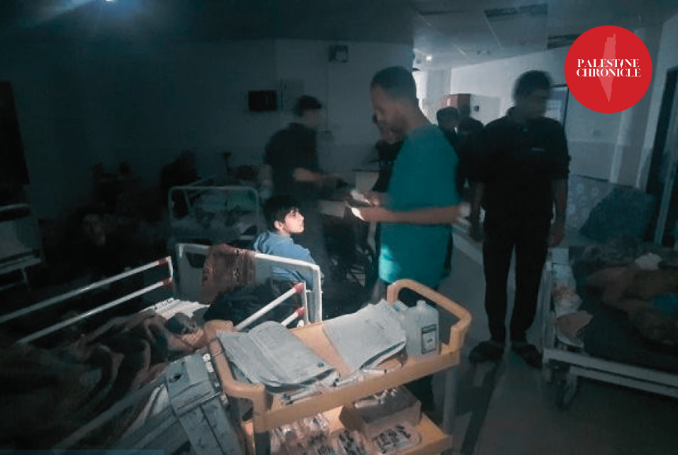
WHO says Gaza’s health system needs $10 billion after widespread destruction of facilities, shortages, and worsening disease risks.
Key Developments
- WHO says rebuilding and rehabilitating Gaza’s health system requires $10 billion over five years.
- More than 1,800 health facilities have been partially or completely destroyed, with sector damage estimated at $1.4 billion.
- WHO says health workers must be protected and essential medicines allowed into Gaza without restrictions.
Five-Year Recovery
The World Health Organization said rebuilding and rehabilitating Gaza’s health system will require $10 billion in investment over the next five years, as the health sector continues to operate under severe destruction, shortages, and access restrictions.
Speaking during a UN press briefing in Geneva from Jerusalem, WHO Representative for the occupied Palestinian territory Reinhilde Van de Weerdt said damage to Gaza’s health sector alone is estimated at $1.4 billion.
She said more than 1,800 health facilities have been partially or completely destroyed, ranging from major hospitals to primary healthcare centers, clinics, pharmacies, and laboratories.
The WHO official said the level of destruction has severely undermined Gaza’s ability to provide essential medical care, while the broader collapse of infrastructure has created additional public health threats.
Disease Risks
Van de Weerdt said destroyed buildings and large accumulations of waste had created ideal breeding grounds for rodents and pests across the Gaza Strip.
According to WHO, 80 percent of about 1,600 displacement sites reported frequent visible presence of rodents and pests. More than 80 percent of those sites also reported skin infections and infestations, including lice and bed bugs.
The conditions were reported at a time when hundreds of thousands of displaced Palestinians remain in overcrowded shelters and displacement sites, with limited access to sanitation, clean water, and medical care.
Van de Weerdt said the health consequences of the destruction are not limited to hospitals, but extend to the wider environment in which displaced families are forced to live.
Al-Shifa Expansion
Despite the scale of the crisis, WHO said efforts to restore limited health capacity in Gaza are continuing.
Van de Weerdt said WHO had completed a 128-bed extension at Al-Shifa Hospital, Gaza’s largest medical complex, as part of efforts to boost the health system’s ability to receive patients.
The expansion comes as Gaza’s hospitals continue to face severe shortages of essential medicines, medical supplies, equipment, fuel, and specialized care.
WHO said such efforts can only have an impact if health workers are protected and if medical supplies are allowed to enter Gaza.
“For saving life to have an impact, health and health care workers needed to be protected; and essential medicines and supplies must enter Gaza,” Van de Weerdt said.
She added that this includes “the removal of bureaucratic processes and access restrictions on globally recognized essential medicines and supplies.”
47 Women, Girls Daily: UN Says Israel Killed 38,000 Women in Gaza
Medical Evacuations
Responding to questions from journalists, Van de Weerdt said medical evacuations remain complicated from security and logistical perspectives.
She also said the issue is first and foremost one of patients’ rights, stressing that patients and their families have the right to be treated where they live.
For that reason, she said, medical supplies must be allowed to enter Gaza.
According to WHO, patients who cannot be treated in Gaza may leave through the Rafah crossing into Egypt and then be transferred to other countries. Van de Weerdt said patients have also recently been transferred back to Jordan.
The latest medical evacuation took place on April 23 through Rafah and included 47 patients and 86 companions.
Girl Shot in Shelter, Two Killed in Drone Strike as Israeli Attacks Continue Across Gaza
Restricted Access
WHO said access restrictions and bureaucratic obstacles continue to obstruct the entry of essential medicines and supplies into Gaza.
The organization said these restrictions affect globally recognized essential medical items, at a time when Gaza’s damaged hospitals and clinics are attempting to restore basic services.
Van de Weerdt said protecting health workers and ensuring unhindered access for medical supplies are necessary for any effort to save lives.
The briefing took place as Gaza’s health system remains heavily degraded, with hospitals, clinics, laboratories, and pharmacies damaged or destroyed across the Strip.
The damage to Gaza’s health system includes both large medical facilities and smaller points of care that previously served communities across the Strip.
WHO said the destruction of primary healthcare centers, clinics, pharmacies, and laboratories has affected routine medical services, emergency care, disease prevention, and treatment access.
The collapse of these services has added pressure on the remaining functioning facilities, which continue to receive patients despite shortages and damage.
The loss of pharmacies and laboratories has also affected access to medications, diagnostic services, and disease monitoring, while the destruction of smaller clinics has left many communities without local healthcare access.
(WHO, PC, WAFA)

You’re missing some words in this article…
After every “destroyed” you’re missing “by Israel”
After every “destruction” you’re missing “by Israel”
After every “restrictions” you’re missing “by Israel”
After every “protected” you’re missing “from Israel”
You do great work for a news website, but you’ve become increasingly mealy-mouthed on these issues. If you become the NYT or the Guardian everybody will stop reading you.
This is appalling news.