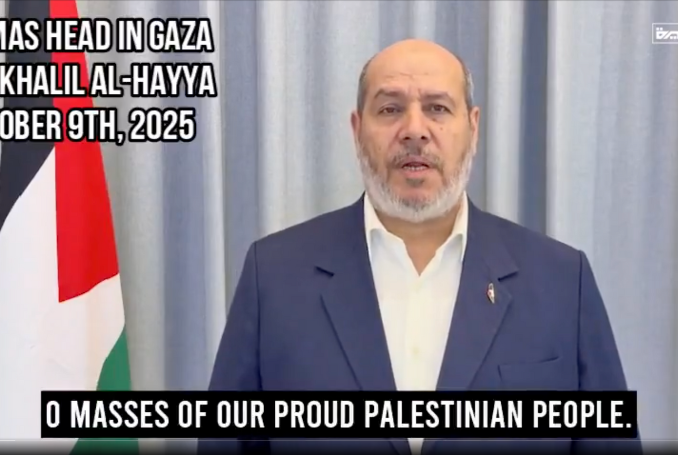
Hamas leaders are reportedly traveling to Cairo for high-stakes talks with Palestinian factions and Arab states, following the passage of a US-drafted UN resolution proposing international administration and demilitarization of Gaza.
A senior Hamas delegation led by Khalil al-Hayya is expected to arrive in Cairo on Saturday for high-level negotiations, the Lebanese media platform Al Mayadeen reported, citing Hani al-Dali, a Palestinian Resistance affairs analyst.
According to Al Mayadeen, Al-Dali said the meetings are intended to “coordinate political positions with Arab states and reinforce the Palestinian national stance in light of ongoing Israeli plans.”
He reportedly described the upcoming talks as “critical,” noting that Hamas considers the current phase “especially sensitive.”
Al-Dali was cited as saying that several Palestinian factions are expected to take part in what he called “important national meetings,” noting continued communication with the Palestinian Authority and Fatah leadership.
Over 20 Killed in Gaza as Hamas Accuses Israel of ‘Blatant’ Ceasefire Violations
According to al-Dali, there is an emerging “sense of unity on the ground and a commitment to coordination.”
Al-Dali expressed hope that the Palestinian Authority would prioritize “the higher interests of the Palestinian people,” arguing that “the entire geography of Palestine remains under threat.”
On November 17, 2025, the UN Security Council adopted Resolution 2803, authorizing an international stabilization force and a transitional governing body in the Gaza Strip.
The plan builds on the October 10 ceasefire agreement and incorporates Washington’s “20-point plan.”
Gaza’s Blackwater: Despite Denials, US Boots Will Be on the Ground in Gaza
It outlines a phased process beginning with the stabilization force deployment, followed by the full demilitarization of Gaza, the dismantling of Resistance infrastructure, and the establishment of a technocratic “Board of Peace” to manage aid, oversee reconstruction, and prepare for internationally supervised elections.
The text went through multiple revisions between November 3 and November 13, during which several Arab delegations sought stronger protections for Palestinian self-determination.
Despite passing with a majority, the initiative drew criticism from Palestinian factions, including Hamas, which called it an attempt to bypass Palestinian political will and alter the realities on the ground through international oversight.
(PC, Al Mayadeen)