
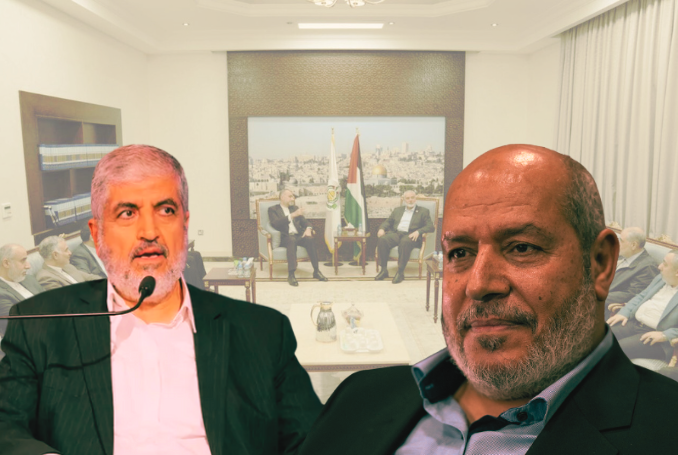
The Palestinian Resistance Movement Hamas completes internal elections and prepares to select a new political bureau chief.
Key Developments
- The Palestinian Resistance Movement Hamas has completed internal elections across its three regions.
- A new political bureau chief is expected to be chosen during Ramadan.
- The next leader will serve a one-year exceptional term before broader four-year elections.
- The race has narrowed to Khaled Mashal and Khalil al-Hayya.
- The vote follows Israeli assassinations targeting senior political and Shura leaders.
Final Stage of Internal Elections
The Palestinian Resistance Movement Hamas has concluded its internal electoral process and entered the final stage of selecting a new head of its political bureau, according to sources cited by AFP on Saturday.
Two sources described as informed and responsible within Hamas told the agency that elections have been completed in the movement’s three main regions, and the process has now reached its final phase.
According to AFP, the new political bureau chief will serve a one-year term described as “exceptional,” after which Hamas plans to organize a new election cycle lasting four years to renew its Shura and leadership bodies.
More than 80 members of the newly elected General Shura Council will vote to select the head of the movement and members of the political bureau, in accordance with Hamas’ internal regulations.
Sources indicated that the leadership contest has narrowed to two senior figures: Khaled Mashal, who heads Hamas’ external leadership, and Khalil al-Hayya, a senior Gaza-based leader who also heads the movement’s negotiating delegation.
An official announcement is expected once the vote is finalized, likely during the month of Ramadan.
The elections follow a period of significant losses within Hamas’ senior leadership. According to AFP sources, the process aimed at renewing internal legitimacy and filling leadership gaps created by Israeli assassinations targeting political bureau members, Shura Council figures, and field commanders.
Following the assassination of former political bureau chief Ismail Haniyeh in July 2024, leadership passed to Yahya Sinwar. After Sinwar was killed in October 2024 during clashes in Rafah, Hamas established a five-member leadership council headed by Shura Council chief Mohammed Darwish.
The current vote represents the first structured leadership selection since those developments.
Gaza Killings Continue Under Ceasefire as Meshaal Rejects Disarmament, Protests Spread
Khaled Mashal: Veteran Political Figure
Khaled Mashal, born in 1956 in the occupied West Bank village of Silwad, is one of the most prominent political leaders in Hamas’ history.
Mashal previously served as head of the political bureau and has long been associated with the movement’s external leadership. Over the years, he played a central role in shaping Hamas’ political strategy and maintaining regional and diplomatic relationships.
He survived an Israeli assassination attempt in Amman in 1997, when Israeli agents injected him with poison in an operation that triggered a diplomatic crisis between Israel and Jordan and ultimately led to his recovery.
His experience has largely been defined by external political engagement and strategic positioning during periods of regional transformation.
Israeli Media Reveal Foiled Plan to Kill Hamas Leader Khalil al-Hayya in Beirut
Khalil al-Hayya: Gaza Leader and Negotiation Figure
Khalil al-Hayya, born in Gaza City in November 1960, represents Hamas’ senior leadership within Gaza and has become a central figure in its political and negotiation efforts.
Al-Hayya has played a leading role in political coordination and has headed official delegations in ceasefire and negotiation talks, including discussions mediated in Doha. For months, he has been based in Qatar as part of Hamas’ leadership structure following intensified Israeli targeting of senior figures inside Gaza.
In September 2025, an Israeli airstrike targeted Hamas leadership in Doha, where Hamas senior officials were meeting with mediators to discuss ceasefire proposals. Although al-Hayya and other senior leaders survived the strike, the attack killed six people, including al-Hayya’s son, Himam al-Hayya, and his office director, Jihad Labad.
These losses add to a personal history of family tragedy for al-Hayya; over the years, several of his relatives, including children and siblings, have been killed in Israeli airstrikes, reflecting the severe toll that repeated military campaigns have taken on Hamas leaders’ families.
As a leader who bridges Gaza-based authority and external political engagement, al-Hayya’s candidacy reflects both continuity and adaptation within Hamas’ evolving leadership structure.
(AFP, AJA, PC, Palestinian Media)
Be the first to comment