
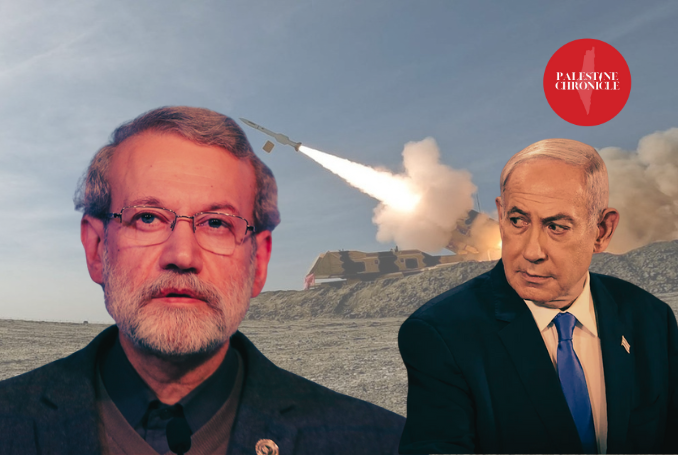

Iran formed a constitutional leadership council after Khamenei’s killing, warning of harsher retaliation.
Key Developments
- Iran activated Article 111, forming a temporary leadership council.
- Ali Larijani called the assassination a “historic turning point.”
- Parliament Speaker threatened “terrible blows” against US and Israel.
- Judiciary chief declared Iran in “open confrontation” phase.
- US refueling aircraft movements indicate expanded American air readiness.
Article 111
Following confirmation of the assassination of Ali Khamenei, Iranian officials moved swiftly to implement constitutional succession mechanisms.
According to the Lebanese news network Al Mayadeen, Secretary of Iran’s Supreme National Security Council Ali Larijani announced that, in accordance with Article 111 of the Iranian Constitution, a temporary leadership council has been formed to assume the responsibilities of the Leader pending the selection of a successor.
Under Article 111, if the Leader dies, resigns, or is dismissed, the Assembly of Experts must appoint a successor as quickly as possible. In the interim, leadership duties are transferred to a council composed of the President, the Head of the Judiciary, and a jurist from the Guardian Council selected by the Expediency Discernment Council.
Larijani stressed that constitutional mechanisms are proceeding “without disruption,” adding that contingency provisions ensure replacements if any council member becomes unable to perform their duties.
Mohammad Mokhbar confirmed that the country had formally entered a transitional phase, with President Masoud Pezeshkian, the Judiciary chief, and a Iran formed a constitutional leadership council after Khamenei’s killing, warning of harsher retaliation and continued regional escalation.
Iran Vows Stronger Retaliation
Larijani described the assassination as a “historic turning point,” warning that the enemy committed a “grave mistake” if it believed eliminating leaders could destabilize Iran.
“The enemy is deluded if it believes that assassinating leaders can destabilize Iran,” he said, asserting that the Iranian people remain loyal and unified.
He revealed that Khamenei had rejected extraordinary security measures and insisted on maintaining his regular work routine. “The enemy is well aware of his standing in the hearts of the Iranian people,” Larijani added, warning that Iran’s response would be proportionate but more severe than previous strikes.
He further stated that “Iranian missiles were launched yesterday toward US bases and the Israeli entity and they were painful — today they will be more painful.”
Iran Confirms Khamenei Killed in US-Israeli Airstrikes, Tehran Declares Mourning
Larijani framed US bases in the region as “American territory,” declaring them legitimate targets in the confrontation, while stressing that Iran does not seek war with neighboring states and has communicated this position to regional leaders.
Speaker of Parliament Mohammad Baqer Ghalibaf told Iranian television that Washington and Tel Aviv had crossed a “red line.”
Addressing US President Donald Trump and Israeli Prime Minister Benjamin Netanyahu directly, he said: “You have crossed a red line and you will pay the price with terrible blows that will make you beg for mercy.”
Ghalibaf asserted that Iranian forces have so far used only a small portion of their capabilities and pledged continuity along the path set by Khamenei.
Judiciary Chief Gholamhossein Mohseni Ejei declared that Iran has entered a phase of “open confrontation,” stating that the United States and Israel “will not be able to extract any concession from the Iranian people over the blood of their leader.”
‘Reckless, Unconstitutional’: NYT Editorial Slams Trump’s Iran Strikes
US Air Readiness Expands
Meanwhile, Al-Jazeera reported that analysis from the Open Source Unit indicated increased movement of US refueling aircraft.
According to flight data from Flightradar24, six refueling aircraft continued from European airspace toward the Middle East, while three remained positioned over Europe.
Military analysts note that refueling aircraft are essential for sustained air campaigns, enabling fighters, bombers, and reconnaissance planes to extend operational range without relying on forward bases.
A senior US official indicated that the intensive bombing campaign is expected to last at least five days, though timelines remain fluid.
(PC, Al Mayadeen, Al-Jazeera, Iranian State Television, Flightradar24)



Be the first to comment