
As in other settler‑colonial contexts, the so‑called civilizing mission operates as a project of dispossession and destruction for the Indigenous population.
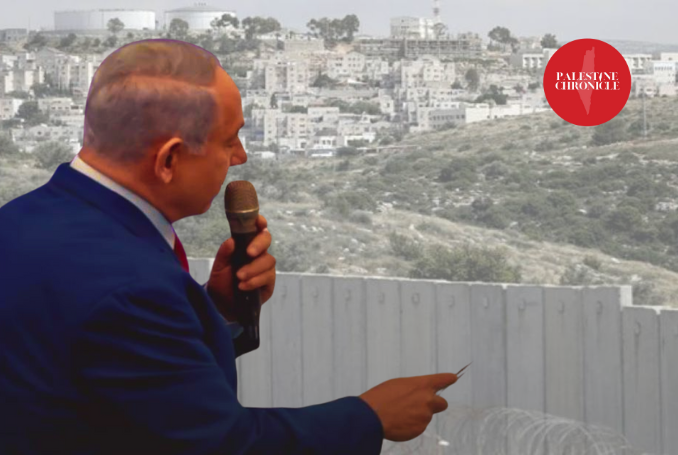
Israeli Prime Minister Benjamin Netanyahu has framed the confrontation with Iran as a sweeping ideological struggle, asserting that Israel and the United States are engaged in a “battle of civilization against barbarism.”
His remarks coincided with a UN Women report estimating that, as of December 2025, more than 38,000 women and girls had been killed in Gaza, over 22,000 women and 16,000 girls. These figures mark a stark departure from previous Gaza offensives, where women and girls accounted for 15 percent of fatalities in 2008–2009 and 22 percent in 2014.
A former Israeli soldier, interviewed by Haaretz, described returning from Gaza to public praise as a “hero,” even as he struggled with profound moral injury. His testimony recounts killing unarmed Palestinians, the mistreatment of detainees, and a broader culture of impunity that normalized excessive force and humiliation. The gulf between public celebration and the violence he witnessed left him feeling monstrous rather than heroic, revealing the psychological and ethical fractures produced by Israel’s military conduct.
At the same time, Israeli military authorities intensified the destruction of agricultural land across the West Bank. An order issued for Kufr Malik, east of Ramallah, authorized the army to uproot vegetation, including long‑standing olive trees, under the pretext of “security and visibility.” The order took effect immediately, giving landowners only 24 hours to file objections through the Liaison and Coordination Directorate. South of Nablus, its implementation resulted in the uprooting of more than 150 olive trees.
In some cases, Palestinian landowners have even asked to uproot the trees themselves in an effort to minimize damage. The army routinely rejects these requests. Palestinians suspect that the uprooted trees are ultimately transferred to Israeli settlements.
On April 21, Israeli settlers stormed Al‑Mughayyir village during school exams, firing toward classrooms and killing 14‑year‑old Aws Hamdi al‑Naasan and 32‑year‑old Jihad Marzouq Abu Naim. Witnesses described students dropping to the floor as bullets struck the building. Villagers said soldiers accompanied the settlers, contradicting the Israeli army’s claim that troops arrived only after civilians opened fire following an alleged stone‑throwing incident.
That same day, sixteen‑year‑old Mohammad Ali al‑Jabari was killed near Hebron when a vehicle from the security convoy of Israeli Settlement Minister Orit Strook struck him as he crossed Highway 60 on his bicycle on his way to school. The road, closed to Palestinians since the war on Gaza, forces students to navigate fast, unpredictable traffic.
Also on April 21, 29‑year‑old Ouda Atef Ouda Awawda, a father of newborn twin girls, died after being shot in the back during a settler attack on Deir Dibwan, east of Ramallah. Armed settlers, accompanied by Israeli forces, opened live fire at residents and homes on the town’s outskirts. Israeli forces then sealed the main entrance and carried out mass arrests, detaining around 30 people.
On April 22, an Israeli airstrike in the northern Gaza Strip killed five Palestinians, including three children. Another airstrike the same day killed Lebanese journalist Amal Khalil and wounded a colleague as they worked near the border with Israel, in a strike that hit a house in the town of al‑Tiri.
Settler violence in Area C has taken increasingly sexualised and gender‑targeted forms, creating coercive conditions that push Palestinian communities toward displacement. Interviews and field monitoring document harassment, threats of rape, forced nudity, sexualized humiliation, and intrusions into homes.
Women and girls face heightened danger, while men and boys are also subjected to sexualised abuse and degrading treatment, often in the presence of Israeli forces who do not intervene. Combined with movement restrictions, economic decline, home demolitions, and settlement expansion. More than 70 per cent of displaced households cited threats to women and children as the decisive factor in leaving, underscoring how gendered violence shapes decisions about whether families can remain on their land.
Displacement then reshapes daily life and community wellbeing. Families restrict women’s movement, send women and children away in partial relocations, rely on children for risky tasks, and sometimes arrange early marriages to remove girls from danger. After leaving, families often live in overcrowded, insecure sites with limited services. Women lose income tied to land and livestock, while children experience trauma, disrupted education, and the loss of safe spaces. Men face increased risks of arrest, detention, and lethal violence, deepening household strain. These pressures collectively contribute to conditions that amount to forcible transfer.
While Israeli officials insist on portraying the army as ‘the most moral army in the world, investigations and testimonies also highlight widespread looting by Israeli soldiers. Accounts from Syria, Lebanon, Gaza, and the West Bank describe thefts of cash, jewelry, and electronic devices, with stolen items later sold on Telegram, Facebook, or in public markets. Friends and relatives recount soldiers taking money during home raids or at checkpoints; in one case, a family reported cash missing after a search, only for their complaint to be dismissed.
Settlers are also involved in looting property to build the farming colonies on stolen land. On February 12, 2025, settlers, protected by the Israeli army, stole Palestinian livestock in the West Bank, including 800 sheep in Deir Dibwan village, east of Ramallah. In Al Mughayyir, they stole 170 sheep and other villages of Yabrud and Jifna, a widespread practice that is routinely practiced.
These practices echo the Nakba, when Haganah and other Zionist militias systematically destroyed, seized, and looted Palestinian property, including homes, libraries, archives, and personal collections. Armed units also looted private homes, taking jewelry, furniture, clothing, and other belongings while occupying, expropriating, or destroying immovable property.
Israeli soldiers who served in Lebanon told Haaretz that looting has become routine during operations there, describing units breaking into homes, stealing valuables, and vandalizing property with their commanders’ full knowledge. Officers often ignored or implicitly condoned the theft, creating an atmosphere in which soldiers felt free to take money, electronics, and personal belongings from houses of the expelled. Some soldiers said they were disturbed by the scale of misconduct and the indifference of senior ranks, noting that complaints were dismissed or met with silence and impunity.
Since March 2, Israeli military operations in Lebanon have killed more than 2,000 people, including health workers and journalists, and injured a further 6,588. The escalation has displaced over one million people, roughly one in five of Lebanon’s population, with an estimated 140,682 now sheltering in overcrowded facilities.
The Yesh Din report Uniformed Theft (August 2025) documents the widespread and systematic looting of Palestinians’ money and property by Israeli soldiers and security forces in the West Bank, a practice defined as a war crime under international law. Drawing on over two decades of monitoring and testimonies from 2022–2024, the report shows how theft has intensified since October 7, becoming normalized during home invasions and checkpoint searches, enabled by military law that grants security forces sweeping powers and impunity. These actions of theft fit within a broader system of dispossession and land expropriation.
Statements by Israeli officials also reflect expansive territorial ambitions. In an interview with i24 on August 12, 2025, Netanyahu described himself as being on a “historic and spiritual mission,” expressing attachment to a vision of a Greater Israel extending beyond current borders. Other officials, including Finance Minister Bezalel Smotrich and National Security Minister Itamar Ben Gvir, have echoed similar aspirations.
Such ambitions are also visible within historical Palestine. On 7 November 2025, Ben Gvir personally oversaw the demolition of Palestinian homes in the Naqab (Negev), claiming they were built without permits. When confronted by a resident, he declared: “Slowly, but surely, we are taking back the Negev lands.” The Israeli Land Authority has increasingly used AI and aerial surveillance to identify what they consider “unauthorized structures,” enabling rapid demolition orders.
Across the region, Israel has imposed new territorial regimes. In southern Lebanon, Israeli forces have established a 10‑km‑deep “Yellow Line,” presented as a security measure but accompanied by demolitions, shelling, and airstrikes that critics argue entrench long‑term control.
In Gaza, an undefined “yellow line” imposed after the October 2025 ceasefire has become a mechanism for continued displacement. Israel’s chief of staff described it as “a new border line,” despite its invisibility and lack of clear markers. Israel remains stationed on more than 58 percent of the Strip, continuing strikes along this line and preventing displaced Palestinians from returning home.
The looting, theft, destruction, and displacement documented should be understood within the longer trajectory of the Zionist project, which established a state on stolen land and appropriated property.
As Israel expands its territorial reach through land expropriation in Lebanon, Syria, and across historical Palestine, the looting of homes and belongings becomes not incidental but instrumental, furnishing newly seized spaces and reinforcing a system built on dispossession. Unrecognized war crimes. As in other settler‑colonial contexts, the so‑called civilizing mission operates as a project of dispossession and destruction for the Indigenous population.

– Dr. Nadia Naser-Najjab is a Senior Lecturer in Palestine Studies at the European Centre for Palestine Studies, University of Exeter. She previously taught at Birzeit University and holds a PhD in Middle East Studies from Exeter. She is the author of Covid-19 in Palestine: The Settler Colonial Context and Dialogue in Palestine. She contributed this article to the Palestine Chronicle.





So the IDF has lost its moral identity in an orgy of looting, mugging and general banditry. Militaries that sink that low generally do not have high survival prospects when it comes to fighting armies or guerrilla forces with high morale and high motivation. Asua bilong em yet ya – it’s all their stupid fault.