
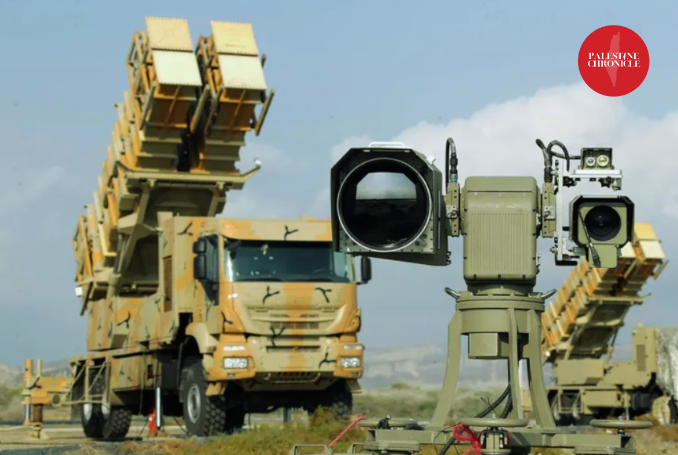

New US intelligence reportedly shows Iran retained most missile infrastructure despite months of devastating American and Israeli attacks.
Key Takeaways
- Iran reportedly regained access to 30 of 33 missile sites along the Strait of Hormuz.
- US intelligence assessed Tehran still possesses roughly 70 percent of its missile launchers and arsenal.
- The report raises concerns that Washington exhausted critical weapons stockpiles without eliminating Iran’s military capabilities.
Intelligence Findings Contradict White House Claims
The Trump administration’s repeated claims that Iran’s military had been “decimated” during the recent war are reportedly contradicted by new classified US intelligence assessments, according to a report published by The New York Times on Tuesday.
Citing people familiar with intelligence evaluations prepared earlier this month, the newspaper said Iran has regained access to most of its underground missile infrastructure and continues to retain significant military capabilities despite months of US-Israeli bombardment.
According to the report, “Iran has regained access to roughly 90 percent of its underground missile storage and launch facilities nationwide,” many of which are now considered “partially or fully operational.”
The findings reportedly alarmed senior US officials, particularly because of Iran’s restored missile presence near the Strait of Hormuz.
“Most alarming to some senior officials is evidence that Iran has restored operational access to 30 of the 33 missile sites it maintains along the Strait of Hormuz,” the report stated.
The strategic waterway carries nearly one-fifth of global oil supplies and remains heavily patrolled by US naval forces.
Iran Launches Missile, Drone Attack on US Warships near Hormuz
Iran Retains Most Missile Capabilities
The report said intelligence agencies assessed that Iran still fields “about 70 percent of its mobile launchers across the country” and has retained “roughly 70 percent of its prewar missile stockpile.”
That arsenal reportedly includes both ballistic missiles capable of targeting regional states and cruise missiles designed for shorter-range attacks.
The assessments directly undermine public statements made by US President Donald Trump and Defense Secretary Pete Hegseth throughout the war.
On March 9, Trump reportedly declared that Iran’s “missiles are down to a scatter” and that the country had “nothing left in a military sense.”
Weeks later, Hegseth stated that Operation Epic Fury had “decimated Iran’s military and rendered it combat-ineffective for years to come.”
However, the intelligence cited by The New York Times was reportedly produced less than a month after those statements.
White House and Pentagon Push Back
The White House strongly rejected the report’s conclusions.
White House spokeswoman Olivia Wales repeated Trump’s assertion that Iran’s military had been “crushed” and accused critics of acting as “mouthpieces” for Iran’s Revolutionary Guards.
The Pentagon also attacked the newspaper’s reporting.
“It is so disgraceful that The New York Times and others are acting as public relations agents for the Iranian regime,” acting Pentagon spokesman Joel Valdez said.
Still, the intelligence assessments reportedly suggest US military planners overestimated the long-term impact of the strikes while underestimating Iran’s ability to rapidly restore operational capabilities.
Missile Shortages and Strategic Limits
According to the report, Pentagon planners faced major constraints during the war because of limited stocks of bunker-busting bombs and precision-guided missiles.
Inside the Secret UAE War on Iran – WSJ Report Reveals Covert Emirati Strikes
Rather than fully destroying many underground facilities, US forces reportedly attempted to block entrances in order to conserve munitions.
“When American forces struck Iran’s hardened missile facilities, the Pentagon … opted to try to seal off many of the entrances rather than trying to destroy the entire sites,” the report stated.
The article also detailed the enormous pressure the war placed on US military stockpiles.
According to The New York Times, Washington expended roughly 1,100 long-range stealth cruise missiles, more than 1,000 Tomahawk missiles, and over 1,300 Patriot interceptor missiles during the conflict.
The newspaper noted that replenishing those weapons “will take years, not months.”
The US and Israel launched a military aggression on Iran on February 28, publicly claiming the objective was to eliminate Tehran’s nuclear capabilities, weaken its missile arsenal, and pressure the Iranian government.
However, Iran responded with sustained missile and drone attacks against Israeli, American and regional strategic infrastructure, forcing both Washington and Tel Aviv to repeatedly redefine the goals and outcomes of the war.
(PC, NYT)




Americans need to take this opportunity to destroy the facilities which produce these missiles, in order to further weaken the empire of the united states.
White House lies to Americans all the time, we are used to not believing a word of it.