
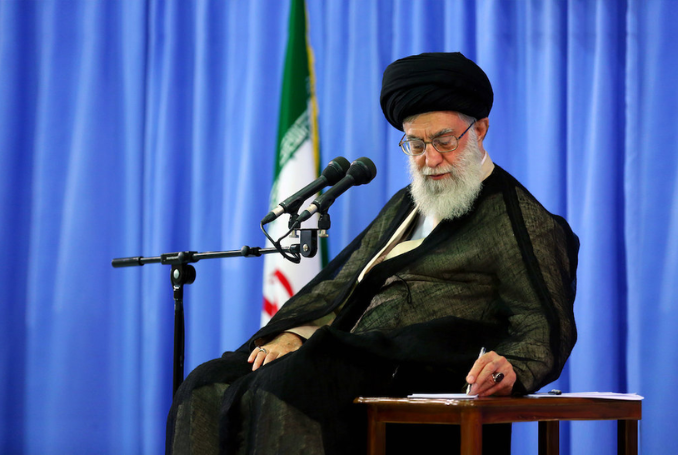

Iran has announced a multi-stage funeral and burial program for Supreme Leader Ali Khamenei, culminating in his interment in Mashhad next month.
Key Developments
- Iran announced that funeral and burial ceremonies for Ali Khamenei will take place between July 4 and July 9 in Tehran, Qom and Mashhad.
- The ceremonies are expected to draw large crowds and senior political, religious and military figures from Iran and abroad.
- The funeral comes at a pivotal moment for Iran, following the war with the United States and Israel and amid efforts to finalize a broader regional agreement.
Final Farewell
Iran has announced a six-day program of farewell, funeral and burial ceremonies for Supreme Leader Ali Khamenei, the country’s highest political and religious authority for more than three decades, setting the stage for what is expected to be one of the largest public commemorations in the Islamic Republic’s modern history.
The ceremonies, scheduled to take place between July 4 and July 9 in Tehran, Qom and Mashhad, will mark the final public farewell to a figure who shaped Iranian politics, regional alliances and the country’s foreign policy for more than three decades.
The announcement comes months after Khamenei was assassinated in US-Israeli strikes that targeted him and members of his family on February 28, an event that reshaped the regional political landscape and triggered a period of intense military confrontation.
A Nation Prepares to Say Goodbye
According to the Office for the Preservation and Publication of the Works of Ali Khamenei, farewell ceremonies will begin on July 4 and 5 at Imam Khomeini Mosalla in Tehran.
A formal funeral procession will follow in the Iranian capital on July 6 before ceremonies move to the holy city of Qom on July 7.
The final stage of the commemorations will take place in Mashhad on July 9, where Khamenei will be buried at the Imam Reza Shrine, one of the most important religious sites in the Shiite Muslim world.
Iranian authorities expect large public participation throughout the ceremonies, with religious scholars, political leaders, military officials and foreign delegations anticipated to attend.
The funeral will also honor several members of Khamenei’s family who were killed alongside him, including Mesbah al-Hoda Bagheri Kani, Boshra Hosseini Khamenei, Zahra Haddad Adel and Zahra Mohammad Kalpayegani.
Plans for public farewell ceremonies had initially been considered earlier this year but were postponed following repeated requests from citizens across Iran who wished to participate.
PROFILE: Ali Khamenei—The Architect of the Islamic Republic and Disciple of Khomeini
From Mashhad to the Islamic Revolution
Born in April 1939 in Mashhad, Ali Khamenei grew up in a religious family and received his education in the city’s seminaries before continuing advanced studies in Islamic jurisprudence.
His political activism emerged during the years of opposition to Shah Mohammad Reza Pahlavi.
By the early 1960s, he had become involved in the movement led by Ayatollah Ruhollah Khomeini, participating in activities that challenged the monarchy and promoted the goals of what would later become the Islamic Revolution.
Throughout the 1970s, Khamenei was repeatedly arrested by the Shah’s security services due to his political activities.
Following the victory of the Islamic Revolution in 1979, he rapidly assumed important responsibilities within the newly established state.
He served in several senior positions, including roles connected to the Ministry of Defense and the Islamic Revolutionary Guard Corps, before becoming Tehran’s Friday Prayer leader in 1980.
In 1981, he survived an assassination attempt during a speech at Tehran’s Abu Dhar Mosque when a bomb hidden inside a tape recorder exploded beside him.
The attack left his right arm permanently impaired.
Later that year, he was elected president of Iran, becoming the Islamic Republic’s third president.
‘World Will Soon Hear Echo of Victory’: US-Iran Deal Nears Finish Line
Becoming Supreme Leader
The death of Ayatollah Khomeini in 1989 marked a turning point in Iran’s history.
Following Khomeini’s passing, Khamenei was selected as Supreme Leader, assuming the country’s highest political and religious position.
Over the following decades, he oversaw a period marked by profound regional and international developments.
His tenure coincided with major confrontations between Iran and the United States, wars across the Middle East, the expansion of Iran’s regional alliances and the country’s emergence as a significant scientific, military and technological power.
Supporters credit him with guiding Iran through sanctions, military pressure and diplomatic isolation while strengthening domestic institutions and expanding the country’s regional influence.
Critics, meanwhile, viewed his leadership through the lens of Iran’s broader geopolitical rivalries and internal political debates.
Regardless of perspective, few observers dispute the central role he played in shaping modern Iran.
The Islamabad Memorandum of Understanding has never been closer. Pending its finalization, the media should refrain from entering speculation about its content.
In line with our responsible and transparent approach, all details will be shared with the public in due course.
— Seyed Abbas Araghchi (@araghchi) June 12, 2026
Palestine and Regional Alliances
One of the defining aspects of Khamenei’s political legacy was his consistent support for the Palestinian cause and regional resistance movements.
Throughout his tenure, he repeatedly framed Palestine as a central issue for the Muslim world and positioned support for Palestinian rights as a core element of Iranian foreign policy.
Under his leadership, Iran expanded ties with movements and governments aligned with what Tehran described as the Axis of Resistance.
These relationships became a major factor in regional politics and played a significant role in shaping conflicts and alliances across the Middle East.
His death therefore resonated far beyond Iran’s borders.
From Lebanon and Iraq to Yemen and Palestine, leaders and supporters of various resistance movements described his death as a major loss while pledging to continue the policies and alliances developed during his leadership.
A Funeral at a Turning Point
The timing of the funeral adds further significance to the event.
Iran is currently navigating one of the most consequential moments in its recent history.
The conflict that followed the February attacks evolved into a broader confrontation involving the United States, Israel and multiple regional actors before a Pakistan-mediated ceasefire took effect in April.
Since then, negotiations aimed at reaching a wider settlement have continued.
Officials from Iran, Pakistan and the United States have all indicated that a memorandum of understanding to formally end the conflict may be close to completion.
Foreign Minister Abbas Araghchi recently stated that the proposed agreement has “never been closer.”
At the same time, Iranian officials have increasingly portrayed the outcome of the war as a strategic victory for Iran and its allies.
Against that backdrop, the funeral is expected to serve not only as a national moment of mourning but also as a political statement about continuity, resilience and the future direction of the Islamic Republic.
Iran-US Draft Agreement Emerges: Ceasefire, Hormuz Reopening, Sanctions Lift
The Final Journey Home
The choice of Mashhad as Khamenei’s final resting place carries particular symbolism.
The city is both his birthplace and home to the Imam Reza Shrine, one of the holiest sites in Shiite Islam.
For many Iranians, the burial will represent a return to the city where Khamenei’s religious education and political journey first began.
The route of the funeral itself—from Tehran, the center of political power, to Qom, the heart of Iran’s religious establishment, and finally to Mashhad—reflects the institutions and traditions that defined his life and leadership.
As preparations continue, Iran is preparing for a farewell that extends beyond the funeral of a single leader.
For supporters, it marks the closing of a chapter that began with the Islamic Revolution nearly half a century ago.
For the country as a whole, it will be one of the most significant public moments since the funeral of Ayatollah Khomeini in 1989, bringing together questions of memory, legacy and the future of the Islamic Republic at a moment of profound regional change.
(Al Mayadeen, Anadolu, PC)

Be the first to comment