
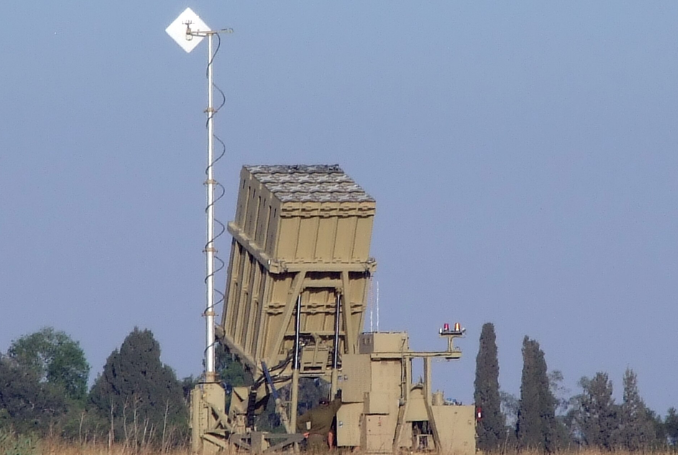

Israel arrests Iron Dome soldier accused of spying for Iran as questions grow over vulnerabilities in the system’s widely promoted effectiveness.
Key Developments
- Israeli authorities arrest Iron Dome reserve soldier accused of leaking sensitive military data to Iranian intelligence for months.
- Shin Bet says the suspect shared operational details, locations, and procedures of air defense systems in exchange for payment.
- Case highlights internal security risks as scrutiny grows over Iron Dome’s real-world performance and structural limitations.
Shin Bet: Soldier Shared Sensitive Iron Dome Information
Israeli authorities have arrested a reserve soldier working within the Iron Dome air defense system on suspicion of espionage for Iran, according to a joint statement by Israeli police and the Shin Bet security service.
The suspect, identified as 26-year-old Raz Cohen from occupied Jerusalem, is accused of maintaining contact with Iranian intelligence operatives over several months and carrying out tasks on their behalf.
According to the statement, “the soldier in question had been in contact with Iranian intelligence elements for several months,” during which he was directed “to carry out various security tasks, including transmitting sensitive security information that he came across while performing his duties.”
Authorities allege that the information shared included operational details of the Iron Dome system, including “battery structure, and ammunition and launch procedures,” as well as photos and videos documenting the system’s activities and the locations of air force bases and air defense batteries.
The statement added that “it became clear during the investigation that the soldier was aware that these contacts were being made by Iranian elements, and that he was receiving financial compensation.”
🚨 HAARETZ / CHANNEL 12: Building hit in central Israel as reported Iranian cluster missile scatters shrapnel; fire breaks out in a home in Rehovot, south of Tel Aviv. pic.twitter.com/pYVZAVxO33
— The Palestine Chronicle (@PalestineChron) March 20, 2026
Indictment Filed
Israeli occupation authorities confirmed that a formal indictment has been filed against Cohen following the investigation, which involved Lahav 433 and the Shin Bet.
The statement noted that “the Israeli Public Prosecution in occupied Jerusalem has been involved in the investigation since its inception, and the indictment was filed today.”
Officials emphasized that the case reflects a broader pattern, warning that “intelligence elements from hostile countries continue their efforts to recruit Israelis and employ them in security, espionage, and terrorist missions inside Israel, even in light of the current war.”
They added that recruitment attempts are increasingly conducted through social media platforms, targeting individuals with access to sensitive information.
The Shin Bet also stated that dozens of Israelis have been arrested in recent years on suspicion of spying for Iran in exchange for financial compensation.
The case underscores growing concerns within Israel’s security establishment over internal vulnerabilities, particularly involving individuals with access to critical defense systems such as Iron Dome, which plays a central role in intercepting incoming projectiles.
Vulnerabilities Behind Iron Dome Narrative
Despite longstanding claims portraying Israel’s Iron Dome as a near-infallible defense system, mounting evidence and real-world developments point to a far more constrained reality.
The system’s effectiveness has been publicly framed in terms of high interception rates, often cited at around 80 to 90 percent. However, this metric is inherently selective: the Iron Dome is designed to intercept only those projectiles assessed to be heading toward populated areas, meaning a significant number of incoming rockets are not engaged at all.
🚨 WATCH: Ballistic missile fragment crashes in “Tel Aviv” after impact pic.twitter.com/rW5ehjfXRC
— The Palestine Chronicle (@PalestineChron) March 20, 2026
As a result, headline success rates do not reflect total interception capability, but rather a filtered subset of threats.
This narrative has been directly challenged in the past. A widely cited 2014 analysis by MIT professor Theodore Postol argued that the actual success rate of the system could be significantly lower than official claims, raising questions about whether interceptions reliably neutralize warheads rather than simply striking rocket bodies.
The study brought attention to the lack of transparency surrounding how effectiveness is measured and reported.
Operational experience has also demonstrated clear structural limitations. The system can be strained or bypassed through saturation attacks, in which large numbers of projectiles are launched simultaneously, overwhelming interception capacity and increasing the likelihood of impact.
This dynamic has been observed repeatedly in recent confrontations, where volleys have penetrated air defenses despite active deployment.
(PC, Israeli media, MIT)







Bullsh!t.
the Iron Dome failed so they fabricated this narrative. More fake news from the Israeli Jewish Nazis.