
Israeli occupation authorities abruptly cancelled coordination for the evacuation of a third batch of patients and wounded Palestinians from the Gaza Strip through the Rafah land crossing, deepening Gaza’s health crisis as Israeli attacks continued across the enclave despite a declared ceasefire.
Key Developments
- Israel cancelled coordination for evacuating the third batch of patients and wounded from Gaza through Rafah without providing reasons.
- The Palestinian Red Crescent said medical teams were fully prepared before the last-minute cancellation halted the operation.
- Rafah crossing operations remain severely restricted, with far fewer Palestinians allowed to travel than agreed.
- Israeli occupation forces carried out deadly air and artillery strikes across Gaza, killing entire families.
- Hamas condemned the treatment of travelers and aid restrictions, while the UN renewed calls for large-scale humanitarian access.
Evacuation Cancelled without Explanation
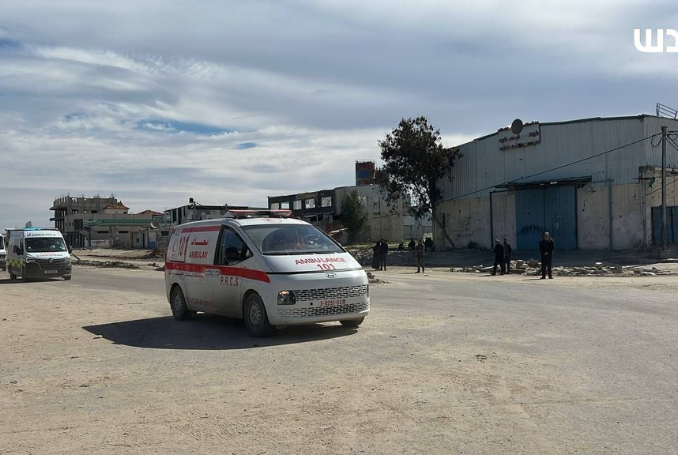
Israeli occupation authorities cancelled, at the last minute, coordination for the evacuation of a third batch of patients and wounded Palestinians from the Gaza Strip through the Rafah land crossing, the Palestinian Red Crescent Society confirmed on Wednesday.
Raed Al-Nems, spokesman for the Palestinian Red Crescent Society in Gaza, said the organization was officially informed of the cancellation by the World Health Organization without any explanation.
Speaking to Anadolu Agency, Al-Nems said medical teams were fully prepared to evacuate patients from Al-Amal Hospital in Khan Yunis, but the sudden decision prevented the operation from going ahead.
He stressed that dozens of critically ill patients had completed preparations to leave Gaza for urgent treatment abroad, noting that the health system in the Strip is near total collapse.
The Red Crescent said it is awaiting renewed coordination in the hope that the evacuation can proceed on Thursday, given the catastrophic humanitarian and medical conditions facing patients inside Gaza.
Conflicting Israeli Claims
In contrast, the Israeli Coordinator of Government Activities in the West Bank and Gaza claimed that the Rafah crossing remained open on Wednesday, alleging that the World Health Organization had failed to provide “procedural coordination details.”
Israeli occupation authorities claimed that Palestinians would be allowed to leave once such details were submitted, despite the Palestinian Red Crescent confirming it had already completed preparations.
Restricted Movement through Rafah
According to Anadolu, 40 Palestinians, including women and children, returned to Gaza via Rafah early Wednesday, while a similar number departed, marking the third day since the crossing was partially reopened under strict Israeli restrictions.
On Monday, only 12 Palestinians were allowed to return to Gaza and 20 were permitted to leave. On Tuesday, 40 arrived and 40 departed. These figures fall far short of the agreed quota of 50 returnees and 50 patients per day.
Palestinians returning through Rafah reported extensive harassment by Israeli forces, including searches, interrogations, and severe movement restrictions.
Renewed Israeli Attacks
The halt in medical evacuations coincided with renewed Israeli attacks across the Gaza Strip. Al Jazeera Arabic reported that Israeli occupation forces carried out a series of deadly air and artillery strikes since dawn, targeting civilian homes and tents sheltering displaced families.
Al-Jazeera correspondent Mo’men Al-Sharafi said the bombardment focused on the neighborhoods of Al-Tuffah, Al-Sheja’iya, and Al-Zaytoun in Gaza City, killing entire families. Among the victims were four members of the Halbous family and three others in Al-Zaytoun, including an infant.
Israeli media claimed the attacks followed the serious injury of an Israeli reserve officer in northern Gaza, with officials vowing a “harsh response.”
Hamas and UN Warnings
Hamas condemned the mistreatment of Palestinians traveling through Rafah, calling it a crime and urging mediators and guarantor states to intervene immediately. The movement warned that Israel continues to severely restrict the entry of aid into Gaza despite the ceasefire entering its second phase.
Hamas spokesman Hazem Qassem said worsening weather conditions have intensified the suffering of displaced families living in tents, particularly as fuel and gas are allowed in only in minimal quantities.
Meanwhile, UN Secretary-General Antonio Guterres renewed calls for facilitating large-scale humanitarian aid into Gaza, including through the Rafah crossing.
Speaking before the UN Committee on the Rights of the Palestinian People, Guterres said any sustainable solution must comply with international law and lead to a unified, legitimate, and internationally recognized Palestinian government.
(Sources: Anadolu Agency, Al Jazeera Arabic, Palestinian Red Crescent Society, United Nations)