
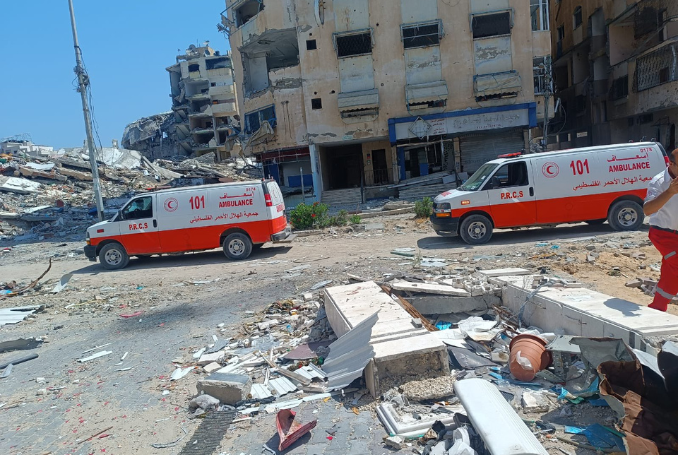

In addition, at least 12 out of 24 attempts to coordinate humanitarian movements inside Gaza were denied by the Israeli authorities.
Israeli authorities have denied 29 out of 35 attempts by the UN to access fuel stocks in Rafah since April 13, the world body said, warning that the lack of fuel threatens to collapse critical infrastructure across the besieged Gaza Strip.
Speaking at a press briefing on Wednesday, UN deputy spokesperson Farhan Haq, citing the Office for the Coordination of Humanitarian Affairs (OCHA), said it “warns that the shortage of accessible fuel could force more health, water and sanitation facilities to shut down.”
The bloodshed continued in Gaza on Thursday as Israeli forces opened fire on civilians waiting for humanitarian aid near the Netzarim junction, killing 13 and wounding 200 othershttps://t.co/RXBSi6PhO7 pic.twitter.com/iPprKve4FE
— The Palestine Chronicle (@PalestineChron) June 12, 2025
This could affect “the most basic of programs,” he continued, including vaccines, which “require fuel for cold chain systems.”
Haq stressed that the collapse of telecommunications systems, internet connectivity and emergency communication systems “is a real threat” as it would “cripple life-saving coordination and prevent affected communities from receiving critical information.”
“Yet, our attempts to access available stocks of fuel in Rafah continue to be rejected. Between 13 April and this past Monday, 29 out of 35 attempts were denied by the Israeli authorities,” he stated.
Critical Supplies
On Tuesday, at least 12 out of 24 attempts to coordinate humanitarian movements inside Gaza were denied by the Israeli authorities, Haq added.
This included “new attempts to truck potable water to vulnerable people who remain in northern Gaza, retrieve critical fuel and nutrition supplies from Rafah and repair vital roads in the south.”
Don’t Fund the Gaza Humanitarian Foundation: It’s a Genocidal Smokescreen
“International humanitarian law is crystal clear: If the population is inadequately supplied with the essentials for their survival, Israel must agree to humanitarian relief and facilitate it by all the means at its disposal,” Haq stated.
He also noted that since the limited resumption of humanitarian assistance into Gaza on May 19, the World Food Programme (WFP) says that it has only been able to bring in “small amounts of life-saving food and aid.”
“This is largely due to delays or denials of permission for humanitarian movements due to expanded military operations,” the UN spokesperson stated.
‘Overwhelming Needs’
Haq said that as of June 10, WFP transported around 700 trucks of aid to the Kerem Shalom border crossing, compared to 600 to 800 trucks of aid transported per day during the ceasefire earlier this year.
Hague Group to Discuss ‘Legal and Diplomatic Measures’ to End Gaza Genocide
The trucks carried over 11,000 metric tons of food but only 6,000 metric tons have entered Gaza — enough to support fewer than 300,000 people for a month with minimal daily food requirements, he noted.
“This is a small fraction of what is needed for a population of 2.1 million people and far too slow to meet the overwhelming needs,” Haq emphasized.
Over 55,000 Killed
Since Israel’s reneging on the ceasefire on March 18, it has killed and wounded thousands of Palestinians throughout the Gaza Strip through a bloody and ongoing aerial bombardment.
On October 7, 2023, following a Palestinian Resistance operation in southern Israel, the Israeli military launched a genocidal war against the Palestinians, killing over 55,000, wounding more than 127,000, with over 14,000 still missing.
Despite habitual condemnation by many countries around the world of the Israeli genocide, little has been done to hold Israel accountable.
Israel is currently under investigation for the crime of genocide by the International Court of Justice, while accused war criminals — including Prime Minister Benjamin Netanyahu — are now officially wanted by the International Criminal Court.
The Israeli genocide has been largely defended, supported, and financed by Washington and a few other Western powers.
(The Palestine Chronicle)




How many UN attempts have Israeli authorities denied access to fuel stocks in Rafah since April 13, and what impact have these denials had on critical infrastructure in the Gaza Strip?