
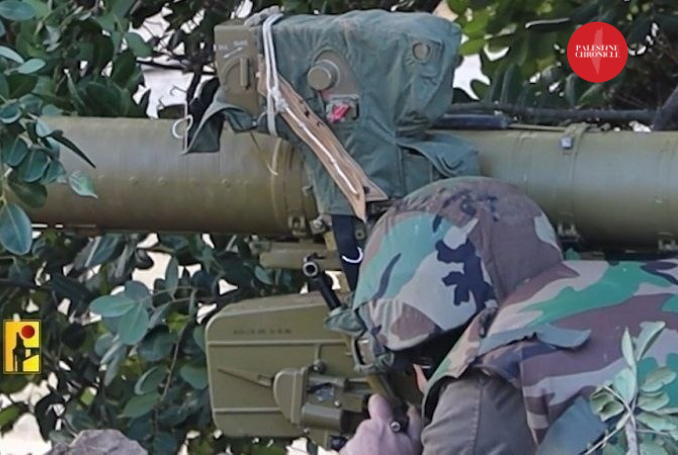

Israeli occupation forces halt deeper advance in Lebanon as Hezbollah ambush kills soldier, wounds dozens, exposing limits of current military strategy.
Key Developments
- Israeli army halts deeper advance, citing defined “front line” south of Litani River.
- Hezbollah ambush kills soldier, wounds around 20, forcing full withdrawal.
- Israeli officers warn political-military gap is “eroding public trust”.
Israeli Army Limits Ground Advance
The Israeli army is preparing to boost its forces in southern Lebanon but has no plans to advance deeper into the country, according to military sources cited by the Israeli newspaper Haaretz.
The sources said Israeli occupation forces have reached what has been defined as the “front line” in operational plans, roughly 10 kilometers from the Litani River.
Military officials emphasized that troops were assigned defensive objectives, aimed at preventing attacks without expanding the scope of the operation.
According to Israeli military sources, if US operations against Iran continue, Israel may struggle to conclude its campaign in Lebanon independently.
According to the report, “such a scenario, (the sources) said, would likely deepen reliance on reserve forces operating across all fronts, which are already under significant strain.”
All regular brigades have been deployed in Lebanon, alongside reserve units, with four divisions currently operating in the area.
Reserve service periods have already been extended from six to nine weeks, with forces stretched across Lebanon, Gaza, the West Bank, and the Syrian border.
Haaretz reported that “in the weeks leading up to the ground incursion, several options with varying levels of escalation were presented to the government.” Ultimately, “a more limited framework” was chosen.
Gap between Military and Political Leadership
Haaretz reported a growing discrepancy between military assessments and government statements regarding the objectives of the campaign.
Northern Command officers warned that the gap between operational realities and political messaging is “eroding public trust.”
While military officials indicated that the army does not seek to disarm Hezbollah in the short term, this position was later adjusted in coordination with Defense Minister Israel Katz.
Israeli army Chief of Staff Eyal Zamir admitted that “the objective of disarming Hezbollah is defined as a long-term, overarching goal.”
Hezbollah Ambush Forces Withdrawal
In parallel, Israeli media cited by Al Mayadeen reported a large-scale ambush carried out by Hezbollah fighters between Taybeh and Qantara.
The ambush targeted an Israeli occupation force attempting a river crossing operation, resulting in the death of one Israeli soldier and injuries to around 20 troops and officers.
The force included units from the Paratroopers Brigade and the Yahalom engineering unit and had been tasked with advancing beyond the Litani River.
According to Israeli reports, the ambush began with a concentrated barrage of rockets and mortar fire targeting the unit’s position within minutes.
The precision of the strikes suggested pre-planned targeting and real-time monitoring.
As casualties mounted and evacuation attempts came under sustained fire, commanders were forced to abandon the operation.
Israeli occupation forces withdrew from the area, leaving behind engineering equipment, including bulldozers, bridging systems, and inflatable boats. Israeli media reported that Hezbollah later published documentation showing the abandoned equipment in Lebanese territory.
A parallel operation in another sector also failed under similar conditions, leading to the suspension of expansion plans.
Hezbollah Capabilities Persist
Israeli military assessments indicate that Hezbollah remains capable of sustaining prolonged combat operations.
A reserve officer told Haaretz: “There’s a very large quantity of weapons inside homes and throughout the area.”
“It’s going less easily than we expected following the previous operation,” he added.
Another assessment from the same officer underscored uncertainty over the campaign’s trajectory: “It’s not clear where this is going,” he reportedly said.
(PC, Haaretz, Israeli media, Al Mayadeen)



Be the first to comment