
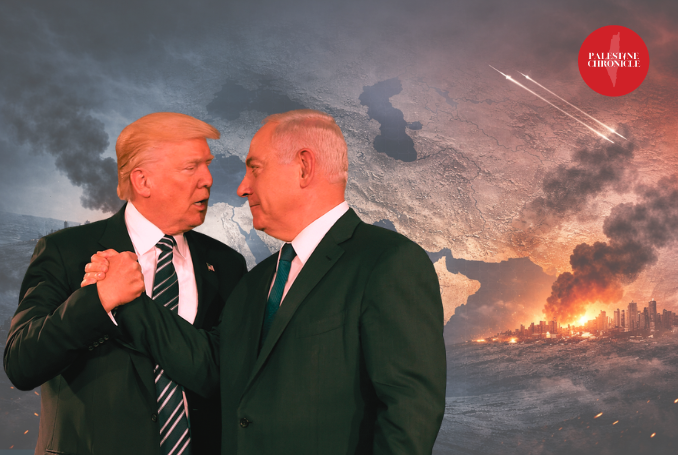

Israel expands strikes, US boosts arms, Lebanon hit, and regional leaders push diplomacy as Iran war intensifies rapidly.
Trump Says No Plans to Deploy Troops to the Middle East
US President Donald Trump said he does not intend to deploy additional troops to the Middle East amid the ongoing war with Iran.
“I’m not putting troops anywhere. If I were, I certainly wouldn’t tell you … but I’m not putting troops,” Trump told reporters.
Trump claimed that US forces had already caused extensive damage to Iran’s military.
“We’ve obliterated just about everything there is to obliterate, including leadership,” he said, adding that “we’re flying wherever we want … nobody’s even shooting at us.”
He also said Washington would act to stabilize global oil markets amid disruptions caused by the war.
UPDATE: IRGC Says It Struck US F-35 as CENTCOM Confirms Emergency Landing
US Approves Major Arms Sales to UAE, Kuwait, and Jordan
The US State Department approved possible military sales to several regional allies as the conflict continues.
The proposed package includes more than $8.4 billion in munitions, radar systems, aircraft upgrades and Medium-Range Air-to-Air Missiles for the United Arab Emirates.
In addition, Washington approved a possible $8 billion sale of missile defense radar systems to Kuwait, and a $70.5 million package of aircraft and munitions support to Jordan.
The department said it notified Congress of the proposed deals, which come amid escalating military operations in the region.
‘Grave Miscalculation’ — Oman Points to the Hidden Driver of America’s War on Iran
Israeli Attacks Kill Four in Southern Lebanon
Israeli airstrikes and artillery shelling killed four people in southern Lebanon, according to Lebanese media.
Two people were killed when fighter jets struck a house in the town of Adloun. Two more were killed and eight others injured in attacks on multiple towns, including Hosh Sour, Al-Burj Al-Shamali, Bazourieh and Debaal.
Artillery shelling and airstrikes were also reported in several areas, including Shehin, Marwahin, Bint Jbeil, Maroun Al-Ras, Aitit and Qantara.
Egypt, Qatar, UAE Discuss Regional Escalation
Egyptian President Abdel Fattah el-Sisi visited Qatar and the United Arab Emirates to discuss the escalating situation.
In Doha, Sisi met Emir Tamim bin Hamad Al Thani, where both sides discussed regional developments and the implications of continued military escalation. Sisi affirmed Egypt’s full solidarity with Qatar and support for measures to protect its sovereignty and security.
In a separate meeting with UAE President Mohammed bin Zayed, the leaders discussed ways to enhance economic cooperation as well as the broader regional situation.
Both meetings emphasized the need to halt escalation and prioritize political and diplomatic solutions to prevent further deterioration.
Laundry Fire? Why the USS Gerald R. Ford’s Withdrawal Deserves Scrutiny – Analysis
Qatar Calls for Immediate Halt to War
Qatar’s Prime Minister Sheikh Mohammed bin Abdulrahman Al Thani called for an immediate end to the war.
“The war must stop immediately, and everyone knows who benefits from it and who is dragging the region into conflict,” he said.
He stressed the importance of ending Iranian attacks on regional states, warning that such actions destabilize security and could affect energy supplies.
“We believe diplomacy is the first and last solution to conflicts,” he added.
The Qatari premier also rejected Iran’s justification for targeting countries hosting US military assets, describing such attacks as “unacceptable and unjustified.”
Iranian Missiles Strike Haifa Energy Infrastructure
Israeli media reported that Iranian missile strikes hit key energy infrastructure in the Haifa area.
According to reports, strikes targeted oil refining facilities in Haifa Bay, including installations belonging to the Bazan Group, leading to fires and disruptions in electricity supply.
Power outages were reported across wide areas, particularly in the Krayot suburbs and surrounding regions. Additional damage was reported to pipelines and energy transmission infrastructure, along with fires in vehicles and industrial areas.
Haifa Petrochemical Complex Struck, Grid Disrupted: What We Know So Far
Yemen Reaffirms Support for Iran
Yemen’s Supreme Political Council head Mahdi al-Mashat reaffirmed support for Iran and condemned US and Israeli actions in the region.
He said Yemen remains committed to supporting the Palestinian people and defending regional sovereignty, describing the conflict as part of a broader attempt to impose dominance over the region.
Al-Mashat warned that US and Israeli actions aim to create conditions allowing attacks on any country without justification, and reiterated Yemen’s backing of Iran’s right to defend itself.
Iran Warns of Possible Attacks on Regional Energy Infrastructure
An Iranian military spokesperson warned that Israel may attempt to target energy infrastructure across the region, including facilities belonging to major companies such as Aramco.
The spokesperson said previous actions attributed to Israel indicate a pattern of attempting to provoke tensions and create instability among regional states.
The warning comes amid heightened concerns over the vulnerability of energy infrastructure and the potential for further escalation affecting global energy markets.
Hormuz in Focus: Iran Eyes Transit Fees as US Signals Oil Shift
Israel Claims First Strike on Iranian Naval Infrastructure in Caspian Sea
The Israeli army said it carried out its first strike on Iranian naval infrastructure in the Caspian Sea, marking a significant geographic expansion of the war.
According to the Israeli military, the air force targeted a port facility where dozens of naval vessels were docked, including missile boats and patrol ships. The army said it targeted vessels equipped with air defense systems and anti-submarine capabilities, as well as a central command headquarters responsible for managing Iranian naval activity in the region.
It added that infrastructure used for maintenance and repair of naval vessels was also targeted, describing the port as a hub for routine and emergency operations.
There was no immediate comment from Iranian authorities, and the claims could not be independently verified.
(Al Mayadeen, Anadolu, Egyptian media, Official Statements, PC)


targeting countries hosting US military assets, describing such attacks as “unacceptable and unjustified.” — but “Israeli” attacking “Iranian naval infrastructure in the Caspian Sea”? Gulf states say … nothing. PC, another excellent article (https://www.palestinechronicle.com/not-just-netanyahus-war-the-arab-factor-they-dont-want-you-to-know/)! Sounds like the Gulf kingdoms cling to the White House … decline and chaos.
Trump denies sending troops while his Dept of Offense is all over the talk shows describing how they are going to take over the shoreline of the Persian Gulf. May the empire rest in peace, and may the planet recover.