
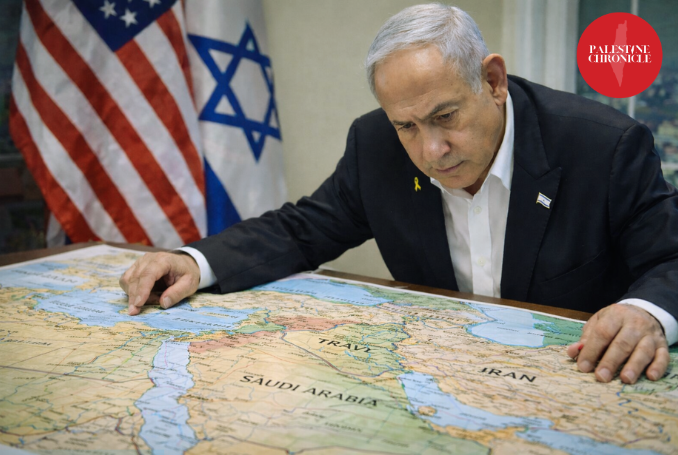

Israel’s war on Iran may undermine its long-term security and erode crucial US support, despite strong domestic backing, FT reports.
Key Takeaways
- Over 80% of Israelis support the war, but analysts warn it may weaken long-term security.
- Growing backlash in the US threatens Israel’s most critical strategic alliance.
- The war is escalating unpredictably, raising risks of prolonged conflict and regional destabilization.
War Backed at Home, Questioned Strategically
An analysis by the Financial Times argues that Israel’s war on Iran, while enjoying overwhelming domestic support, may ultimately undermine the country’s long-term security.
According to the report, more than 80 percent of Israelis support the decision to attack Iran, reflecting deep-rooted perceptions of Tehran as an existential threat.
Israeli Prime Minister Benjamin Netanyahu has long framed Iran in those terms. Following initial strikes, he stated that the current “combination of forces (…) allows us to do what I have been hoping to do for 40 years.”
However, the FT contends that the war may be producing the opposite effect.
Dagger in Hand: Netanyahu Turns on Mossad as His Iran War Unravels – Analysis
Erosion of US Support
The analysis identifies the weakening of US backing as the most serious long-term consequence of the conflict.
“For decades, the single biggest guarantee of Israeli security has been strong bipartisan support in the US,” the FT notes, warning that recent actions “are draining that support away.”
Israel’s genocidal war on Gaza and the current escalation with Iran have contributed to shifting public opinion in the United States. A recent poll cited by the FT found that, for the first time, more Americans sympathize with Palestinians than Israelis.
This shift is beginning to influence political discourse. The report notes that future US political leadership may adopt a more critical stance toward Israel, with even traditionally supportive candidates facing increasing pressure.
War Escalation and Strategic Miscalculation
The FT also argues that the war itself is not unfolding as anticipated.
“The swift and decisive victory that both Trump and Netanyahu spoke of has not transpired,” the report states.
Instead, the conflict has escalated in unexpected ways, including disruptions linked to the Strait of Hormuz, raising fears of a prolonged and costly confrontation.
The report warns that a drawn-out war would increase risks for Israeli civilians and soldiers, while further straining relations with Washington.
The FT highlights dissenting views within Israeli security circles regarding the urgency of the Iranian threat.
Danny Citrinowicz, a former Israeli military intelligence official, challenged the notion of an imminent nuclear danger, describing Iran’s previous leadership as “cautious, calculating” actors.
He added that Iran had signaled willingness in past negotiations to limit its enriched uranium stockpile, suggesting that diplomatic avenues had not been fully exhausted.
Knesset Session Suspended as Wave 78 Strikes Tel Aviv, Southern Israel
Political Fallout in the United States
The analysis underscores that Israel’s strategic position is closely tied to US political dynamics, which are now shifting.
It notes growing criticism of Israel within both major American political camps. Even within traditionally pro-Israel circles, dissatisfaction is increasing, fueled by the war and broader regional developments.
The FT warns that it is now plausible that future US presidential candidates from both parties could advocate reducing support for Israel—an outcome it describes as a “strategic disaster.”
‘A Recipe for Perpetual War’
Despite Israel’s advanced military capabilities, the report argues that recent conflicts have exposed the limits of a purely military approach.
“Israel’s formidable military machine has also allowed Netanyahu to promote a dangerous myth — that the only route to lasting security lies in warfare,” the FT writes.
The analysis points out that previous operations have failed to deliver lasting outcomes, noting that the Palestinian resistance movement Hamas remains active in Gaza and the Lebanese resistance movement Hezbollah continues to pose a threat in Lebanon.
The FT concludes that reliance on military solutions risks locking Israel into ongoing conflict without resolving underlying political issues.
“Netanyahu’s way is a recipe for perpetual war,” the report states, warning that this approach comes “against a backdrop of rapidly declining international support for Israel.”
The Self-Undoing of Israel: Has Zionism Crossed the Point of No Return?
The Financial Times analysis suggests that Israel’s war on Iran may mark a turning point, not only militarily but also politically.
While the conflict currently commands strong support within Israel, its long-term consequences—particularly the erosion of US backing—could fundamentally alter the country’s strategic position.
In this view, the greatest threat to Israel’s future security may not lie in Iran itself, but in the weakening of the alliances that have historically underpinned its military and political strength.
(PC, Financial Times)




he’s looking at an upside-down map?
did AI do that? or is the admin team slipping? 😉 instead of Iraq, it reads, Travi…good job! why does AI suck? i’m trying to rememberrrrr…..
Netanyahu is a dirty Jew, just like all the ones in the government. They’re not good, decent Jewish people. They like to mur der chil drennnnnnn…….
stop supporting them and they’ll collapse. That would be the best thing for the entire world.
No more ” Israel ” .
israel IS A ROGUE State, GUILTY OF A HORRENDOUS GENOCIDE AND IN VIOLATION OF EVERY VESTIGE OF INTERNATIONAL LAW…..israel HAS NO POSSIBILITY of long-term existence….LITTLE POSSIBILITY of short-term existence…..the ACCURSED Western elites, the 1%, do not yet understand just HOW MUCH israel IS HATED….HOW MUCH israel IS LOATHED……BY THE VAST MAJORITY OF THE HUMAN RACE!!